Tell us about the job
Takes about a minute. No obligation.
Before a contractor can pin down why a central AC unit has failed in Lee County, they have to account for what the system has been running against. 142 severe weather events were recorded in Lee County, Iowa between 2015 and 2024. At that rate, cumulative load is a real variable in a repair diagnosis, not a theoretical one. A compressor that has cycled hard through repeated severe weather events may show stress patterns that look like neglect or a bad install. A contractor who skips that history risks misreading what failed and why, and prices the job against the wrong cause.
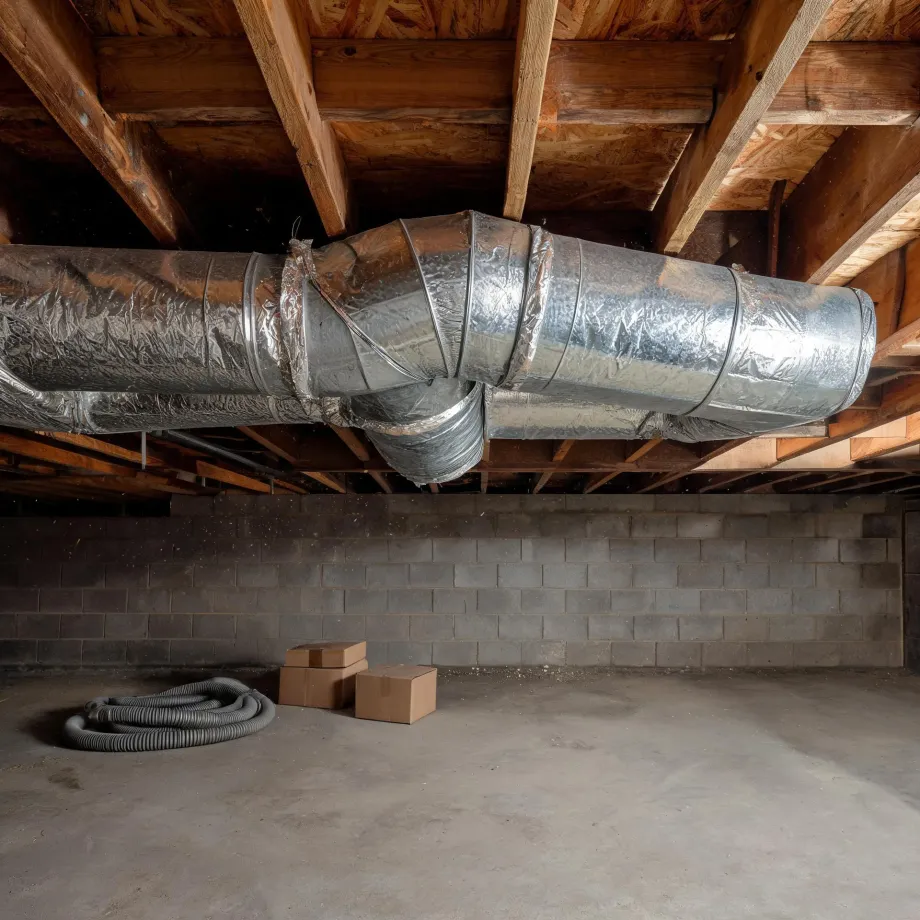
Ductwork and wiring in Lee County's older houses get a lot of attention, but on a repair call they are rarely what decides the outcome. Half the homes in Lee County, Iowa were built in 1960 or earlier (2020-2024 ACS 5-year). A system installed into a house that old came in long after the original build, and what a contractor finds once the unit is open is whether the components it takes can still be sourced. Compressors, control boards, and metering devices for systems that age are not always in distribution, and that gap between what the repair needs and what a supplier can ship is where many jobs stop or change direction.
The Parts of a Central AC a Contractor Checks First
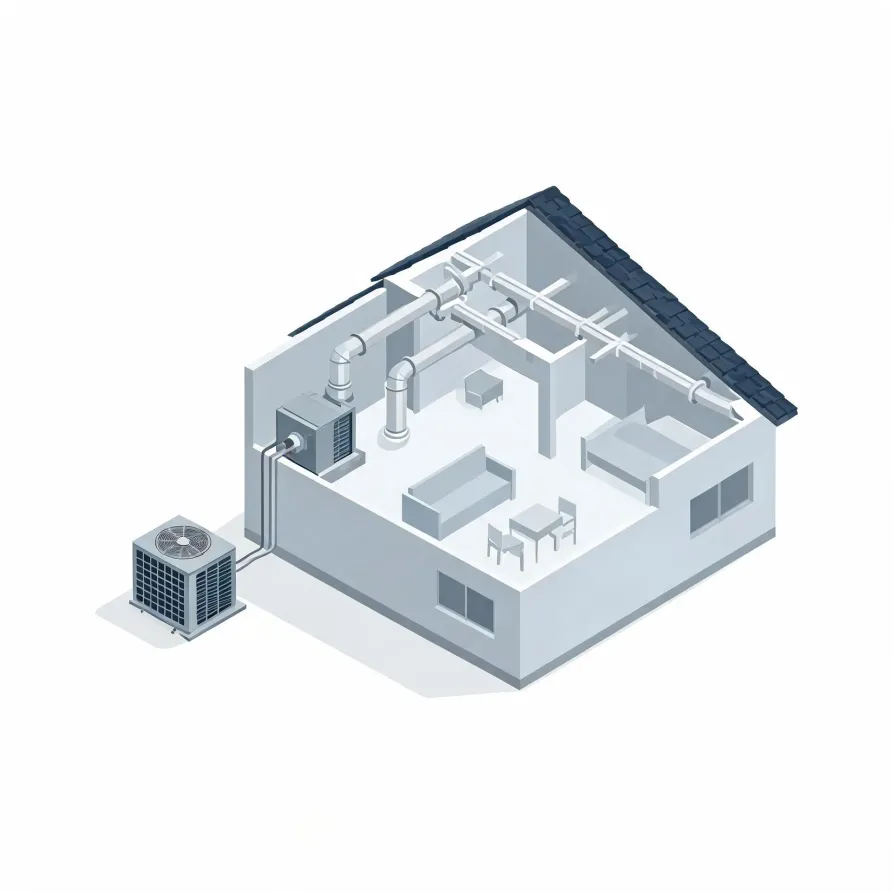
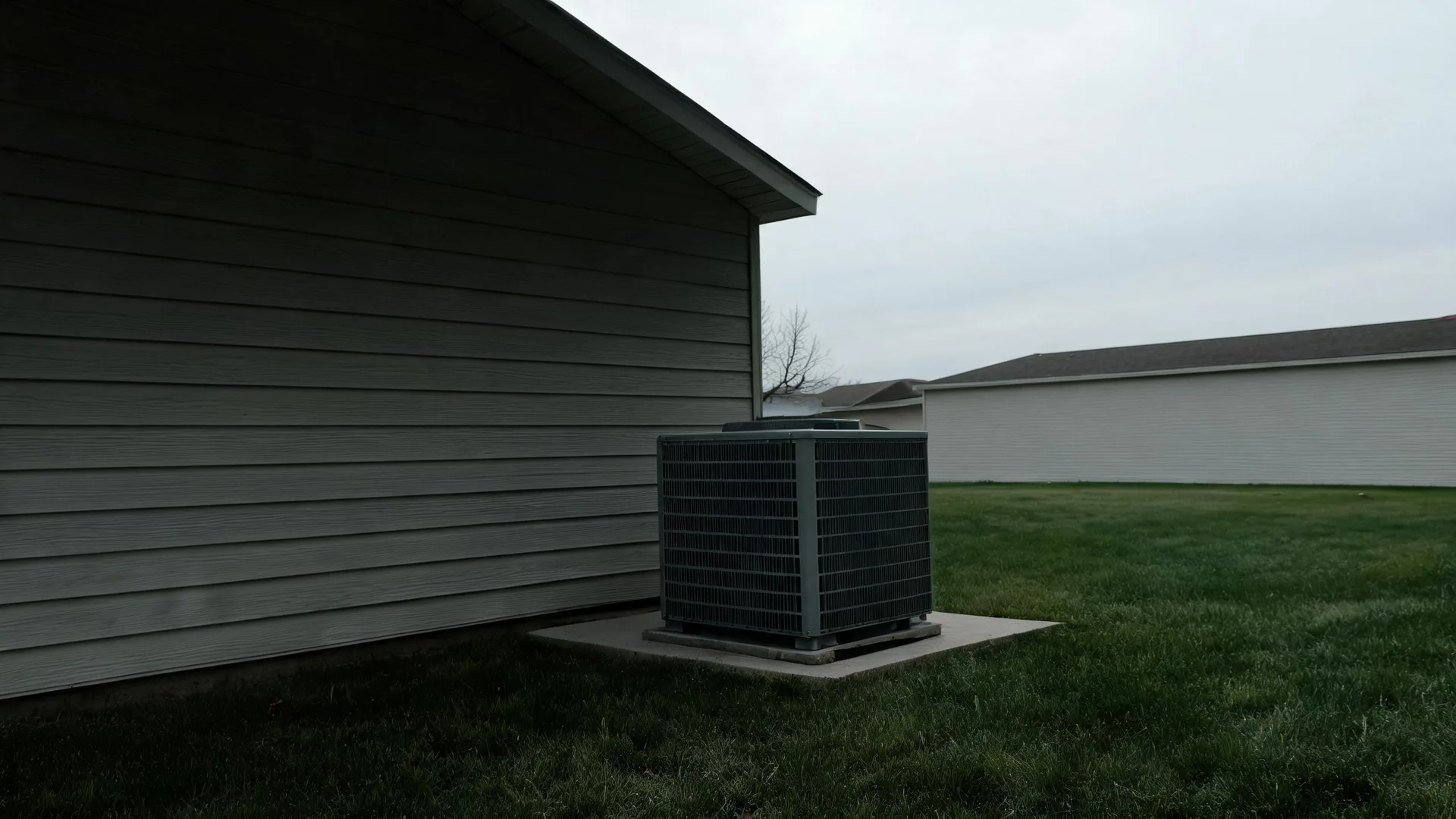
The outdoor condenser unit sits outside the house, usually on a concrete pad along a side or rear wall, and it is where the system sheds heat. The compressor lives inside that cabinet and is the piece contractors go to first when a system runs but does not cool. The condenser coil wraps around it, and a bent or fouled coil is a common reason cooling falls off.
Inside the house, the air handler or furnace blower forces air across the evaporator coil, which sits in the indoor cabinet above or below the unit itself. The refrigerant line set runs between the two cabinets, and a leak anywhere along it will show up as lost cooling or ice on the indoor coil. The thermostat, mounted on a wall in the living space, controls the whole system and is a quick first check when the system will not start.
The drawing shows the general layout of a central AC system, and a licensed contractor determines which components and conditions apply to your specific house.
Get matched in Lee CountyLee County by the Numbers
142 severe weather events were recorded in Lee County, Iowa between 2015 and 2024.
NOAA National Centers for Environmental Information, Storm Events Database, bulk CSV export, events 2015-01-01 through 2024-12-31.Half the homes in Lee County, Iowa were built in 1960 or earlier (2020-2024 ACS 5-year).
U.S. Census Bureau, 2020-2024 American Community Survey 5-Year EstimatesLee County, Iowa holds 15,794 housing units (2020-2024 ACS 5-year).
U.S. Census Bureau, 2020-2024 American Community Survey 5-Year EstimatesOwners occupy 76.3% of the occupied homes in Lee County, Iowa (2020-2024 ACS 5-year).
U.S. Census Bureau, 2020-2024 American Community Survey 5-Year EstimatesRules & Standards Governing Central AC Repair in Lee County, Iowa9 sourced rules and standards
What HVAC Repair Looks Like in Lee County
Split-system central air conditioners rated below 45,000 Btu/h manufactured on or after January 1, 2023 must meet a federal minimum of 13.4 SEER2.
Split-system central air conditioners rated at or above 45,000 Btu/h manufactured on or after January 1, 2023 must meet a federal minimum of 13.4 SEER2.
Split-system central air conditioners manufactured between January 1, 2015 and December 31, 2022 had to meet 13 SEER, the metric that preceded SEER2.
Single-package central air conditioners manufactured on or after January 1, 2023 must meet a federal minimum of 13.4 SEER2.
Space-constrained central air conditioners manufactured on or after January 1, 2023 must meet a federal minimum of 11.7 SEER2.
Federal efficiency standards for split-system central air conditioners and heat pumps are set on each certified combination of outdoor unit and indoor coil rather than on the outdoor unit alone.
Residential and light commercial air conditioning and heat pump systems assembled in the field, including mini-splits and unitary systems, may not be installed on or after January 1, 2025 using a refrigerant with a global warming potential above 700.
A field-assembled system whose specified components were all manufactured or imported before January 1, 2025 carries no installation compliance date under the refrigerant restrictions and may still be installed.
Licensing and Legal Requirements in Lee County, Iowa
Iowa requires a state licence to install or repair HVAC, refrigeration, mechanical or plumbing systems, and to operate as a contractor, with exceptions listed in section 105.11.
Severe Weather Events in Lee County
Hard weather puts real stress on cooling equipment: heat exchangers, compressors, and electrical components all take a beating when conditions spike. How often that happens in Lee County shapes how much repair work the equipment here actually needs.
142 severe weather events, 2015–2024. Source: NOAA National Centers for Environmental Information, Storm Events Database.