Tell us about the job
Takes about a minute. No obligation.
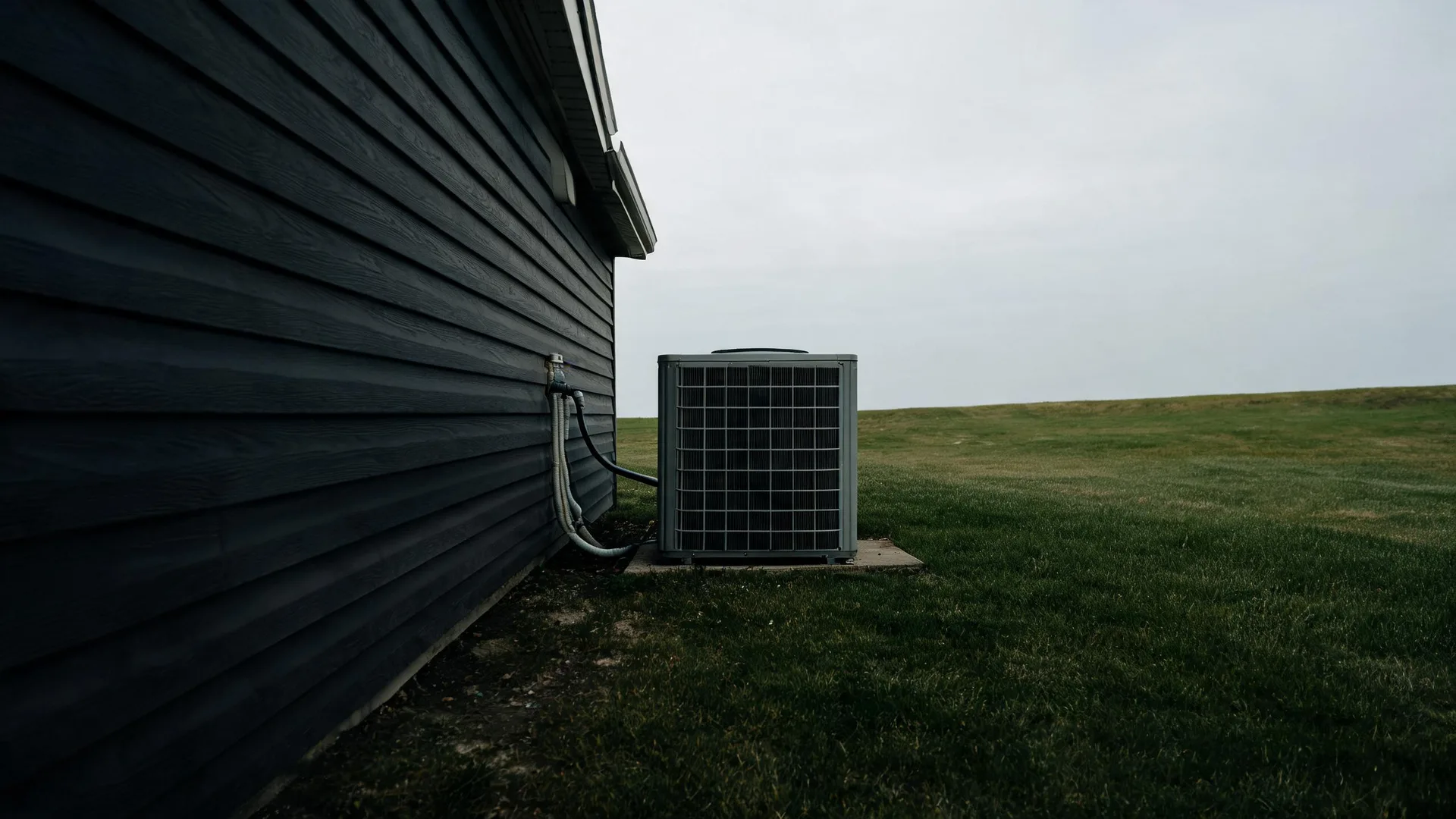
A contractor called out to repair a central AC unit in Wayne County is working out what actually killed the system. 50 severe weather events were recorded in Wayne County, Iowa between 2015 and 2024. At that rate, severe weather is real but not constant, and a compressor that has given out or a capacitor that has failed is far more likely to have reached the end of its service life than to have been worn down by weather alone. The contractor will check refrigerant levels, electrical components, and the condition of the coils, and what they find there tells the story. Blaming the climate when a system is simply old is a wrong diagnosis, and it produces a wrong repair plan.
Ductwork and refrigerant lines put in before modern central AC equipment was common were sized and routed for different loads, and when something fails today a contractor opens the system to find components that have been working against that mismatch for years. Half the homes in Wayne County, Iowa were built in 1969 or earlier (2020-2024 ACS 5-year). That history shows up inside a unit as wear patterns on compressors, coils, and contacts that do not always match what the model number alone would predict. Whether a part is still in production, and what condition the surrounding components are in, is what sets the actual repair bill.
The Parts of a Central AC a Contractor Checks During a Repair
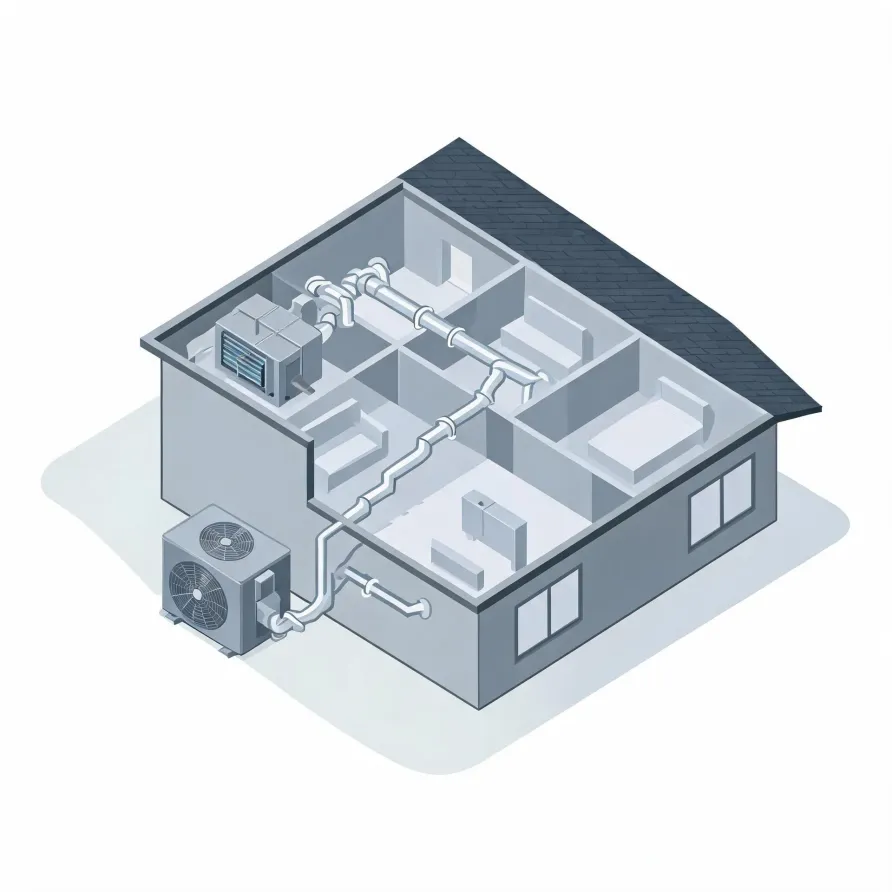
The outdoor condenser unit sits outside the house, usually on a concrete pad against an exterior wall, and it carries the compressor and the condenser coil. These are the pieces a contractor reaches first, because a failed compressor or a dirty, damaged coil will shut the whole system down. Inside, the air handler or furnace cabinet holds the evaporator coil, which is where refrigerant absorbs heat from your indoor air.
The refrigerant lines run between the two units, and a leak anywhere along them starves the system of what it needs to move heat. The blower fan inside the air handler pushes conditioned air into the duct system, and the contractor checks it along with the capacitors and contactors in the electrical compartment of the outdoor unit, since those small components fail often enough to be early stops on any diagnostic.
The drawing shows how these parts relate in a standard installation, and a licensed contractor determines which of them are relevant to the specific system in your home.
Get matched in Wayne CountyWayne County by the numbers
50 severe weather events were recorded in Wayne County, Iowa between 2015 and 2024.
NOAA National Centers for Environmental Information, Storm Events Database, bulk CSV export, events 2015-01-01 through 2024-12-31.Half the homes in Wayne County, Iowa were built in 1969 or earlier (2020-2024 ACS 5-year).
U.S. Census Bureau, 2020-2024 American Community Survey 5-Year EstimatesWayne County, Iowa holds 3,019 housing units (2020-2024 ACS 5-year).
U.S. Census Bureau, 2020-2024 American Community Survey 5-Year EstimatesOwners occupy 80.9% of the occupied homes in Wayne County, Iowa (2020-2024 ACS 5-year).
U.S. Census Bureau, 2020-2024 American Community Survey 5-Year EstimatesRules & Standards Covering Central AC Repair in Wayne County, Iowa9 sourced rules and standards
What HVAC Repair Looks Like in Wayne County
Split-system central air conditioners rated below 45,000 Btu/h manufactured on or after January 1, 2023 must meet a federal minimum of 13.4 SEER2.
Split-system central air conditioners rated at or above 45,000 Btu/h manufactured on or after January 1, 2023 must meet a federal minimum of 13.4 SEER2.
Split-system central air conditioners manufactured between January 1, 2015 and December 31, 2022 had to meet 13 SEER, the metric that preceded SEER2.
Single-package central air conditioners manufactured on or after January 1, 2023 must meet a federal minimum of 13.4 SEER2.
Space-constrained central air conditioners manufactured on or after January 1, 2023 must meet a federal minimum of 11.7 SEER2.
Federal efficiency standards for split-system central air conditioners and heat pumps are set on each certified combination of outdoor unit and indoor coil rather than on the outdoor unit alone.
Residential and light commercial air conditioning and heat pump systems assembled in the field, including mini-splits and unitary systems, may not be installed on or after January 1, 2025 using a refrigerant with a global warming potential above 700.
A field-assembled system whose specified components were all manufactured or imported before January 1, 2025 carries no installation compliance date under the refrigerant restrictions and may still be installed.
Licensing and Legal Requirements in Wayne County, Iowa
Iowa requires a state licence to install or repair HVAC, refrigeration, mechanical or plumbing systems, and to operate as a contractor, with exceptions listed in section 105.11.
Severe Weather Events in Wayne County
Hard weather puts real hours on HVAC equipment. The more a system runs hard to compensate for heat, humidity swings, or pressure changes, the sooner its components show wear, and repair needs in Wayne County tend to track with what the sky has been doing.
50 severe weather events, 2015–2024. Source: NOAA National Centers for Environmental Information, Storm Events Database.