




Profile view of a bearded man wearing a black baseball cap and a dark gray T-shirt against a plain light background.

Why your AC unit is buzzing in Iowa

Step 1 of 3: Equipment

Why is my AC unit buzzing?

That buzzing outside has probably been there a few days and it's not going away on its own. In Iowa, your AC is running hard most of the summer to keep up with the humidity, and a noise like that usually means something inside the outdoor unit is starting to fail under the load.

It's almost always a loose part or an electrical problem, not something minor

A buzzing sound from the outdoor unit usually points to one of a few things. The fan blade can be hitting something or knocked out of balance. A contactor, the switch that sends power to the compressor, can start to chatter when its contacts wear down. A capacitor that's going bad will often buzz before it fails outright. Loose panels or screws on the cabinet can vibrate against the frame too, though that's the least serious of the bunch. None of these get better by waiting. A humming compressor straining against a bad capacitor can burn out the compressor itself, and that's a far bigger repair than the part that caused it.

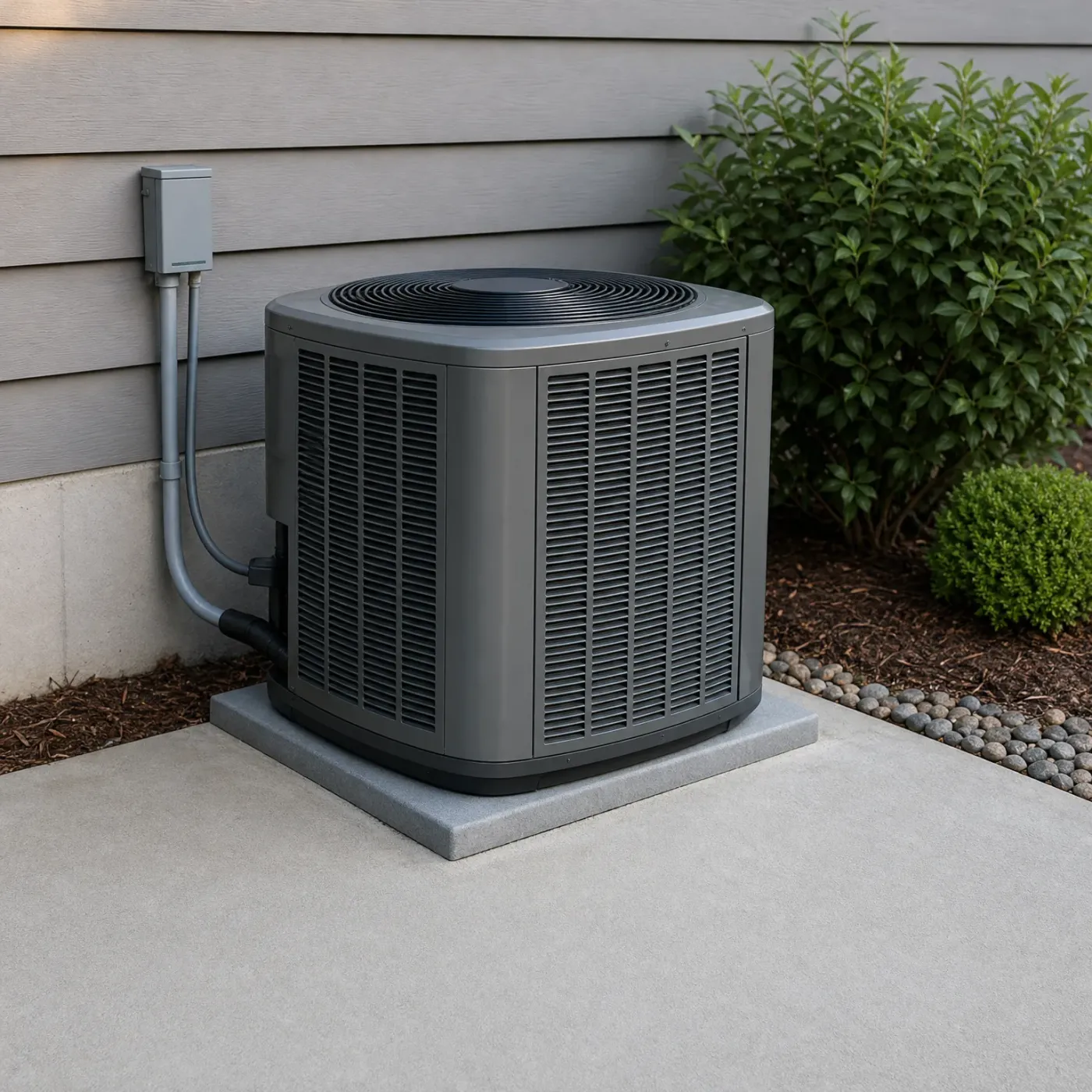
A gray outdoor air conditioner condenser unit on a concrete pad beside a house with horizontal siding and a light stucco wall, with a disconnect box and refrigerant lines on the wall and a shrub and mulch bed at left.

What that buzzing usually is

A buzz from the outdoor unit is often a sign the contactor is sticking, the relay that switches power to the compressor every time your thermostat calls for cooling. Over thousands of cycles through an Iowa summer, the contacts wear down and start to chatter instead of closing clean. It can also be a fan motor losing balance, or a loose panel vibrating against the cabinet. None of these fix themselves, and most get louder.

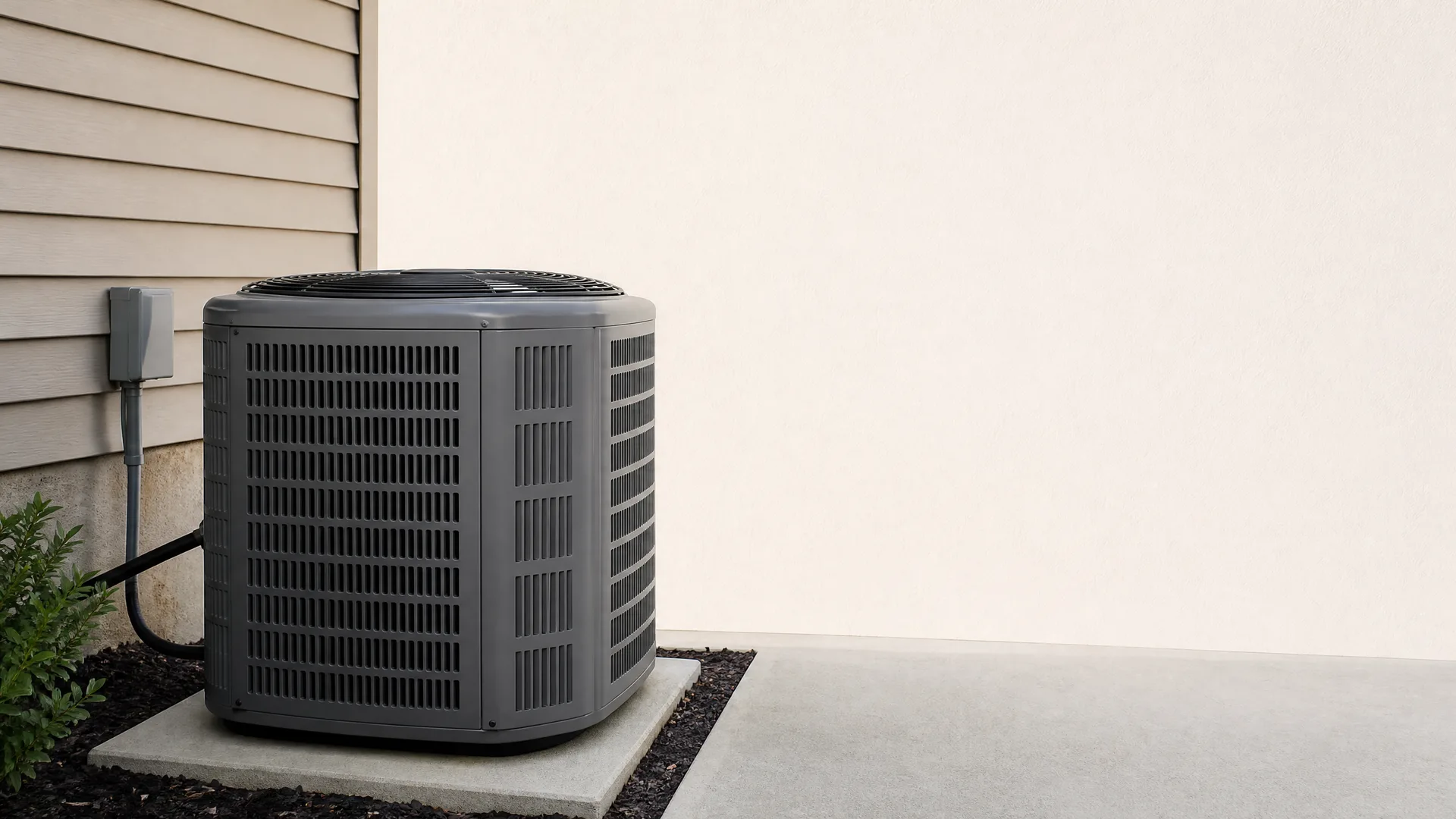
A gray outdoor air conditioning condenser unit on a concrete pad surrounded by gravel, next to a white horizontal-lap-sided house wall with an electrical box and conduit, against a blank white background on the left.

Why summer load makes it worse

Your compressor works harder on the muggy days, pulling more current to force refrigerant through the system and wring moisture out of the air. That extra strain shows up first in the weakest part, whether that's a tired capacitor, a loose fan blade, or electrical contacts already starting to pit. A unit that ran quiet in May can start buzzing in July simply because it's being asked to do more, for longer stretches, with the same worn part.

Is This Buzz Worth Worrying About

Buzz now, runs fine

  • A contactor that sticks a little will often clear itself for a few cycles before it sticks again.
  • If the outdoor fan is spinning normally and the air coming from your vents feels as cold as always, the unit isn't in trouble yet.
  • A loose panel or screw can buzz against the cabinet without touching the electrical side at all.
  • Running it a bit longer won't make a clean contactor fail, so there's no harm in a tech taking a look before anything else happens.
  • Catching it at this stage usually means a single part gets replaced instead of several.

Buzz and something's off

  • If the compressor hums but the outdoor fan isn't turning, the capacitor is likely failing and the unit needs attention soon.
  • A burning smell near the outdoor unit means wiring or a component is overheating, not just a part sticking.
  • If your house isn't cooling down the way it did last week, the compressor may already be struggling to keep up.
  • A buzz that's gotten louder or more constant over a few days points to a contactor that's close to failing rather than just starting to stick.
  • If the unit shuts off on its own and won't restart, something has already tripped a safety switch inside it.
Single-story house with tan horizontal siding and a dark shingled hip roof, fronted by a patchy green and brown lawn and a concrete walkway leading to the covered entry.

Summer air in Iowa holds a dew point around 62°F, averaged across June, July and August, according to NOAA climate data. That's heavy air, the kind that makes your AC run long stretches instead of short bursts just to keep the house comfortable. A contactor that's already sticking gets worked harder under that kind of load, and the buzz you're hearing now is more likely to turn into a unit that won't start at all before summer's over. Once you send the form, you're not the one who has to track down a contractor or sort through calls from different companies. A local contractor who works on units like yours all summer takes it from there.

NASA POWER T2MDEW county cells weighted by homes

Hand off the air conditioner problem

The pro who reaches out is licensed in Iowa.

No fee to send it, and nothing to sign.

What's happening inside the contactor

  • Every start sends about 200 amps through the contactor's contacts for a fraction of a second.
  • That surge is what pits and burns the metal a little more each time the compressor kicks on.
  • Once the surface is rough, the contacts don't close flush and the buzz is the gap arcing.
  • A capacitor losing strength makes the compressor motor labor on startup, which adds load to the same contacts.
  • If the hum keeps going after the outdoor fan is spinning, the contactor is usually the one still cycling.
  • A contractor can test the contactor and capacitor with a meter in a few minutes without opening up the compressor.

The contactor is a switch, nothing more. Your thermostat sends a low-voltage signal down to the outdoor unit, and the contactor closes to let full power through to the compressor. That closing happens every time your AC cycles on, and in an Iowa summer that can be dozens of times a day. Each time it closes, there's a jolt of current as the compressor motor starts up, and that jolt arcs across the contacts for an instant before they seat together. Over a season or two, that arcing wears the metal. The surface that used to be smooth gets pitted and uneven. When the contacts don't sit flush anymore, electricity jumps the small gap between them instead of flowing clean, and that arcing is the buzz you're hearing.

A weak capacitor makes this worse. The capacitor gives the compressor motor the push it needs to start turning, and when it's lost some of its charge, the motor strains longer on startup. That strain pulls more current through the same worn contacts, which means more arcing and a louder, steadier buzz.

None of this is something you can see from outside the unit. But it's quick to check. A contractor can put a meter on the contactor and the capacitor and get a reading in a few minutes, no disassembly needed, and know right away which one is failing and whether it's just the contactor or both parts working against each other.

A woman with dark hair in a bun reclines on a sofa with her eyes closed, wrapped in a cream fleece blanket, a closed blue hardcover book resting in front of her, with a lit lamp and a vase of dried flowers in the background.
A smiling bearded man in a navy sweater sits at a candlelit dinner table with a glass of red wine, a bowl of salad, and plates of food in the foreground.

What keeps running while you wait

A sticking contactor doesn't always quit all at once. Your compressor may keep starting for days or weeks, buzzing louder each time as the contacts wear down further. Meanwhile your AC is pulling the same power, or more, to do the same job, since a worn contactor can make the compressor work harder to get going. You might not notice the difference on a single evening, but across a full Iowa summer of long cooling cycles, that adds up on the bill before anything actually fails.


What happens if it sticks

The risk isn't really the noise. It's the contactor welding shut or failing to release, which can mean a compressor that won't shut off when the thermostat is satisfied, or won't start at all when you need it. A compressor is the most expensive part of your AC to replace, and it's the part most likely to get damaged by electrical arcing left unchecked. Catching a sticking contactor early is a small repair. Letting it run through a hot stretch is how a small repair turns into a compressor replacement.

A smiling man in a dark navy sweater sits on a light sofa in a living room, with a glass bowl of popcorn on a wooden coffee table and bookshelves behind him.
A smiling man in a dark green sweater sits on a tan leather sofa in a dimly lit living room, with a bowl of popcorn in the foreground and a kitchen area blurred behind him.
A smiling middle-aged man in a dark shirt sits on a gray sofa in a living room, with a bowl of popcorn on a side table and shelves, a window and kitchen area behind him.
A smiling bearded man in a dark gray t-shirt sits on a gray couch in a living room, with a large glass bowl of popcorn on a wooden table in the foreground.

The contactor is a small switch, not much bigger than a matchbox, mounted near the bottom of the outdoor unit. Your thermostat sends it a low voltage signal, just 24 volts, and that's enough to pull a set of contacts shut. Once they close, full power runs through to the compressor and fan, and the compressor draws far more current than what closed the switch. When the contacts are clean and flat, that whole motion happens with one snap, quiet enough that you'd barely notice it under the sound of the fan running. Wear changes that. Pitted contacts don't close flush anymore. They touch at an angle, bounce slightly, and chatter against each other instead of making one clean connection. That chatter is the buzz coming from outside your house. It's worth knowing this part works on its own. The compressor isn't necessarily the problem, and neither is the fan motor. A contactor can wear out and get replaced by itself, without the rest of the unit being involved at all.

Inside the contactor

  • The contactor is a small switch with a coil and a set of contacts, not much bigger than a matchbox, mounted near the bottom of the outdoor unit.
  • Your thermostat sends low voltage to the coil, the coil pulls the contacts shut, and that connection is what sends full power to the compressor and fan.
  • Twenty-four volts is all it takes to pull the contacts closed, while the compressor itself draws far more current once the circuit is made.
  • A healthy contactor closes with a single clean snap you can barely hear over the fan.
  • Once the contacts are pitted, they chatter against each other instead of closing flush, and that chatter is the buzz you hear.
  • A contactor can be replaced on its own; it doesn't mean the compressor or any other part is failing.
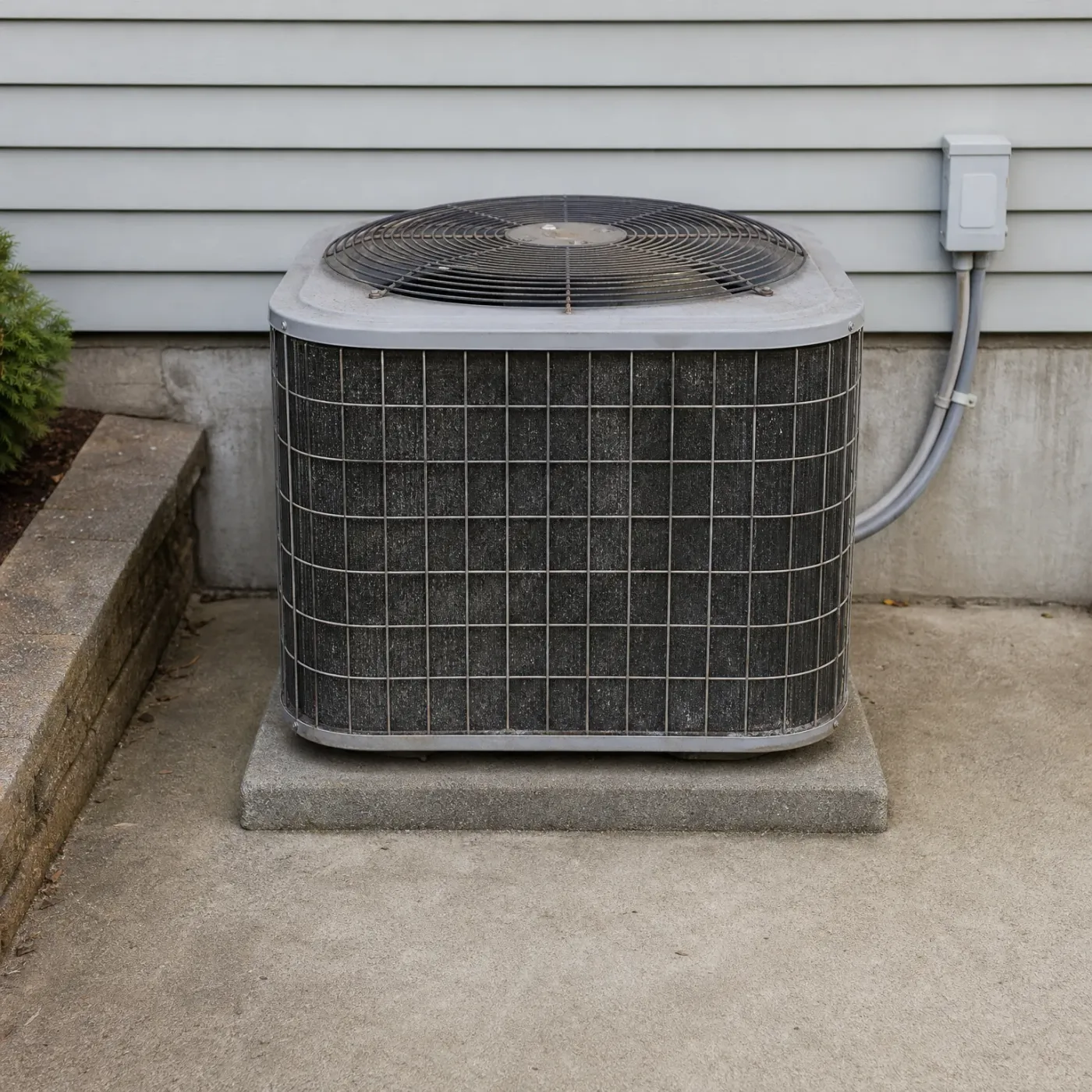
A gray outdoor air conditioner condenser unit on a concrete pad beside a house with horizontal lap siding, with a wall-mounted disconnect box and conduit at left and a green shrub and mulch bed at right.
The unit is clean, the fan spins free, and the air off the conduit box stays quiet from one cycle to the next.
An outdoor air conditioner condenser unit on a concrete pad beside a house with horizontal lap siding, with a conduit running to a gray electrical disconnect box on the wall.
The same cabinet now buzzes every time the compressor kicks on, a sign the contacts inside are losing their grip.

Power costs 13.62 cents per kilowatt-hour statewide

At 13.62 cents per kilowatt-hour, running a worn contactor a little longer each day costs you less here than it would in most states. That's not a reason to leave it alone. A compressor that keeps re-striking on bad contacts wears out long before the power bill tells you anything's wrong.

EIA-861 2025 statewide residential average

That buzz is the contactor telling you it's wearing out, and it won't fix itself. Left alone, it gets louder and the compressor takes the damage, not the power bill. Getting it looked at now means a clean fix instead of a compressor replacement later. When you send in your request, it goes to one contractor, not a handful of companies competing for your business, someone local who works on Iowa AC units all summer and knows a sticking contactor the moment they hear it over the phone or see the unit running. They've seen this exact noise on hundreds of outdoor units in this kind of heat and humidity, and they know what to check first. You won't be stuck making calls or comparing quotes. Once you send the request, finding the right person for the job stops being something you have to manage. You just wait for the call back and let someone who does this every day take it from there.

Close view of a dark standing-seam metal roof with a stone chimney and metal flue cap, overlooking a wide river, trees, and flat farmland under a partly cloudy sky.

Let someone else find the pro

Hand it over

Sending the form costs nothing.

A contactor rarely fails clean. It buzzes for days first, chattering a little louder each time the compressor starts, while the rest of the unit runs like normal. Catching it at the buzzing stage is what keeps this a small repair instead of a compressor job.