

Dust burning off, then gone
A unit that just kicked on for the first time in weeks can smell faintly hot for a few minutes as dust bakes off the coil and wiring. If the smell fades on its own and doesn't return, that's what happened. Nothing to fix.
One form replaces the calls you'd make to find an air conditioner pro.
Skip the callsA burning smell from your AC usually means dust burning off a component that just kicked on, or it means a wire or a motor is actually overheating. If your system sat unused for a stretch before this latest stretch of muggy weather, a light burning smell for a few minutes after startup can just be dust on the coil or heating elements. It should fade fast. A smell that lingers, gets stronger, or smells sharp and electrical, like burning plastic or rubber, is different. That points to a motor working too hard, a failing capacitor, or wiring insulation breaking down inside the unit. Running the system in that state risks the motor itself or, in worse cases, a fire. If the smell is faint and brief, give it a few minutes and see if it clears. If it is strong, sharp, or comes back, shut the system off at the thermostat and don't run it again until someone has looked at it.
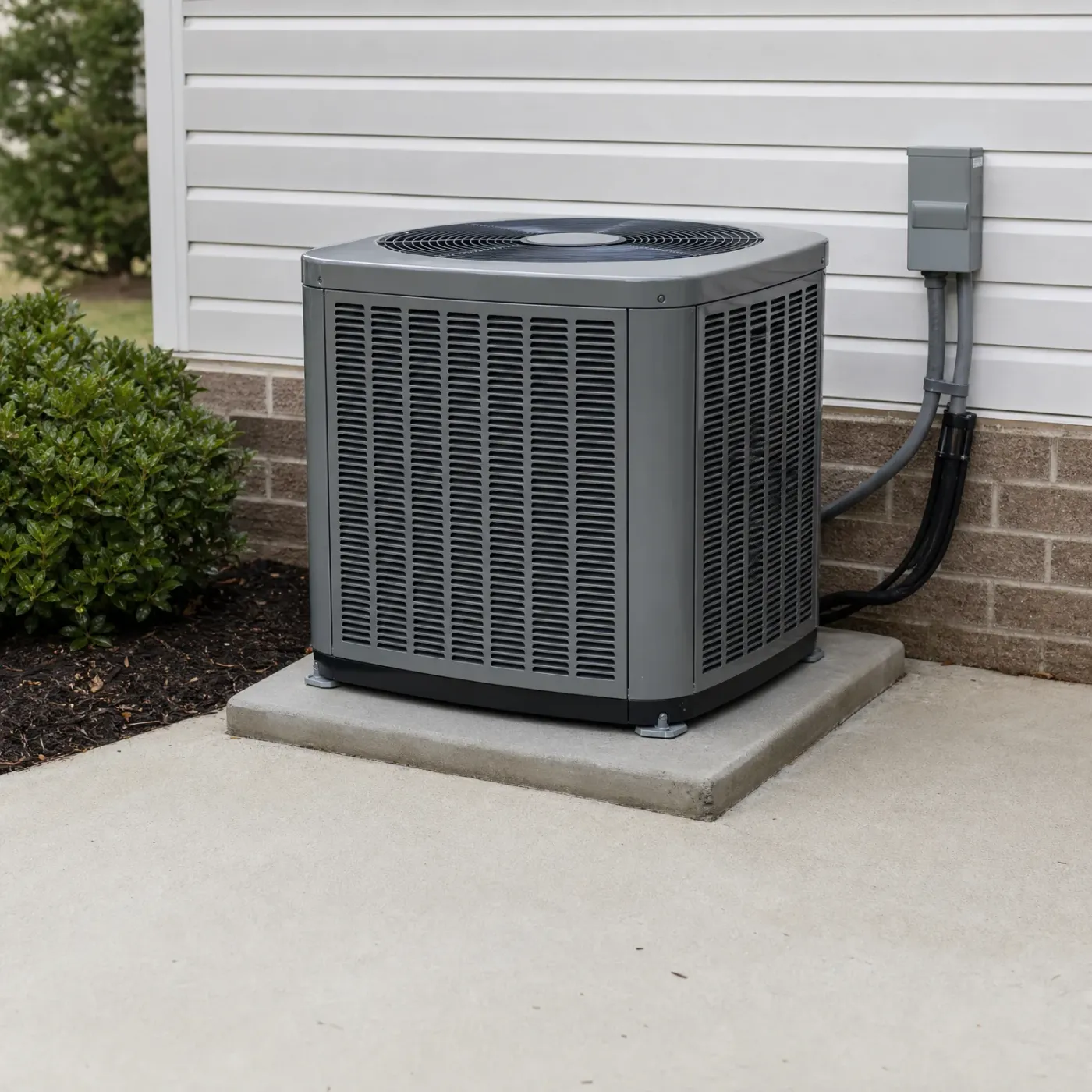
A unit that just kicked on for the first time in weeks can smell faintly hot for a few minutes as dust bakes off the coil and wiring. If the smell fades on its own and doesn't return, that's what happened. Nothing to fix.
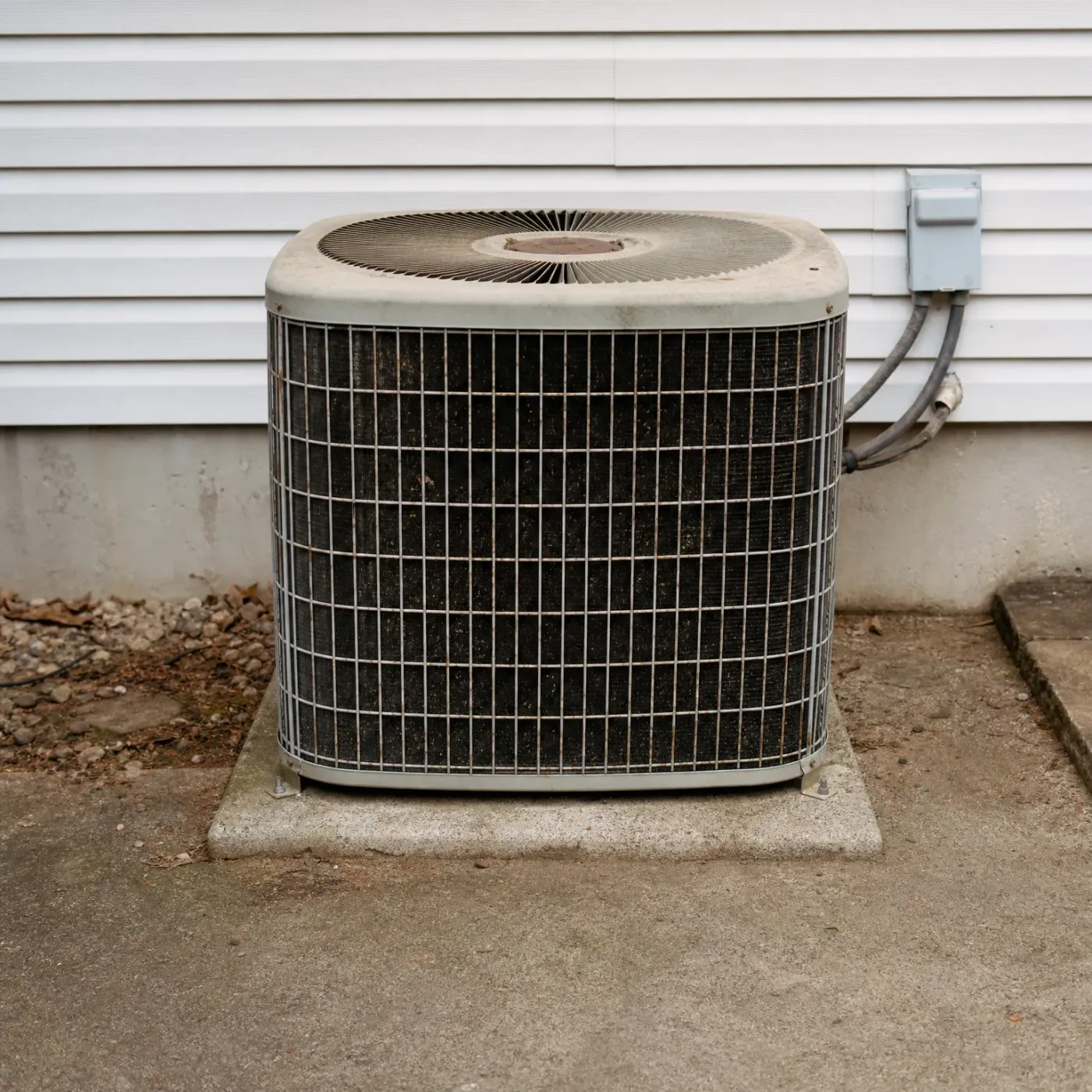
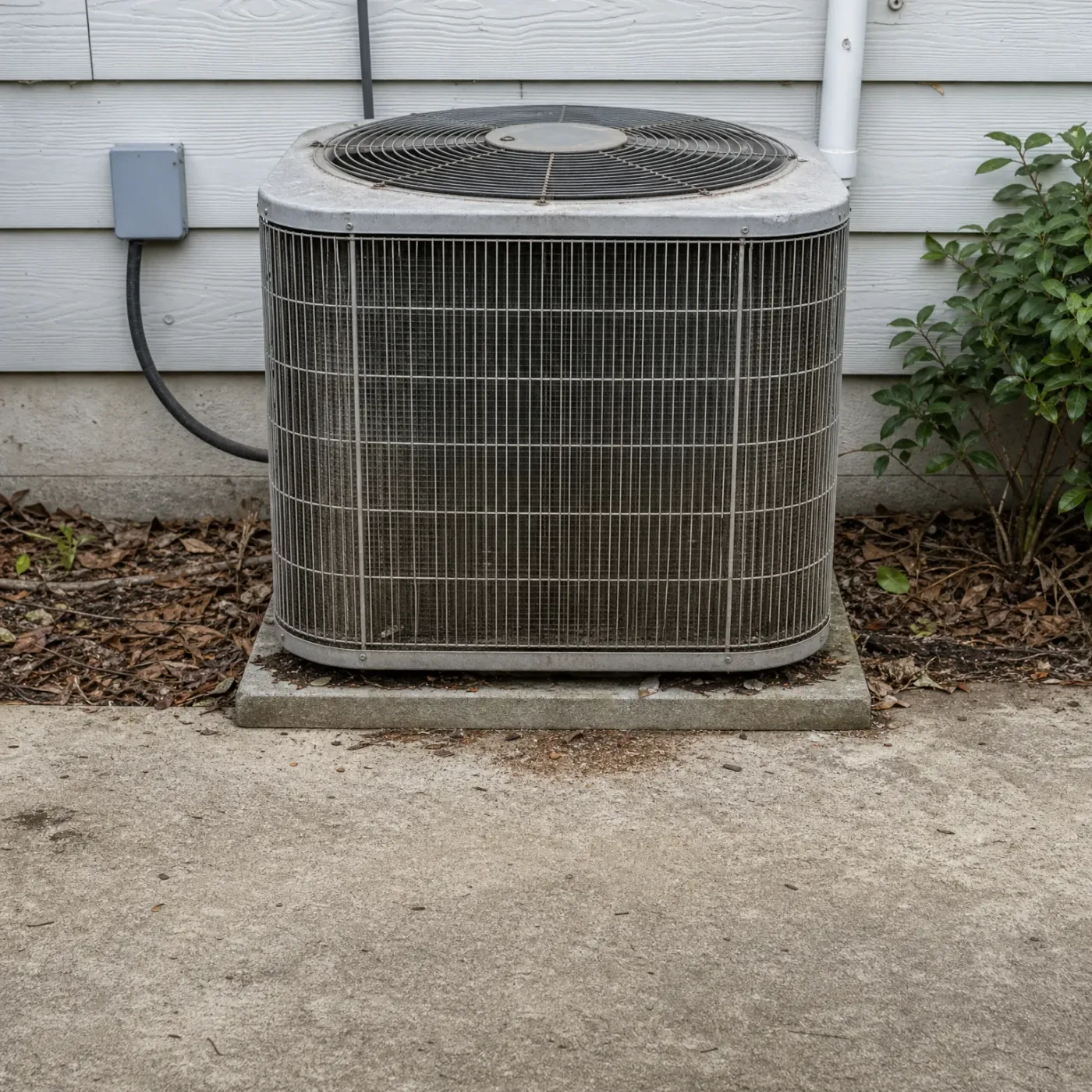
A grille and top cover caked with dirt like this traps heat around the motor and wiring instead of letting it shed. The burning smell on a unit this dirty tends to hang around or come back, and it points to a motor or electrical problem a contractor needs to check.
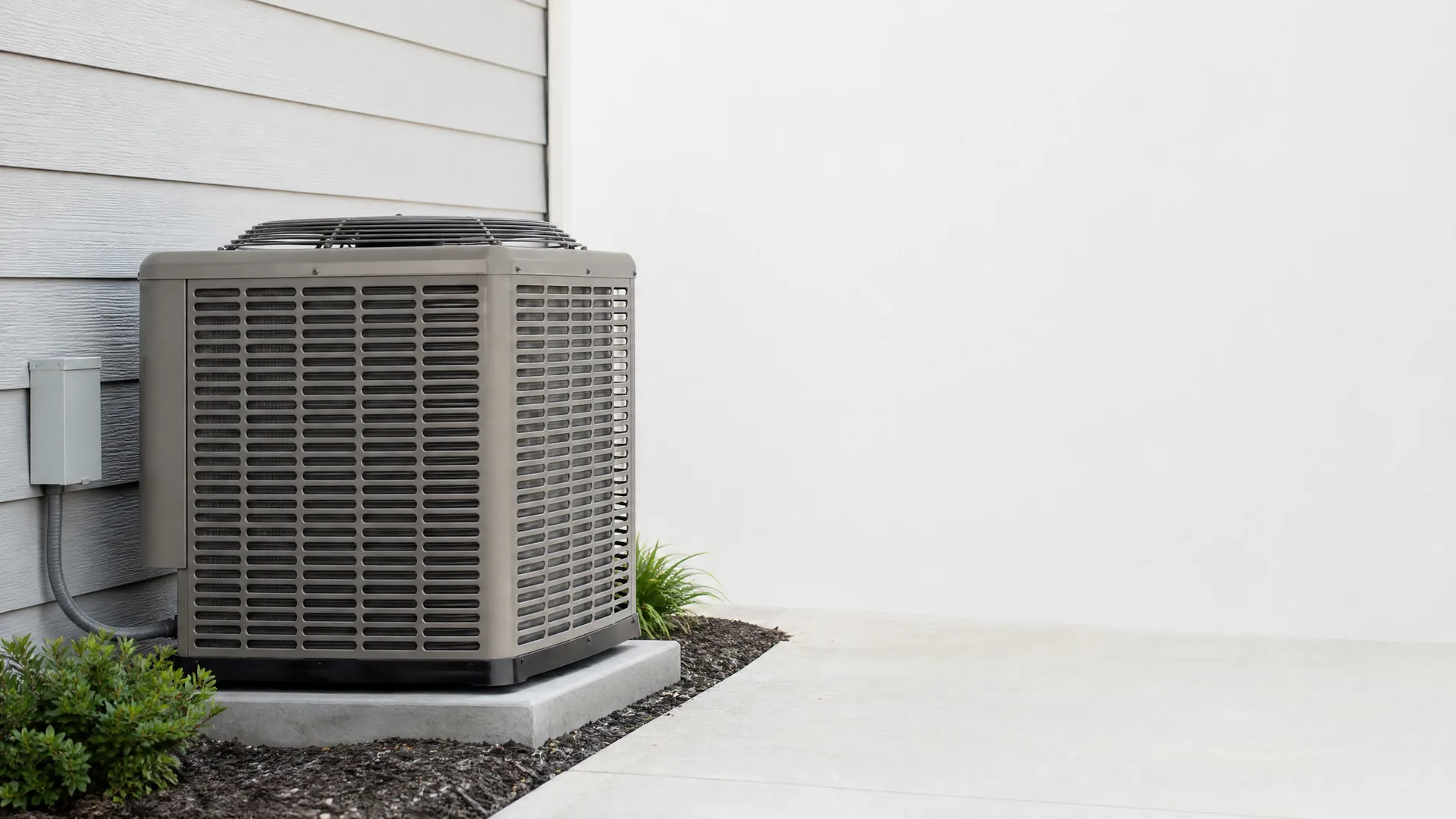
The outdoor fan motor and the compressor both work against Iowa's humidity, not just the heat. Humid air holds more moisture for the coil to pull out, so the system runs longer stretches to get the same cooling. A motor bearing that's starting to wear can run fine in short bursts but heat up and smell during one of those long muggy-day runs.
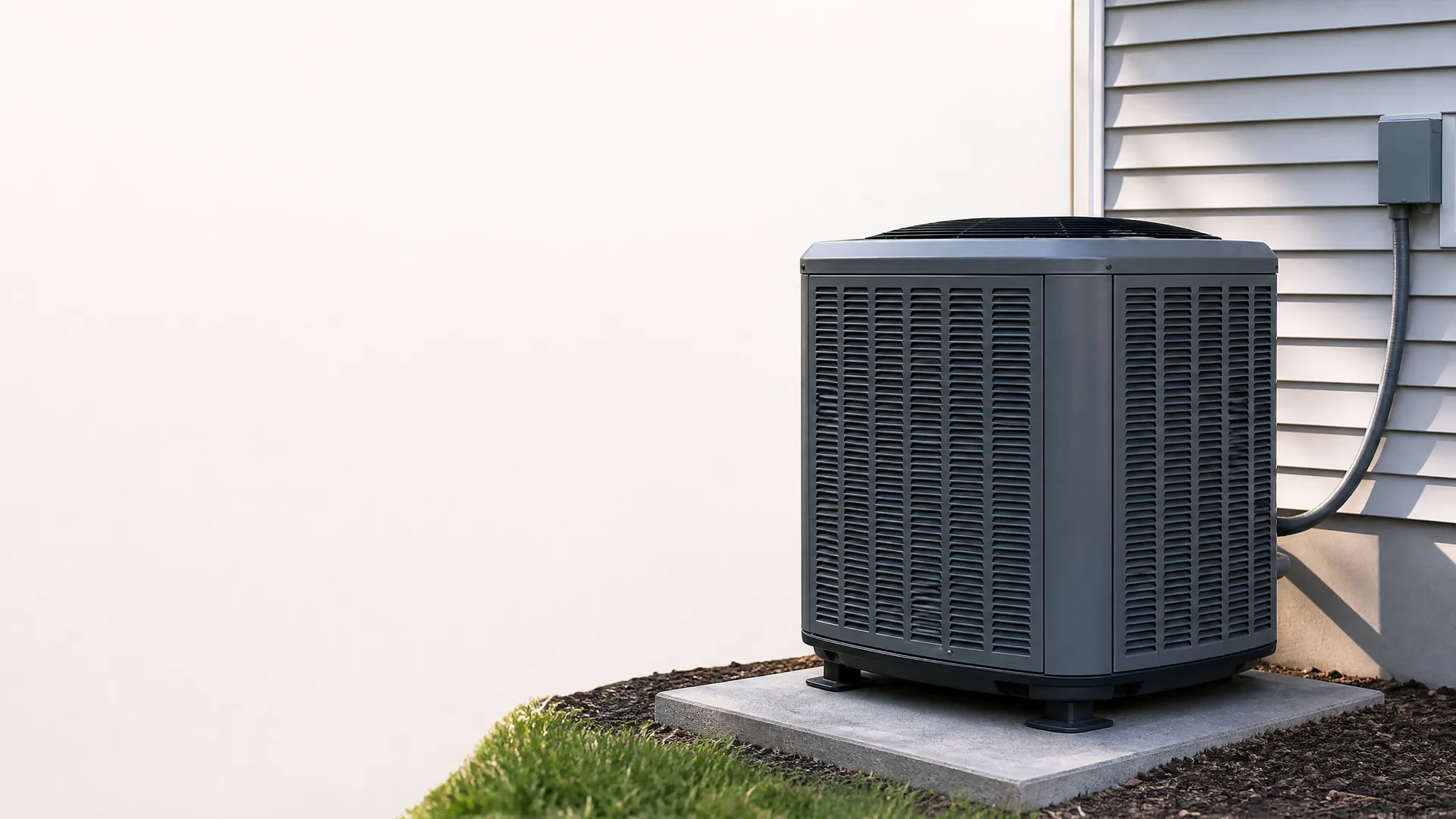
Inside, a burning smell usually traces back to the blower motor or the wiring at the furnace cabinet, since that's where the air handler lives in most Iowa homes with gas heat. A motor that's failing can smell hot before it ever stops running. Wiring that's loose at a connection will do the same, and that one needs a licensed contractor to find and fix.
At 13.62 cents per kilowatt-hour, every extra hour your AC runs to chase down a burning smell shows up on the bill fast. A motor or capacitor that's overheating doesn't just risk damage, it pulls more power while it struggles, so a quick repair now costs less than letting it run that way through a muggy Iowa week.
EIA-861 2025 statewide residential average
If that smell is coming from a motor or a wire and you keep running the system anyway, you're not looking at a bigger repair bill later. You're looking at a dead compressor or a house fire risk, either one, starting from a smell you noticed today.
Shut the system off at the thermostat or the breaker until someone who works on this equipment can look at it. A short wait beats finding out which one it was the hard way.




Your request stays with one local pro.
No charge to send it. You decide if you hire them.
If the smell is faint, came right after the system kicked on, and is already fading, you can let it finish that cycle. Dust on a coil or a heating element burns off in a few minutes and doesn't come back. Open a window if the room allows it and check back in ten minutes. If the smell is gone and stays gone, the unit is fine to keep running the rest of the afternoon.
A smell that's sharp, smells like hot plastic or rubber, or keeps coming back every time the system cycles on means something electrical is heating up that shouldn't be. Keep running it and you risk a motor burning out for good or wiring arcing inside the unit. Shut the system off at the thermostat, and if you can get to it safely, flip the breaker too. A contractor who works on these units every summer can tell you in one visit whether it's a stuck motor, a bad capacitor, or something in the wiring, and fix the right one instead of guessing.
Dust or debris on the coil heats up and starts to smoke.
A failing capacitor forces the motor to draw extra current.
The overloaded motor windings heat past their rated limit.
Wire insulation softens and melts against the hot motor casing.

You're out on the patio around seven, the air still thick from the day, grilling or just sitting while the kids run through the yard. The condenser by the fence has been humming most of the afternoon, keeping up with the heat. Then you notice it's quiet. Not off, the unit's still powered, but the fan on top has stopped spinning. A few seconds later you catch it, a hot, oily smell drifting over from that corner of the yard. The light's gone gold and low, the kind of evening that's usually easy. You walk over and put a hand near the vents on the side, not touching, just checking. The smell is stronger up close.

A faint smell that fades after a few minutes is dust burning off a coil that just started running after sitting idle. A smell that holds steady, smells electrical, or comes with the system tripping its breaker means a motor, capacitor, or wire is overheating, and it needs a technician before the unit runs again. You now know which one you're dealing with.
If it's the second kind, you don't have to start from nothing. Instead of searching around and calling a few companies to describe the smell over and over and weigh their quotes against each other, you get matched with one licensed contractor local to Iowa, someone who deals with condensers straining through muggy summers every season and knows what a burning smell from a motor versus a coil actually means on a service call. You explain it once, to the person who's coming to fix it.



Describe it once
Your request goes to one pro, not a list of companies.