



Get AC Iowa

Why your AC outdoor fan isn't spinning in Iowa

Step 1 of 3: Equipment

Why is my AC outdoor fan not spinning?

You go out to check the outdoor unit on a hot July evening and the fan on top isn't turning, even though the system is running inside. In Iowa summers, with the humidity sitting heavy for months, a dead fan on the condenser means the heat your AC pulls out of the house has nowhere to go. You want to know why it stopped and whether it's something that can wait until morning.

A bad capacitor, a failed fan motor, or a tripped breaker is usually why

The outdoor fan pulls air through the condenser coil to get rid of the heat your AC collects from inside the house. When it stops, the most common cause is the capacitor that gives the motor its starting kick. A capacitor can wear out after years of running through Iowa's hot, sticky summers and leave the motor unable to start even though it still hums. The motor itself can also just fail, especially after enough seasons of heavy summer use. Sometimes it's simpler: a tripped breaker or a blown fuse cuts power to the outdoor unit entirely. Whatever the cause, the compressor can keep running without the fan, and that builds heat fast. Left alone, it risks a compressor that overheats and shuts down or fails for good.

  1. Thermostat calls for cooling and sends power to the outdoor unit

  2. Contactor pulls in, feeding power to the compressor and fan motor together

  3. Compressor starts drawing in refrigerant gas to begin the cooling cycle

  4. Fan motor should spin the blade to pull air across the condenser coil

A smiling bearded man in a dark green hooded jacket and blue t-shirt sits on a couch in a living room with shelves, a potted plant, and a bowl of popcorn on a wooden table.
A smiling man in a green long-sleeved shirt sits on a beige sofa in a living room, with a bowl of popcorn in the foreground, a large potted plant and shelving behind him.
A smiling man in a dark blue T-shirt sits on a couch in a dimly lit living room with a bowl of popcorn and a remote on a wooden table, a lit floor lamp and bookshelves behind him, and windows showing greenery.
A smiling bearded man in a dark green long-sleeved shirt sits on a leather couch in a living room, with a bowl of popcorn and a remote control on a wooden table in the foreground.
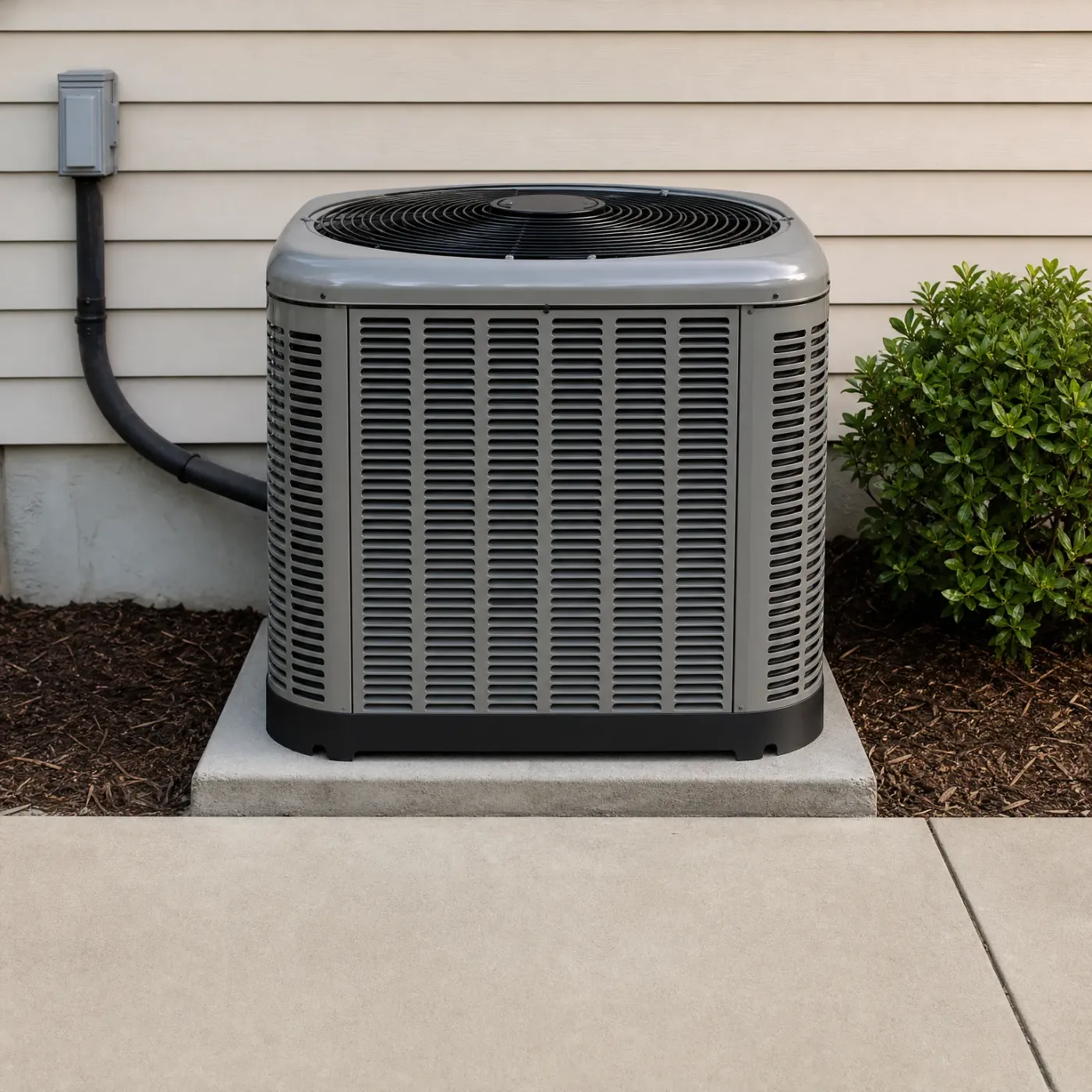
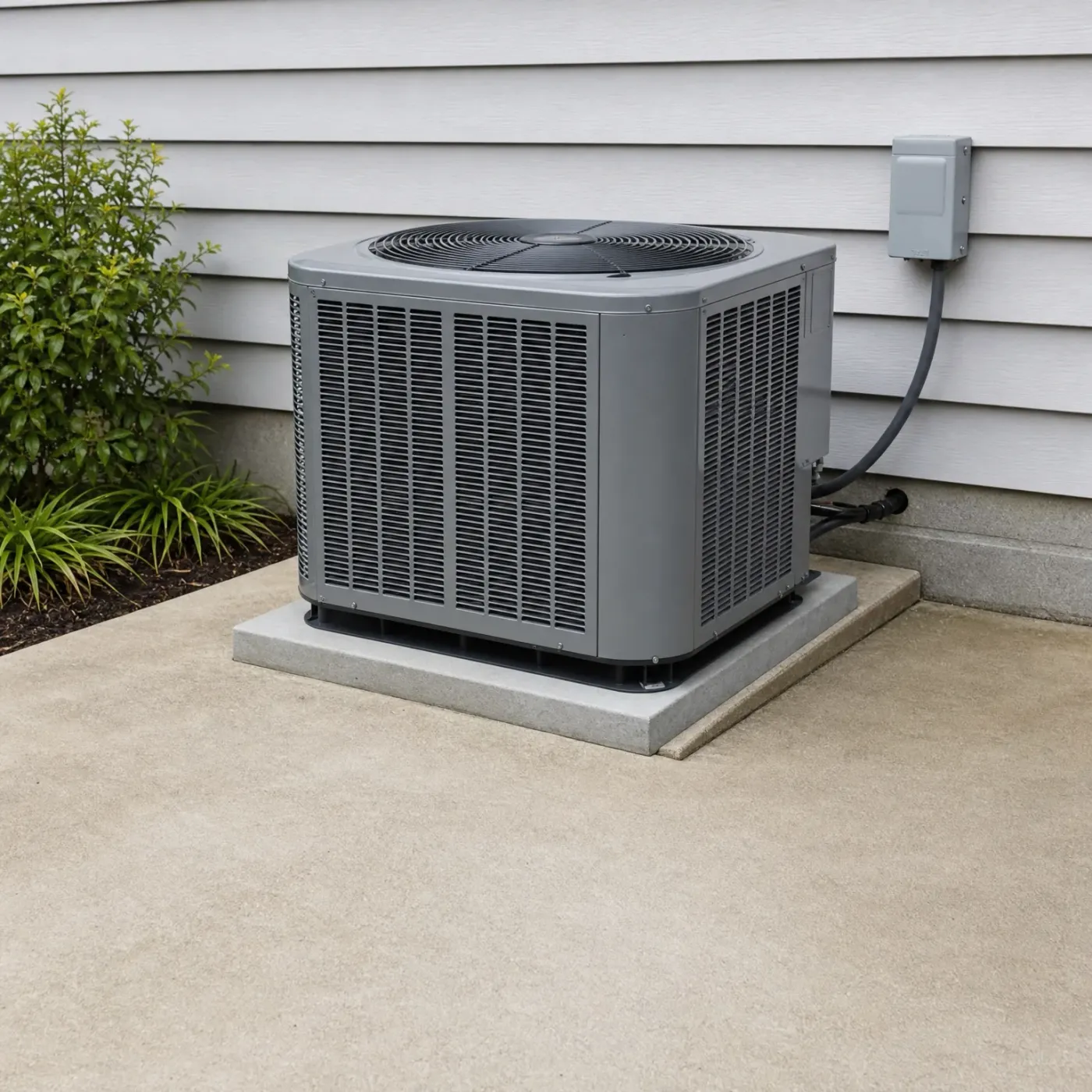
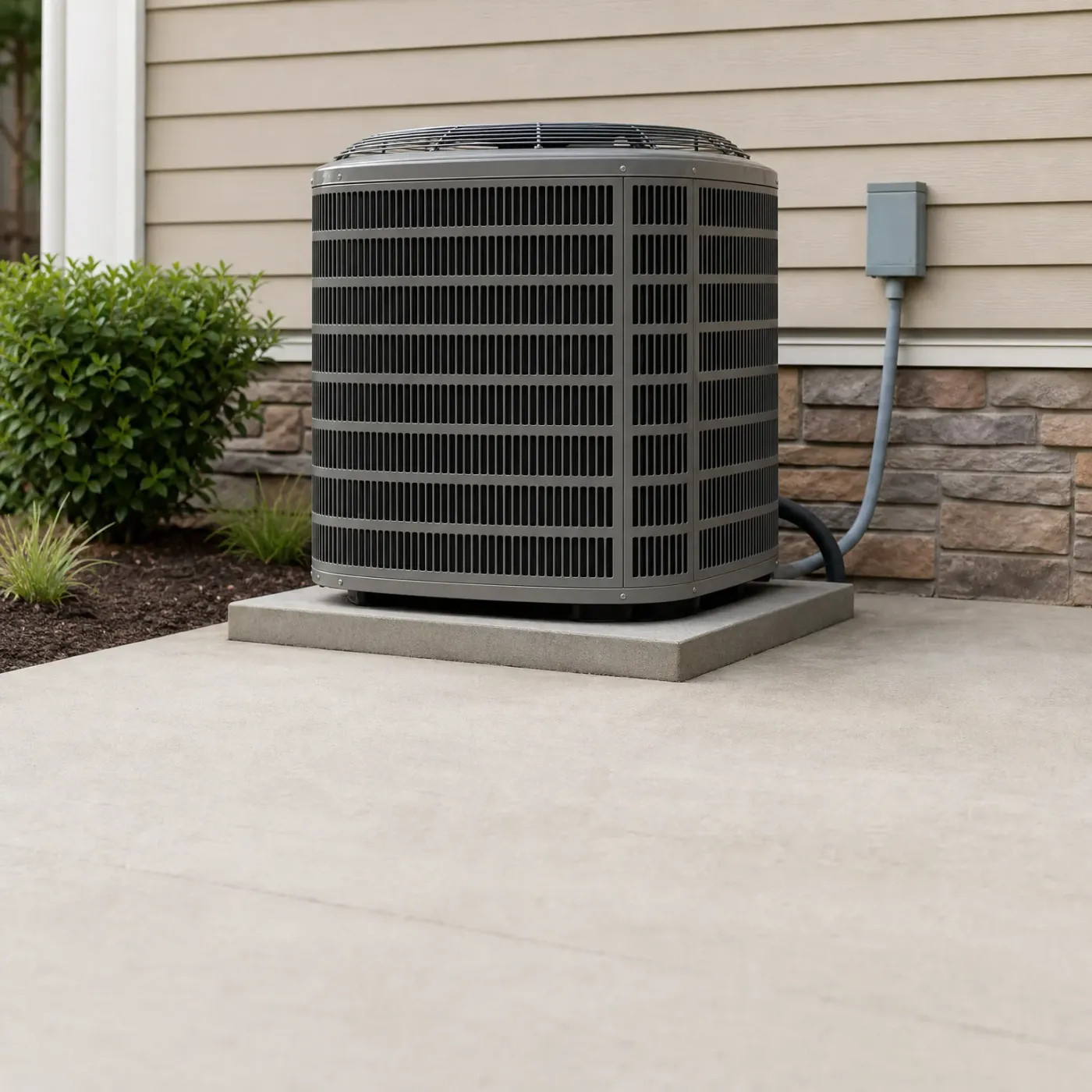
A gray outdoor air conditioning condenser unit on a concrete pad beside a house with horizontal siding and a stone veneer base, with a wall-mounted disconnect box and conduit, next to a shrub bed and a concrete patio.

The fan spinning the way it should

Air pulls up through the grille and the blade turns steady while the compressor hums below it. Warm air coming off the coil goes straight out the top. The unit can shed heat as fast as the compressor makes it, so the system inside keeps up with the thermostat even on a sticky evening.
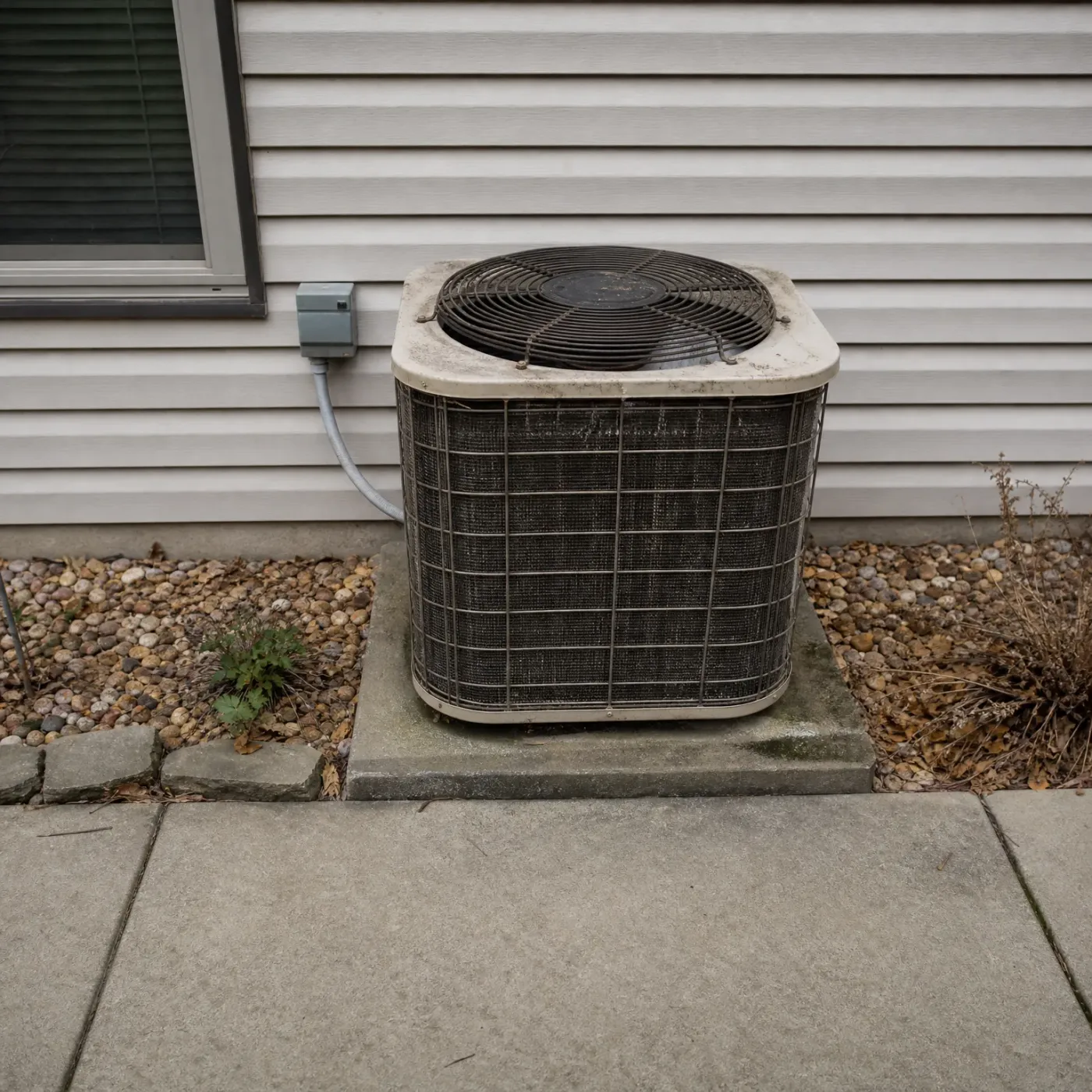
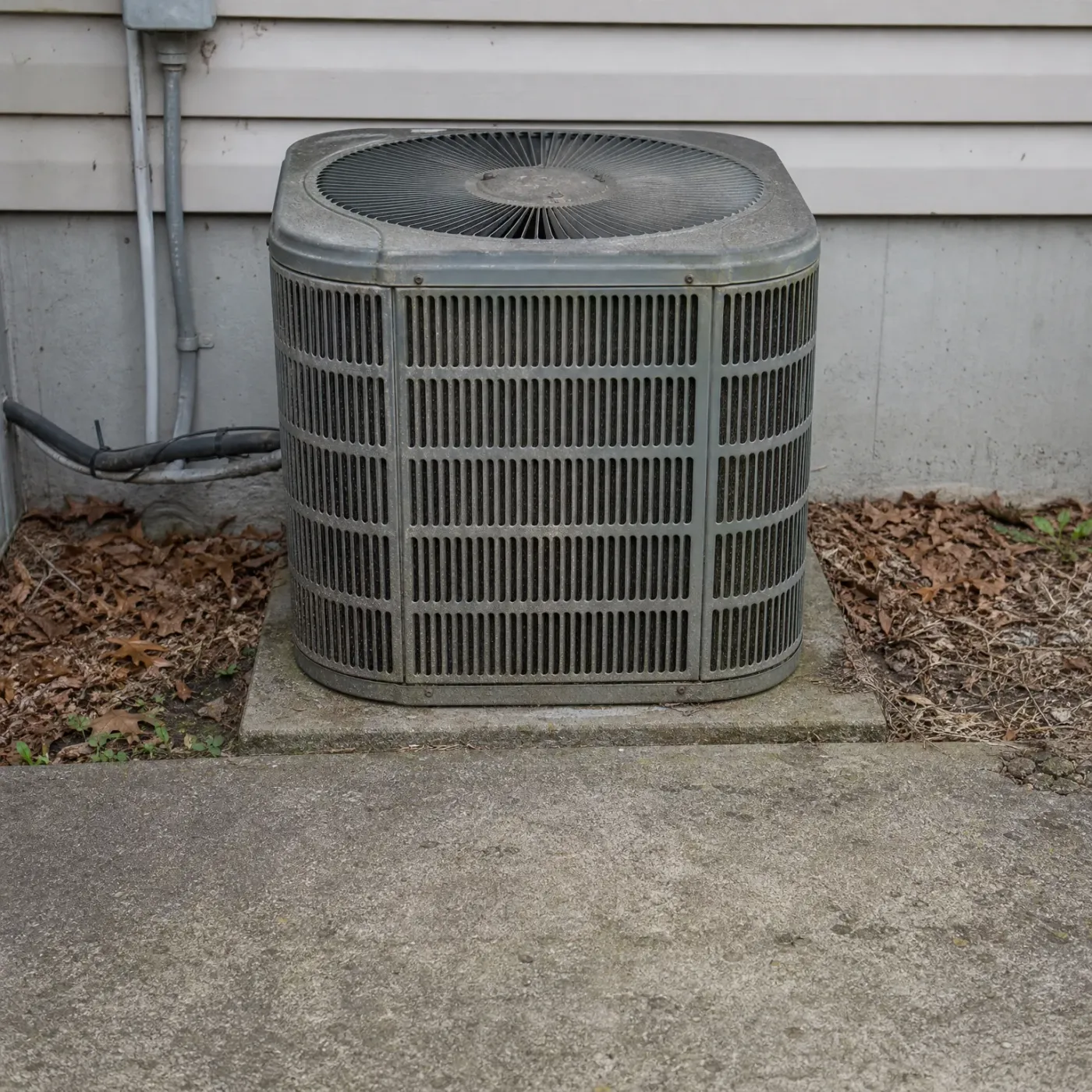
An outdoor air conditioner condenser unit on a concrete pad beside a house with light gray vinyl siding, with a gray electrical disconnect box and conduit on the wall, gravel beds and dried plants nearby, and a concrete sidewalk in the foreground.

The fan stopped on a unit like this

Weeds have grown in around the pad and the housing shows its age under the gravel bed. A motor that's run every summer for years wears down, and on an older unit the capacitor that gives it the first kick to spin is often the first thing to go. With the fan stopped, heat has nowhere to go and the compressor behind that disconnect box is working against it.

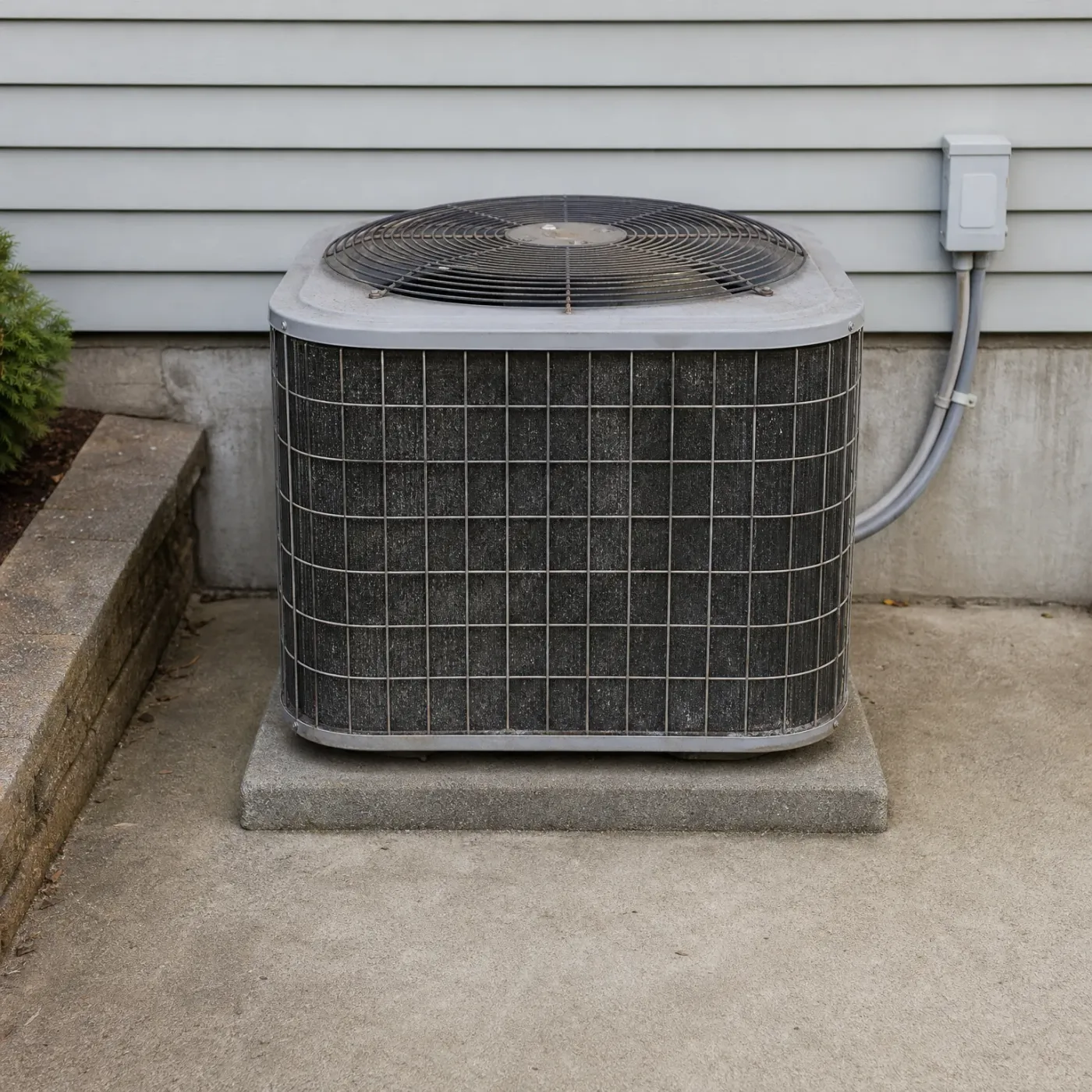
A weathered outdoor air conditioner condenser unit on a concrete pad beside a house with horizontal vinyl siding, with a conduit and disconnect box on the wall to the right.
Before you get your air conditioner repair
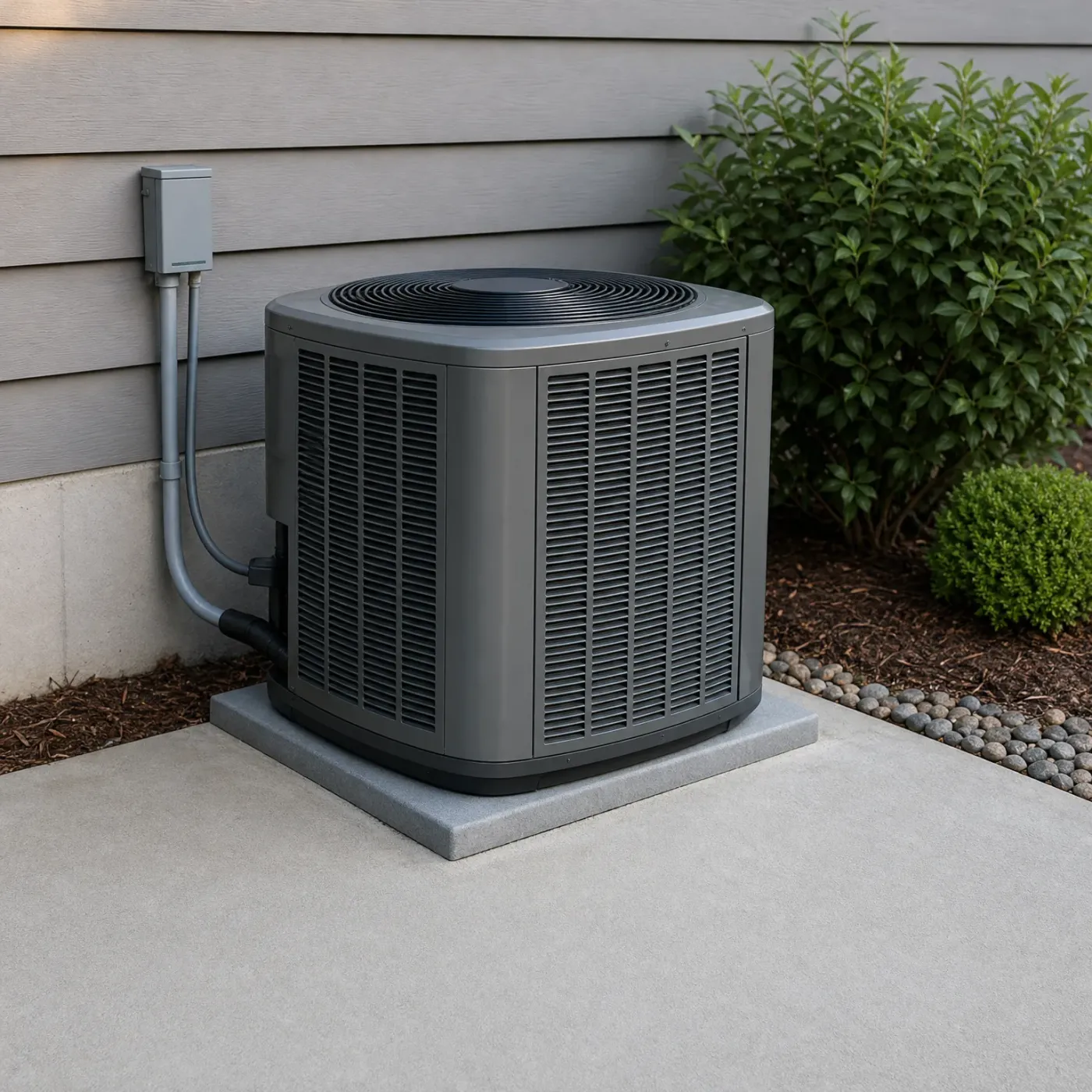
A gray outdoor air conditioning condenser unit on a concrete pad beside a house with horizontal lap siding, with a conduit and electrical disconnect box on the wall and a green shrub in mulch to the right.
After you get your air conditioner repair

Once that fan stops, the compressor is still working, still drawing power, still trying to push refrigerant through a coil that has no airflow over it. Heat has nowhere to go. Pressure builds inside the system, and the compressor is the part that pays for it. That's the expensive part to replace, and it's working hardest right when it's least protected. Meanwhile the house stops keeping up. You might notice it first upstairs, where the air sits warmer no matter what the thermostat says, or in how sticky the rooms feel even with the system running. Iowa summers already carry a lot of humidity, and a system that can't move air across the coil can't pull moisture out of the house either. Some units will shut themselves down once the compressor overheats, which means no cooling at all until someone gets out there. Other times the fan motor is still running, just not turning the blade, so it sounds like the unit is working when it isn't doing anything useful at all.

What a Stuck Fan Costs You

  • With the fan stalled, the compressor keeps running but the outdoor coil can't shed heat, so pressures inside the system climb fast.
  • A compressor that overheats or trips its internal protection can shut the whole system down, leaving the house without cooling on a hot afternoon.
  • Indoor air stops getting cooled the way it should, so rooms upstairs can stay warm even with the thermostat set low.
  • Letting the unit run this way for days risks damage to the compressor itself, which costs far more to replace than a fan motor.
  • Humidity inside the house climbs along with the temperature, since a struggling system can't pull moisture out of the air as well as it should.
  • Some fan motors hum or click without turning, which still means the outdoor unit is drawing power while doing none of the cooling work.
A woman in a dark gray sweater reclines on a couch with her eyes closed and a knit blanket over her lap, an open book resting face-down in front of her, with a lit table lamp and shelving blurred in the background.
A bearded man in a dark navy sweater over a collared shirt smiles and looks off to the side while seated at a dinner table with a glass of red wine, a lit candle, and a plate of food in the foreground of a dimly lit room.

Hand off the search today

A still fan on a muggy July night in Iowa isn't something to sit on. The compressor keeps pulling current with nowhere to put the heat, and a unit left running like that can trip its own protection or burn out trying. That doesn't wait for a cooler stretch of weather to come back and bite you. Getting someone out to look at it is the one step that matters now, and the person who shows up should be someone who works on these outdoor units all summer in this climate, who's seen the capacitors that give out in the heat and the motors that seize after years of running through Iowa humidity. Send the request through and it goes to one local contractor who takes it from there, so you're not stuck fielding calls while your house sits warm. That's the part you can hand off. The fan, the coil, the heat that needs somewhere to go, that's what gets sorted once it's in someone's hands who does this for a living.

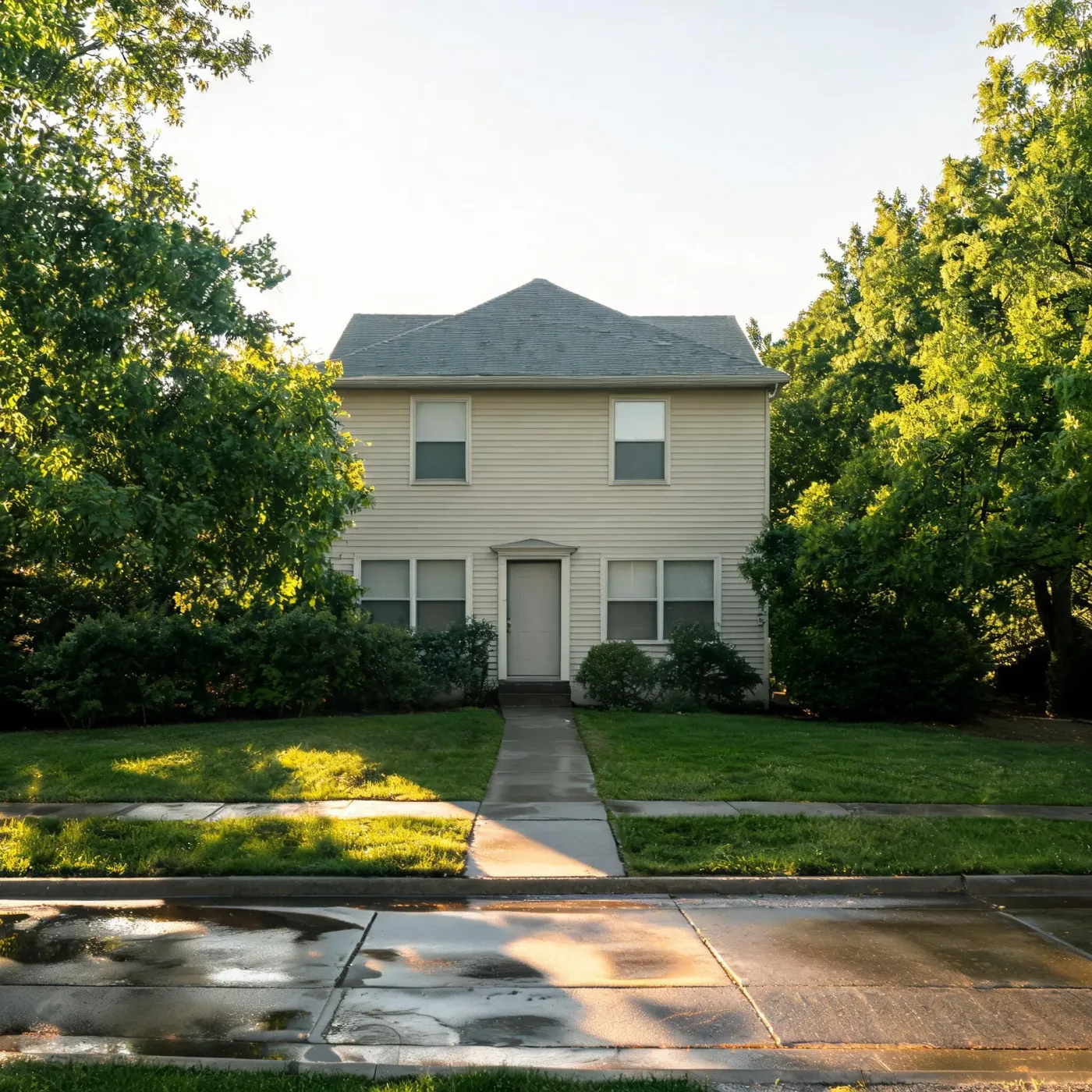
A two-story cream-colored house with horizontal siding and a gray hipped roof, flanked by large green trees and shrubs, with a concrete walkway crossing a lawn to a wet street in the foreground.

Summer dew points in Iowa average 62°F across June, July and August, a figure the National Weather Service tracks to show how much moisture the air is actually holding. That's heavy enough that your air conditioner isn't just cooling the house, it's wringing a lot of water out of the air to keep things comfortable. A system working that hard already has little room for a problem like a stalled fan. When the outdoor fan stops, the unit can't shed the heat the compressor is pulling in, and in air this thick that strain shows up fast, not after a few days of sitting idle.

NASA POWER T2MDEW county cells weighted by homes

A gray outdoor air conditioner condenser unit on a concrete pad beside a house with horizontal lap siding, with a wall-mounted disconnect box and conduit at left and a green shrub and mulch bed at right.
The blade spins the moment the compressor kicks on, moving steady air out the top grille without delay.
An outdoor air conditioner condenser unit on a concrete pad beside a house with horizontal lap siding, with a conduit running to a gray electrical disconnect box on the wall.
The blade sits still against the housing while the unit inside the house keeps running and the compressor strains alone.

What's Actually Keeping That Fan Still

  • A failed run capacitor is the most common reason a fan motor won't start even though you hear the compressor.
  • A seized or worn bearing in the fan motor can keep the blade from turning even with full power reaching it.
  • A fan motor can hum without spinning when its windings have burned out internally from age or a power surge.
  • Debris like cottonwood seed or grass clippings packed around the blade can jam it even when the motor itself is fine.
  • A bad capacitor often lets the blade spin if you give it a push by hand, which points straight at that part.
  • A tripped high pressure switch can shut the whole outdoor unit down, not just the fan, if pressures climb too far.

The capacitor is where most of these calls end up. It gives the fan motor the extra push it needs to start spinning, and once it weakens, the motor can sit there humming with full power reaching it and still not turn. That's also why a stuck blade sometimes starts moving again if you shut the system off and give it a gentle spin by hand. If it takes off on its own after that push, the capacitor was likely the problem all along. A worn bearing tells a different story. The motor shaft binds up from age or grit working its way in, and no amount of power will push the blade past that resistance. Burned windings are further down the line and harder to miss once you know to listen for it, a motor that hums but never catches, the windings having given out from years of running or a surge that got through. Sometimes the motor and the capacitor are both fine and the problem is simpler than that. Cottonwood seed, grass clippings, even a stray plastic bag can pack in around the blade tight enough to stop it cold. And sometimes the fan isn't the actual failure at all. If pressures inside the system climb too high, a high pressure switch can cut power to the whole outdoor unit, fan included, as a way of protecting the compressor from damage.

Power costs 13.62 cents per kilowatt-hour statewide

At 13.62 cents a kilowatt-hour, running your outdoor unit costs you less here than in most states. That's worth knowing because when the fan motor fails, the compressor doesn't stop pulling current, it just works harder with nowhere to put the heat. Cheap power won't keep that from shortening the compressor's life.

EIA-861 2025 statewide residential average

A gray outdoor air conditioning condenser unit on a concrete pad beside a house with horizontal lap siding, with a wall-mounted disconnect box and conduit, and shrubs to the left.

Unit running clean

This is what you want to walk past without a second look. Fan spinning steady, pad clear, conduit running neat down the wall to the disconnect. Nothing on the ground around it, nothing dragging on the housing. A unit kept clear like this gives the fan motor and capacitor one less reason to fail early.

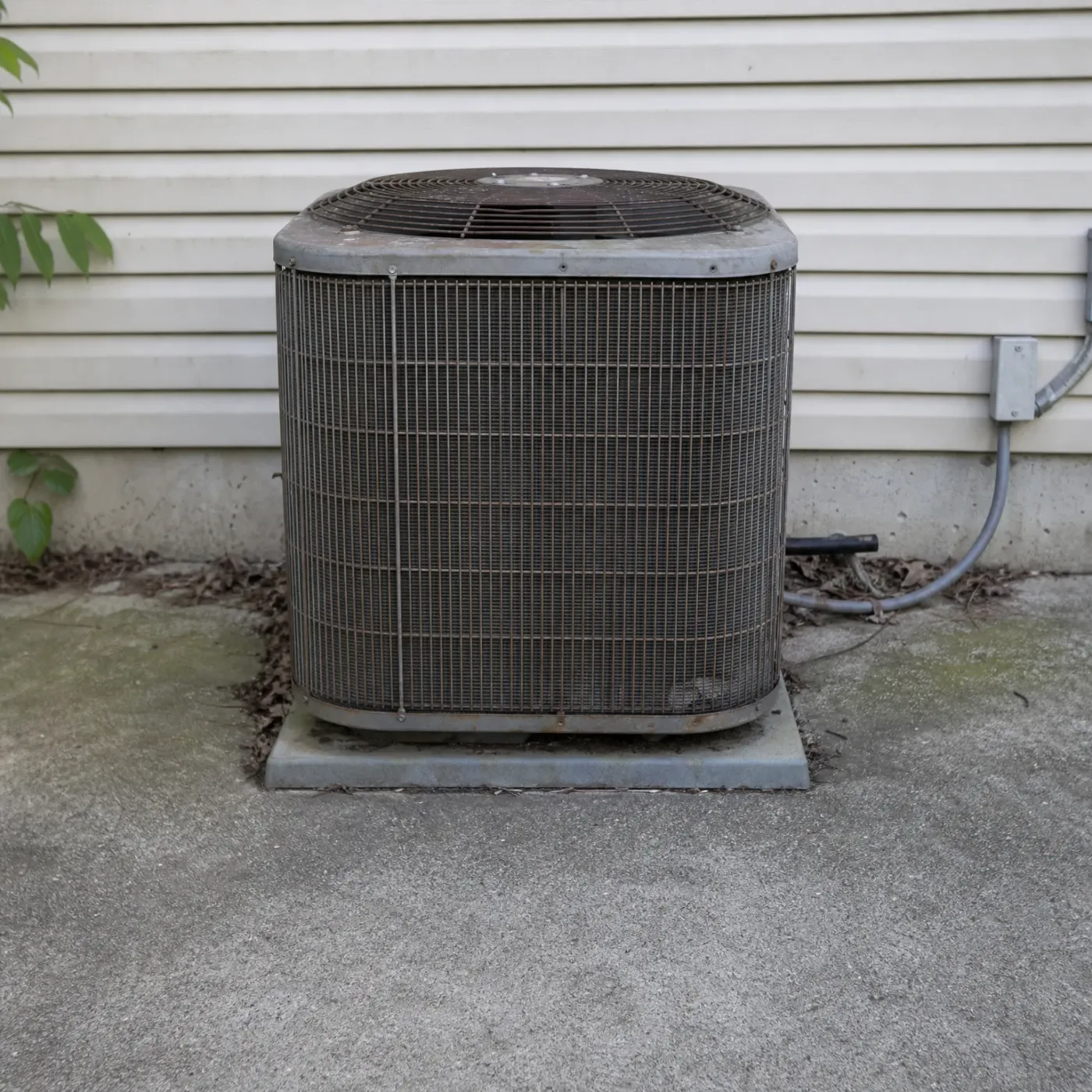
An outdoor air conditioning condenser unit on a concrete pad beside a house with horizontal siding and a concrete foundation, with dry brown leaves on the ground to either side.

Unit worth a closer look

Leaves packed against the cabinet, grime built up on the coil, a season or two since anyone looked at it. None of that stops a fan on its own, but it crowds the motor and traps heat the unit needs to shed. If the blade's not turning on a unit that's sat like this, a tech needs eyes on it.

A fan that isn't spinning while the compressor runs almost always comes down to a bad capacitor, a worn motor bearing, or a control board that's lost its signal to the fan. None of those get better on their own, and the compressor pays the price every hour the blade sits still. Finding that out doesn't take a guess. A licensed contractor working near you sees this exact failure every summer, on the same brands and the same units that sit out in Iowa heat season after season, and knows which of those three to check first. You'll be matched with one contractor, not a handful calling you back at once, so the person who shows up already has a read on what's likely wrong before they lift the panel. The fan might just need a part swapped. It might be telling you the compressor is already stressed. Either way, you'll know what you're dealing with instead of standing in the yard listening to a unit strain against the heat.

A lit ceramic table lamp with a linen shade sits on a round wooden side table with a small vase of greenery and a dark shallow bowl, beside a beige upholstered sofa with a cushion and knit throw, below a framed artwork on a pale wall.
Corner of a beige linen sofa with a large woven cushion and a fringed knit throw, beside a potted leafy tree in a woven basket against a neutral wall.
Sunlit interior corner with a wood-framed armchair with beige cushions and a striped pillow, a leafy plant in a tall ceramic pot, a window with wood sill showing green foliage outside, and dark wood flooring.
A lit black path light beside a stone walkway leading to a dark front door of a white clapboard house, with shrubs and flowering plants in the bed at dusk.
A covered porch at dusk with a wooden front door, a lit lantern wall sconce on gray horizontal siding, a black rocking chair with a cream throw, a potted white flowering plant, a coir doormat, and a window showing a lit interior lamp.

Hand off the air conditioner problem

Only one pro gets your request, so you hear from one company.

I'm done searching

No fee to send it, and nothing to sign.