



Get AC Iowa

Is a two-stage AC worth it in Iowa

Step 1 of 3: Equipment

A two-stage AC is worth it in Iowa if you want steadier comfort through muggy summers and you plan to stay in the house a while. Most air conditioners run at one speed: full blast, then off. A two-stage unit has a low speed it uses most of the time, which runs longer but pulls more moisture out of the air, and that matters here where the humidity is what makes July and August feel worse than the temperature alone. It only drops to full power on the hottest days. Because gas heat handles most Iowa winters, the AC's value comes down to how it does on those sticky stretches, not year round comfort. If your current system cycles on and off a lot and the house still feels damp inside, a two-stage unit is the upgrade that addresses that directly. If summers there have never bothered you, it's a smaller gain.

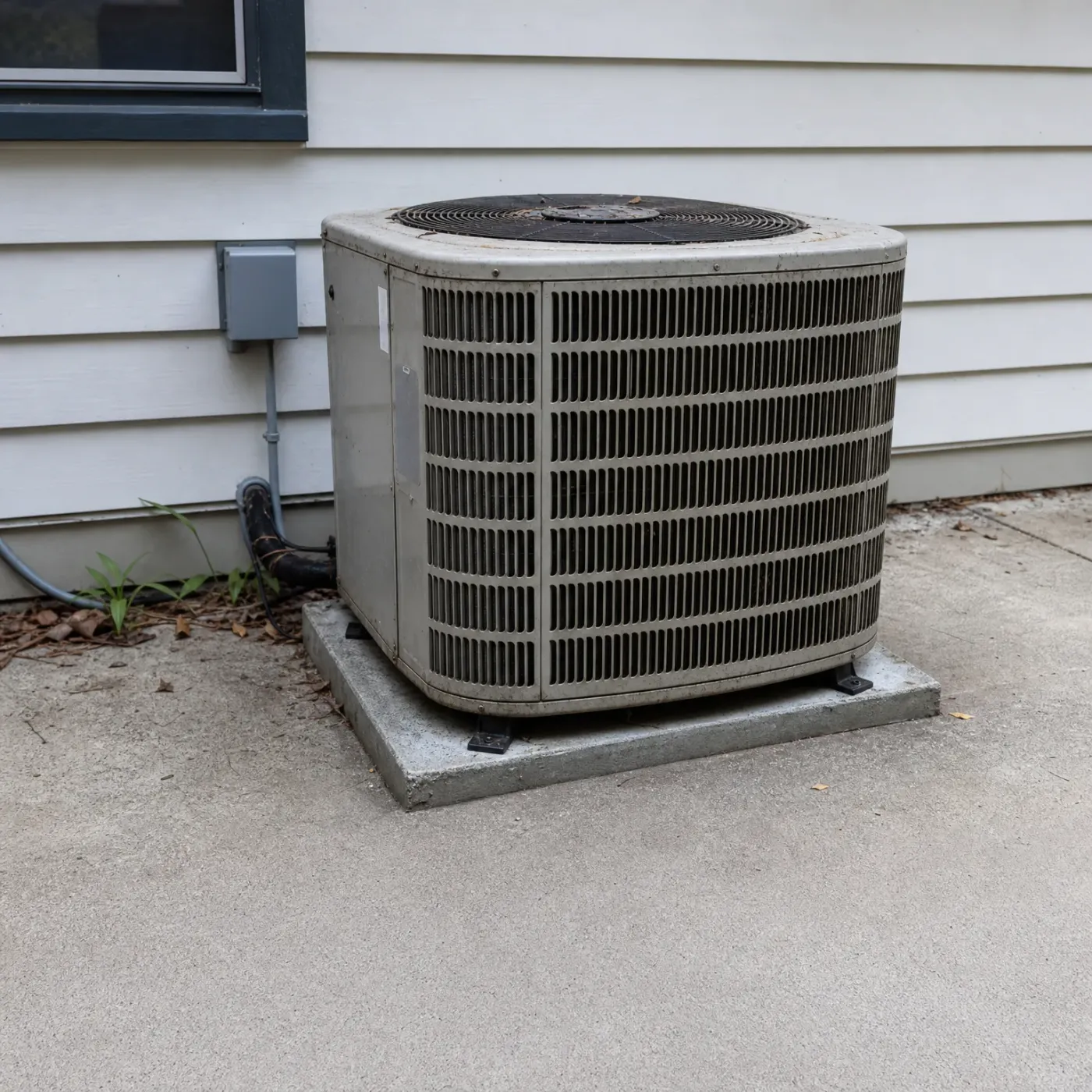
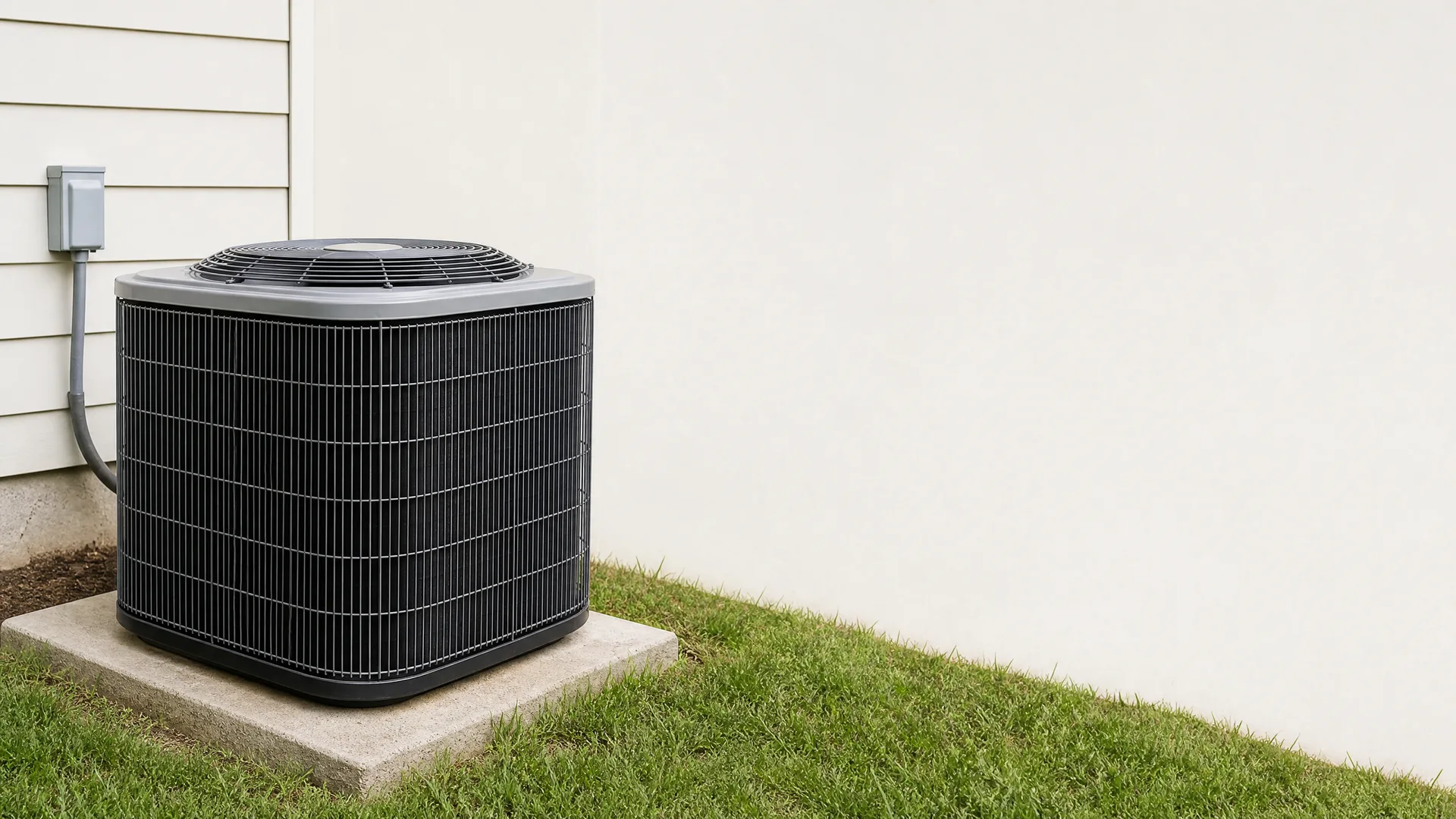
An outdoor air conditioner condenser unit on a concrete pad beside a house wall, with a gray electrical disconnect box and conduit above it and grass in the foreground.

Why low speed does more work

A two-stage AC spends most of its time running low, moving air steadily instead of blasting and shutting off. That long, slow run pulls more moisture out of the air than a single-stage unit's short full-blast cycles do. In Iowa, where summer air sits heavy and sticky, that difference in humidity control is what you feel on the muggy days, not just the temperature on the thermostat.

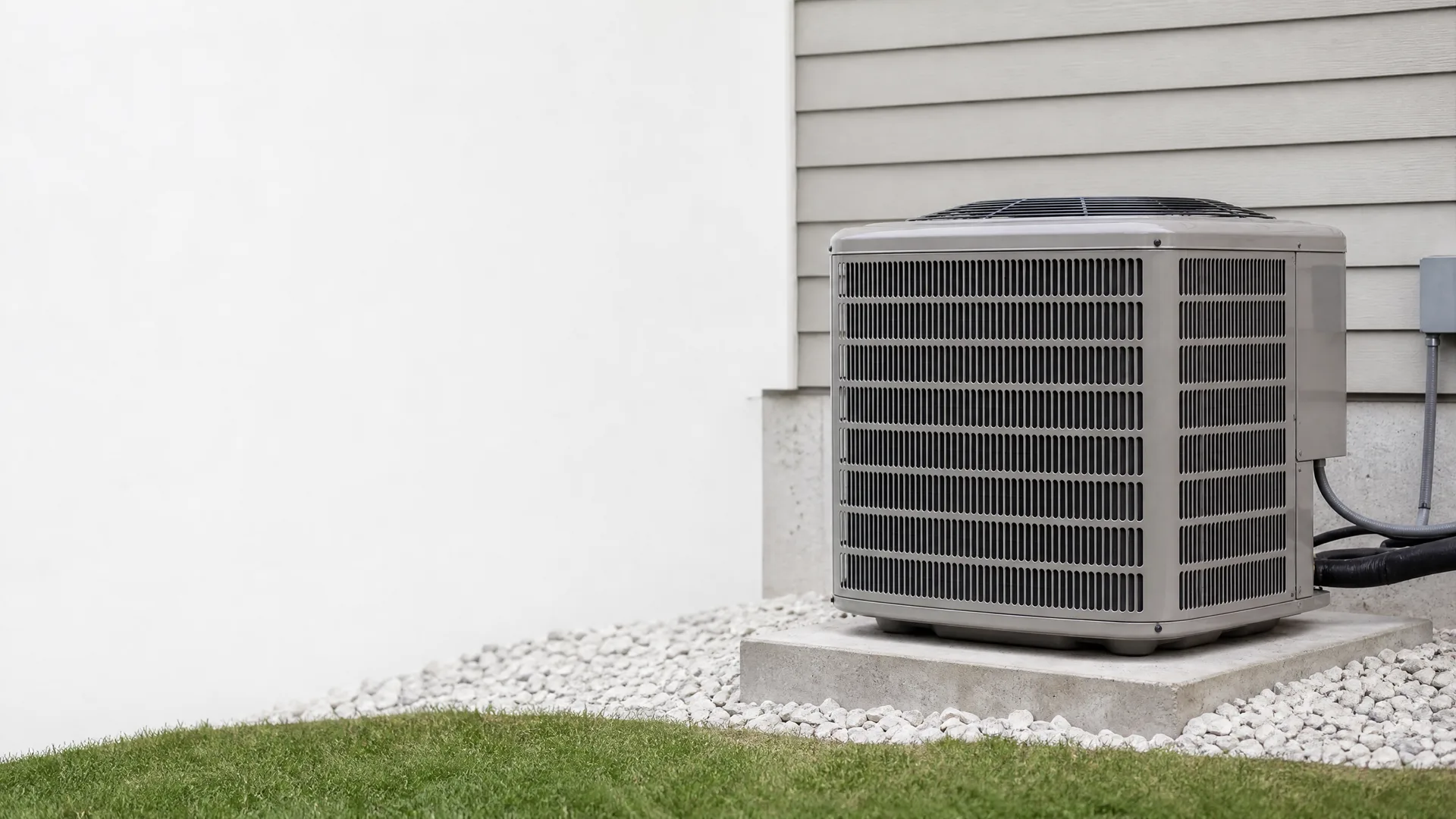
A gray outdoor air conditioner condenser unit on a concrete pad beside a house with horizontal lap siding, surrounded by white gravel and a lawn, with a white wall at left.

When full speed kicks in

The second stage is there for the afternoons when low speed can't keep up, the kind of heat that settles over Iowa in July and August. The compressor shifts to full capacity, cools the house down, and drops back to low once the load eases. You get the steady run most of the time and the extra power held in reserve for the days that actually need it.

Why does the house feel muggy even when the AC is running

You've got the thermostat set where you want it, and the air is cold, but the house still feels damp. Floors feel sticky underfoot. Windows fog up in the morning. That's a single-stage unit doing its job on temperature and nothing else. It hits the setpoint, shuts off, and the moisture it pulled out in those few minutes is all you get until it kicks on again. Left alone through a wet July, that extra moisture gives mold and mildew a place to start in closets, basements, and anywhere air doesn't move much. It also means the unit is cycling on and off more than it should, which wears on the parts that start it up each time.

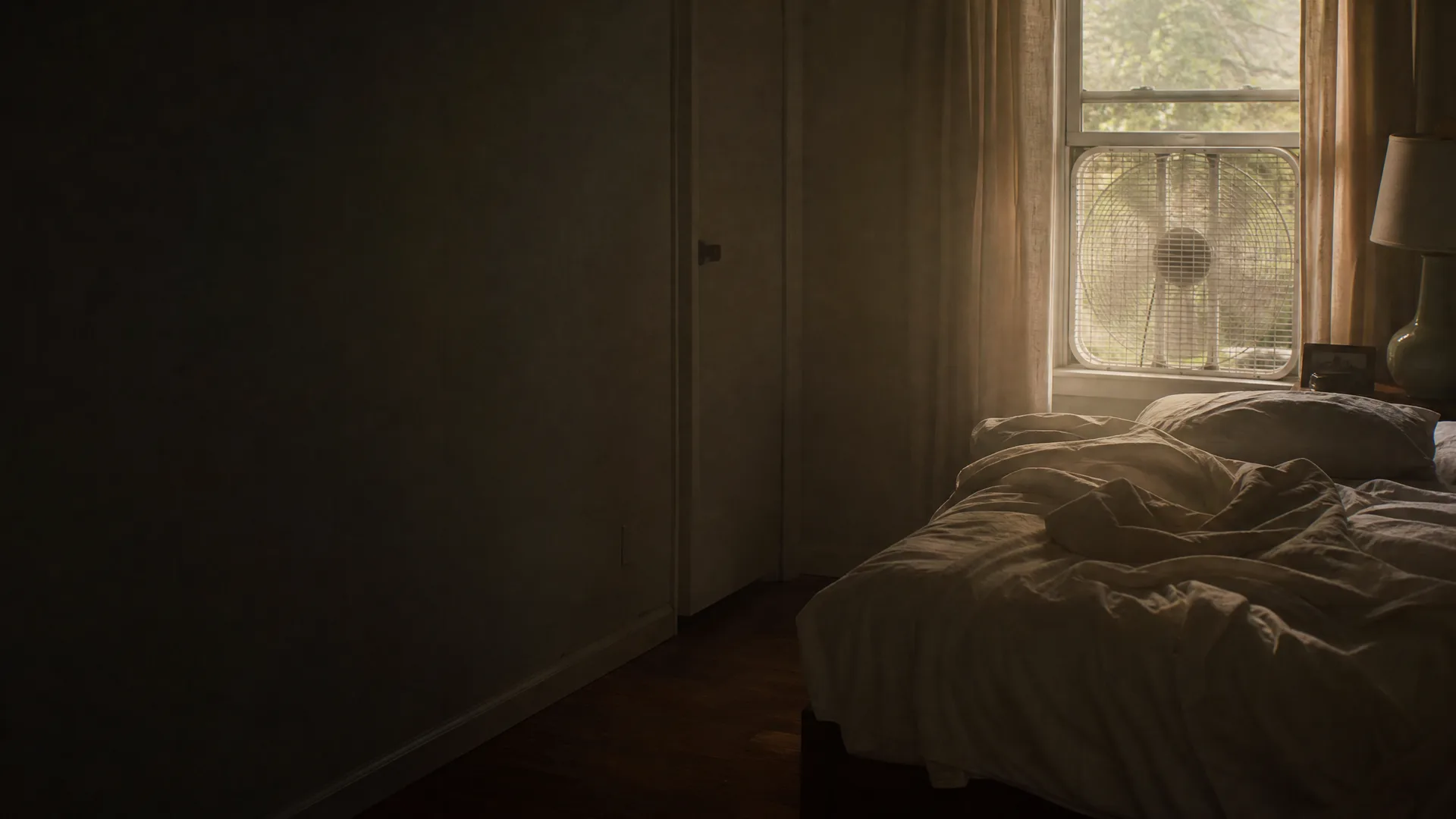
A dim bedroom with an unmade bed beside a window holding a box fan, with sheer curtains, a lamp at right and a large blank wall at left.

It's past eight but still light out, the sky that flat white heat gives it in June. You're upstairs putting the kids down and the box fan in the window is just moving the same warm air around the room. The AC kicked off ten minutes ago, so what's left is whatever it managed to push up the stairs. The sheets feel damp before anyone's even lying on them. You can hear the unit outside, quiet now, and you know it'll be another twenty minutes before it kicks back on and starts the same short run all over again.

How does a two-stage AC actually keep the house from feeling muggy?

You've heard the low speed runs longer and pulls out more moisture, but you want to know what's actually happening inside the unit when it does that. It helps to know the mechanics behind the claim before you decide it's worth paying for.

It controls how much refrigerant moves, which controls how cold and how long the coil runs

A two-stage unit has a compressor that can run at two different outputs, usually around 65 percent and 100 percent. On low, less refrigerant moves through the system, so the coil stays cold longer instead of dropping fast and shutting off. Air passing over that coil for a longer stretch gives up more of its moisture before it ever gets back into the room. A single-stage compressor only has full output, so it cools the air fast, hits the thermostat setting, and shuts off before the coil has had much time to work on humidity. The compressor decides the pace, and the pace decides how dry the air ends up.

A gray-haired bearded man in a dark coat and scarf dusted with snow stands smiling in a dimly lit entryway with a white front door, a side table with a lit lamp, an oval mirror, and a patterned rug.
An older bearded man in a dark snow-dusted coat and gray scarf stands just inside a dimly lit home entry, with a framed picture, lit table lamp, and an adjoining room with a fireplace behind him, and snow visible through the open door.
A gray-haired, bearded man in a dark snow-dusted coat stands smiling in a dimly lit entry hall with a staircase, a lit table lamp, a framed picture, and a living room visible through a doorway.
An older man with gray hair and a beard, wearing a dark jacket dusted with snow, stands smiling in a dimly lit hallway with lamps and a living room visible behind him.

An air conditioner pro near you

You've got a decision to make on the AC, and by now you know what the low speed buys you: a house that doesn't feel sticky by August, even upstairs, even at night. That's the comfort side. The other side is what you already have going for you in Iowa. Power here is cheap, and most homes heat with gas, so the AC isn't carrying your whole utility bill the way it might somewhere else. A two-stage unit costs more up front than a single-stage one. Whether that's worth it comes down to how long you're staying in the house and how much a dry, even summer is worth to you against a bill that was never the biggest line item to begin with. If you've read this far, you already have what you need to weigh it. What's left is finding out what it would actually run for your house, from someone who can look at the place and tell you.

How the thermostat decides

  • A two-stage thermostat reads how far the house is from the set temperature, not just whether it's above or below it.
  • Low speed turns on first and stays on as long as it can keep up, which in most Iowa summer weather is most of the time.
  • The thermostat only calls for high speed when the house is losing ground, like after the sun's been hitting the roof all afternoon.
  • On high speed, the compressor moves more refrigerant and the blower moves more air, both at once, to catch up fast.
  • Once the house is back on target, the system drops back to low rather than shutting off, because low is still removing heat and moisture.
  • The compressor itself has two fixed speeds built in, so the switch between them is the thermostat sending a signal, not a part wearing out.

A single-stage thermostat only checks one thing: is the house above the set temperature or not. A two-stage thermostat checks how far off it is. That difference is what controls which speed the compressor runs.

When the house is close to the set temperature, the thermostat calls for low. Low speed turns on and the compressor settles into its lower output, moving refrigerant at a steady, slower rate. In most Iowa summer weather, that's enough to hold the house where you want it, so low just keeps running. It's not straining to catch up. It's keeping pace.

High only gets called when the thermostat sees the house falling behind, the kind of afternoon where the sun's been on the roof for hours and the house has picked up more heat than low can carry off. The compressor switches to its higher fixed speed, moving more refrigerant, and the blower speeds up with it to move more air across the coil. Both happen together, because moving more refrigerant without moving more air across the coil doesn't do much.

Once the house catches back up to the set temperature, the system doesn't shut off the way a single-stage unit would. It drops back down to low. Low is still pulling heat and moisture out of the air, just at a pace the house can keep up with.

The compressor has exactly two speeds built into it from the factory. Switching between them is the thermostat sending a signal, not a part shifting gears or wearing against another.

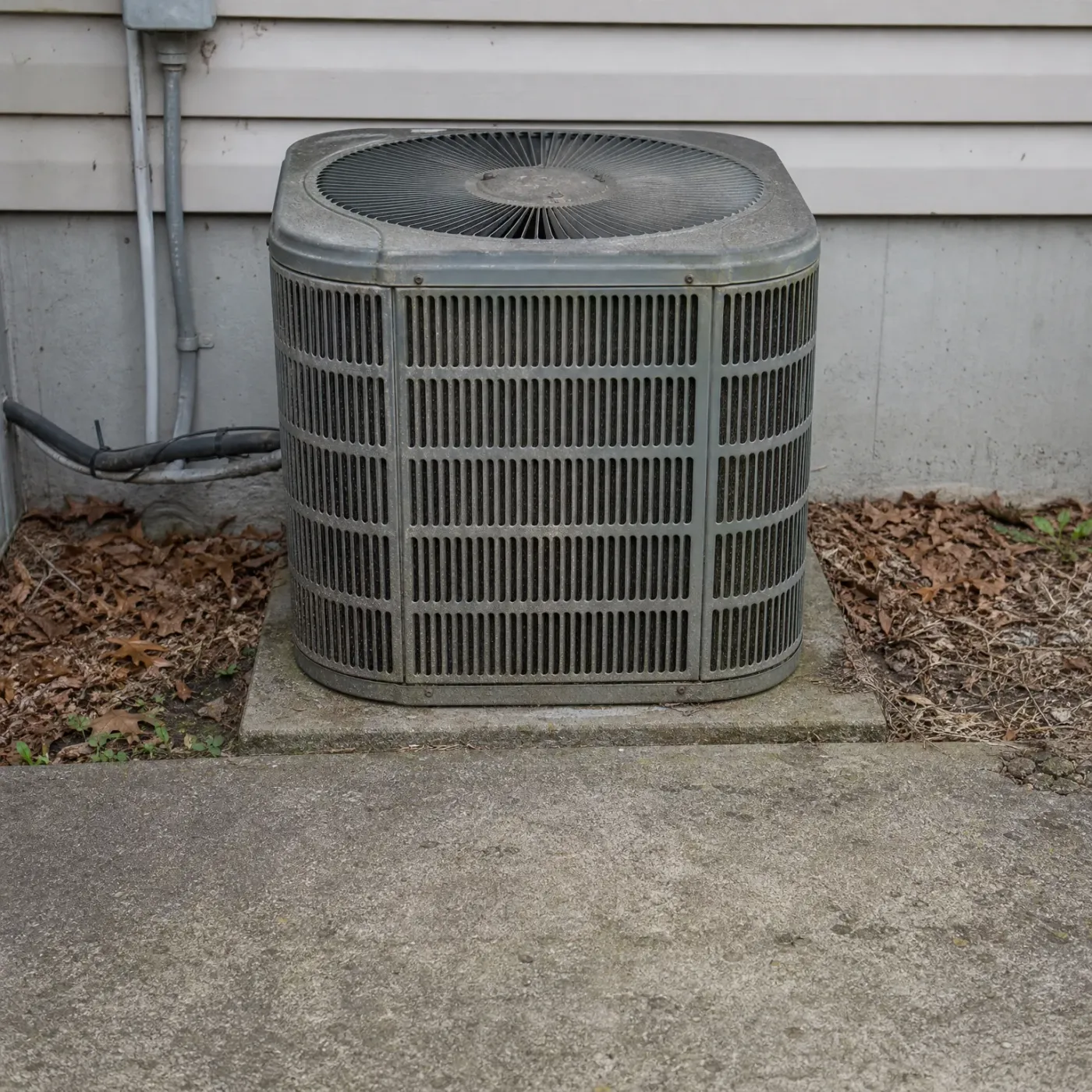
An outdoor air conditioning condenser unit on a concrete pad beside a house with horizontal siding and a concrete foundation, with dry brown leaves on the ground to either side.
Before you get your air conditioner installation
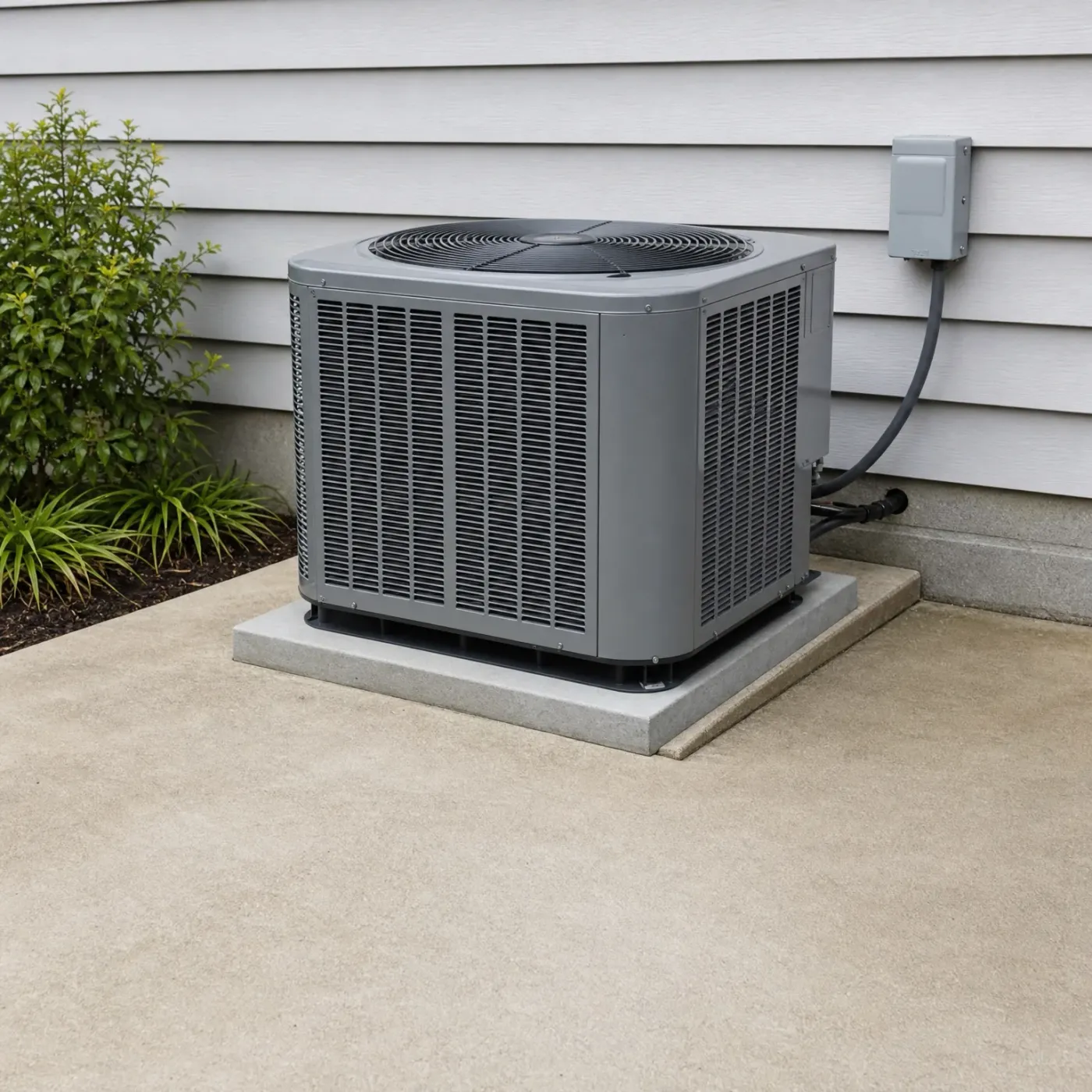
A gray outdoor air conditioning condenser unit on a concrete pad beside a house with horizontal lap siding, with a wall-mounted disconnect box and conduit, and shrubs to the left.
After you get your air conditioner installation
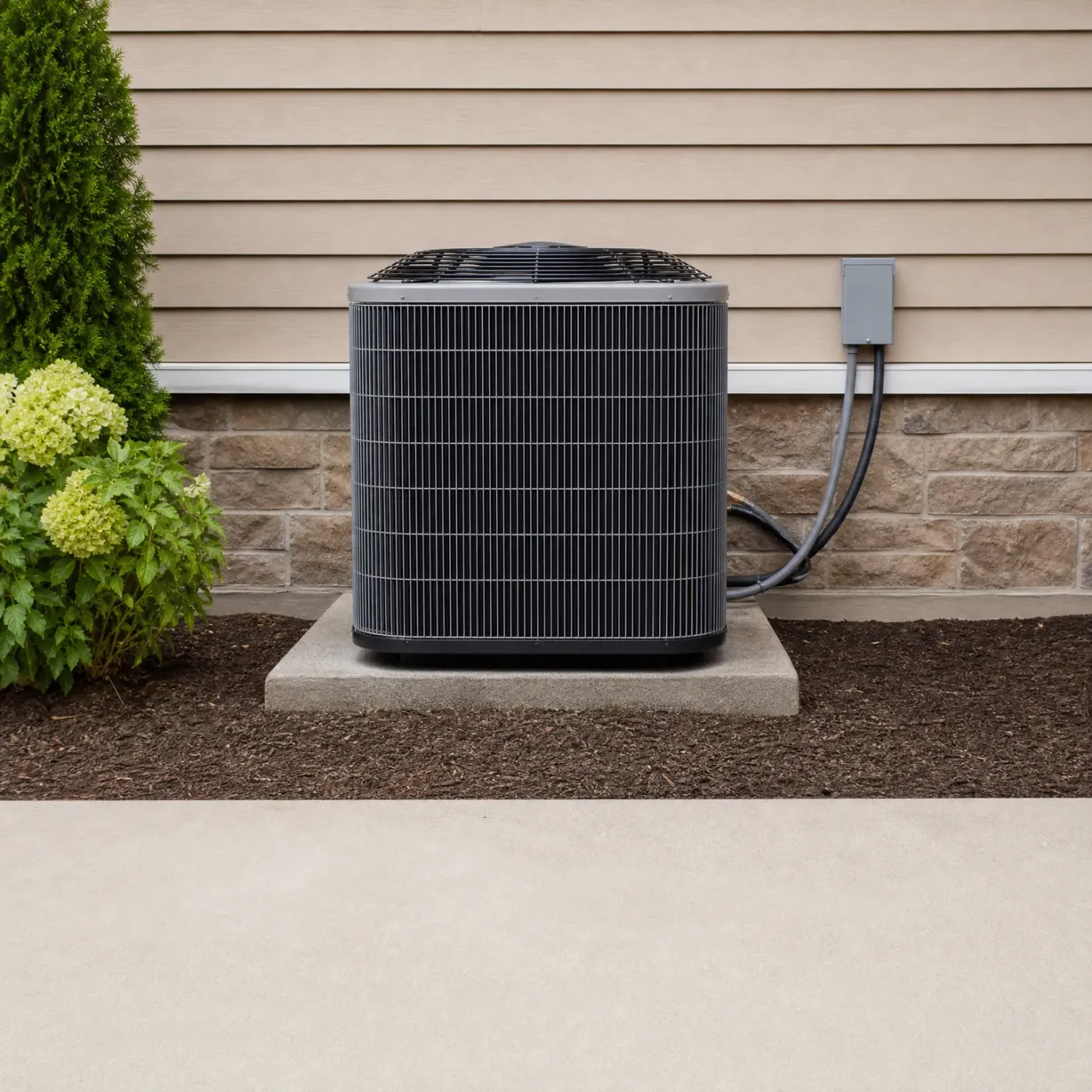
An outdoor air conditioner condenser unit on a concrete pad beside a house with beige horizontal siding and a stone-veneer base, with refrigerant lines running to a gray wall-mounted electrical box, surrounded by dark mulch, a flowering shrub and an evergreen on the left.

Single-stage, working fine

This is what a single-stage condenser looks like doing its job: on at full blast, cold air moving, nothing wrong with it. It'll cool the house down every time. What it won't do is run long enough at a steady pace to pull much moisture out of the air before it shuts back off.
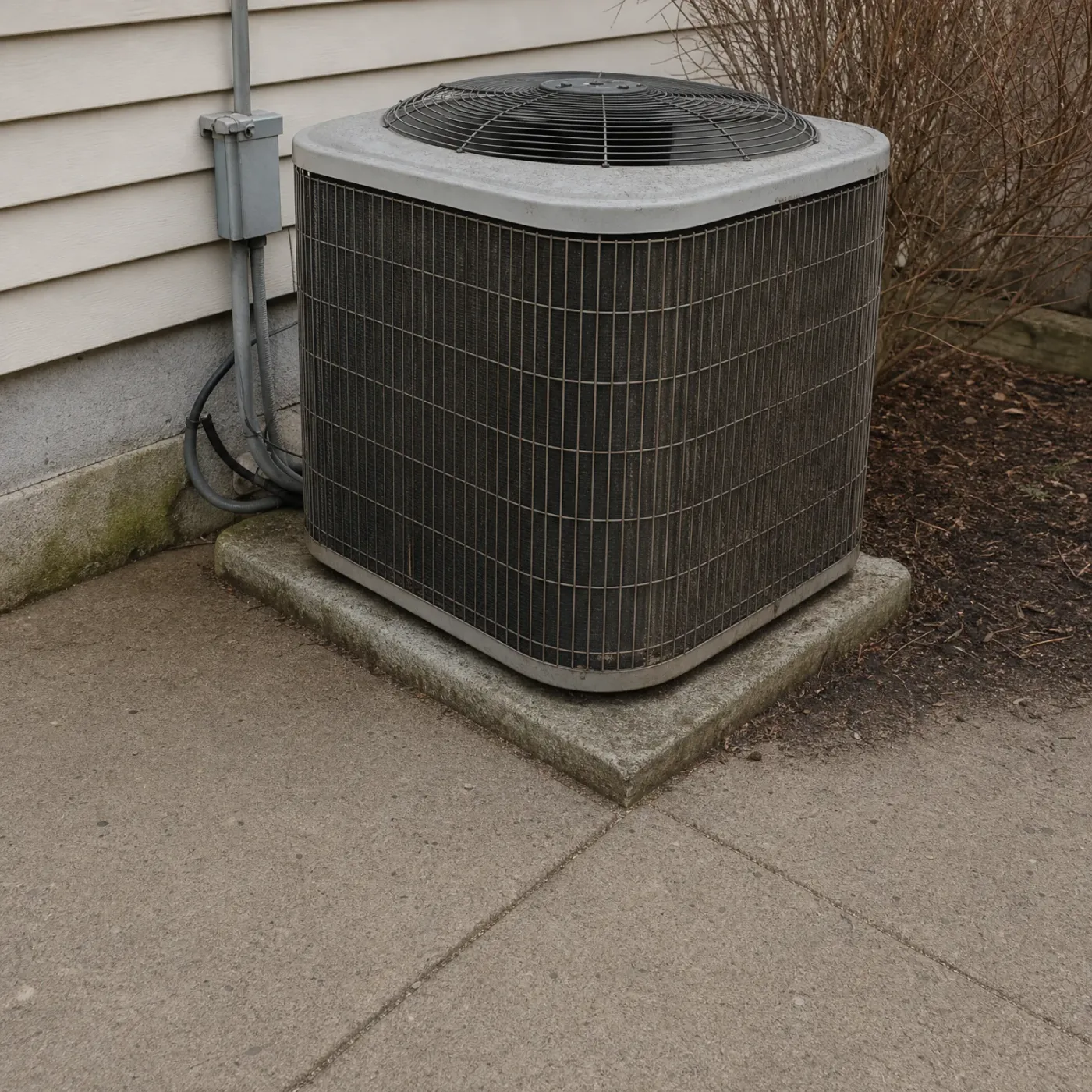
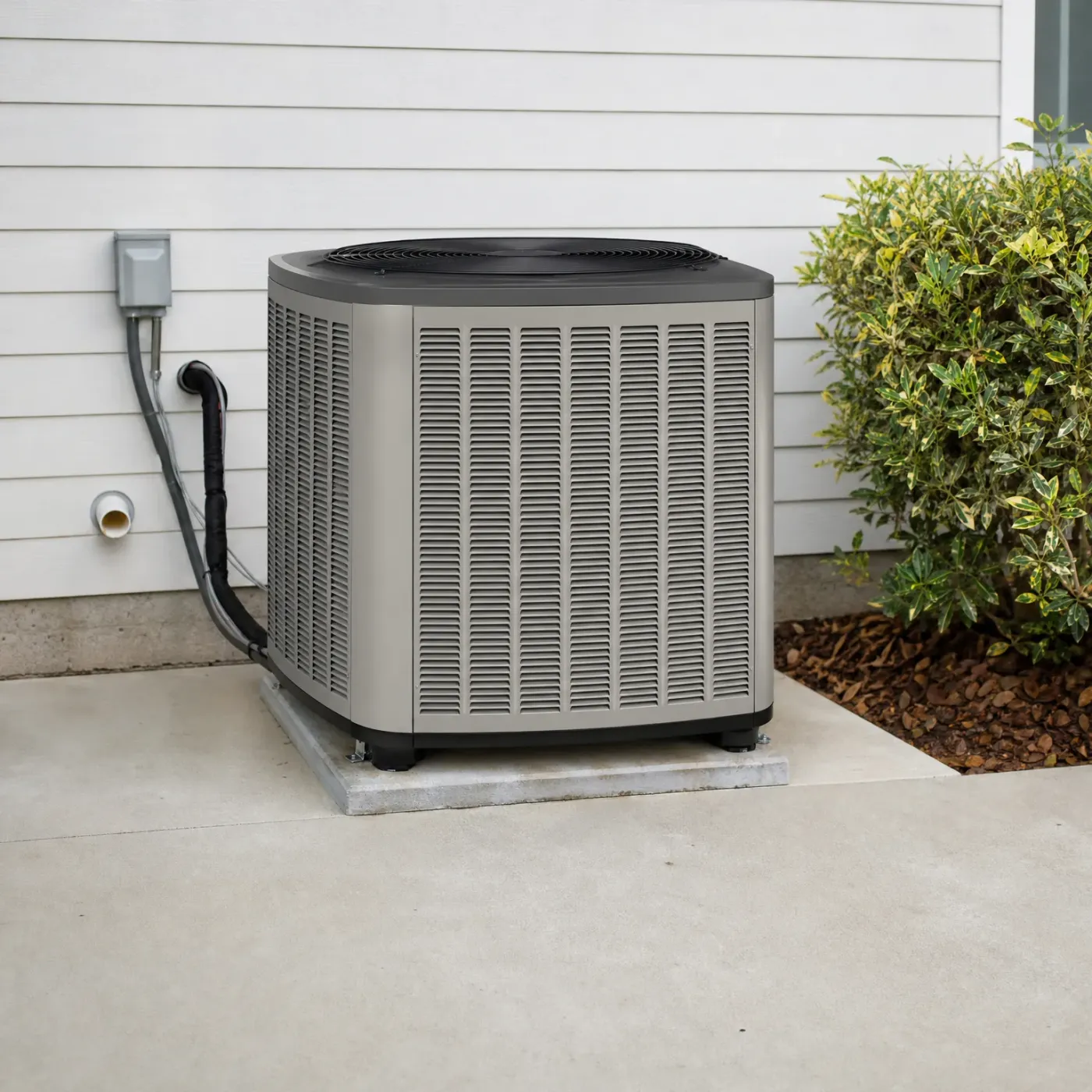
An outdoor air conditioning condenser unit on a concrete pad beside a house with light vinyl siding, an electrical disconnect box and conduit on the wall, bare shrubs and mulch to the right, and a concrete walkway in the foreground.

Same spot, muggy summer

Same unit, same pad, but this is the stretch where single-stage shows its limit. It satisfies the thermostat and shuts off, so the air gets cold but stays damp. A two-stage unit in this spot would still be running low, quietly drying the house out instead of cycling off.

Power costs 13.62 cents per kilowatt-hour statewide

At 13.62 cents per kilowatt-hour, running a two-stage AC's low speed for longer stretches doesn't hit your bill the way it would somewhere with pricier power. You get the drier, steadier house without paying a premium for the extra runtime it takes to get there.

EIA-861 2025 statewide residential average

An outdoor air conditioning condenser unit on a concrete pad beside a house with white horizontal lap siding, with an electrical disconnect box and insulated refrigerant line on the wall and a shrub over mulch to the right.

A unit that's keeping up

This is a condenser doing its job. Lines run clean along the wall to the disconnect box, the pad is level, the shrub next to it is trimmed and clear. Nothing about the setup is working against the unit.

An outdoor air conditioner condenser unit on a concrete pad beside a house with light horizontal lap siding, with an electrical disconnect box and conduit on the wall behind it.

A unit that's aging out

This one shows it. Weathering on the cabinet, same disconnect box on the wall, lines running along the foundation instead of up a clear wall. An older single-stage unit like this will still cool the house. It won't pull the moisture out the way a two-stage one does.

A woman wrapped in a thick beige fleece blanket sits on a sofa with an open book on her lap, beside a lit table lamp, with a frost-covered window behind her.
A gray-haired woman in a cream knit sweater stands in a dimly lit kitchen at night, looking to her right, with a round loaf of bread in the foreground and a dark window and potted plant behind her.
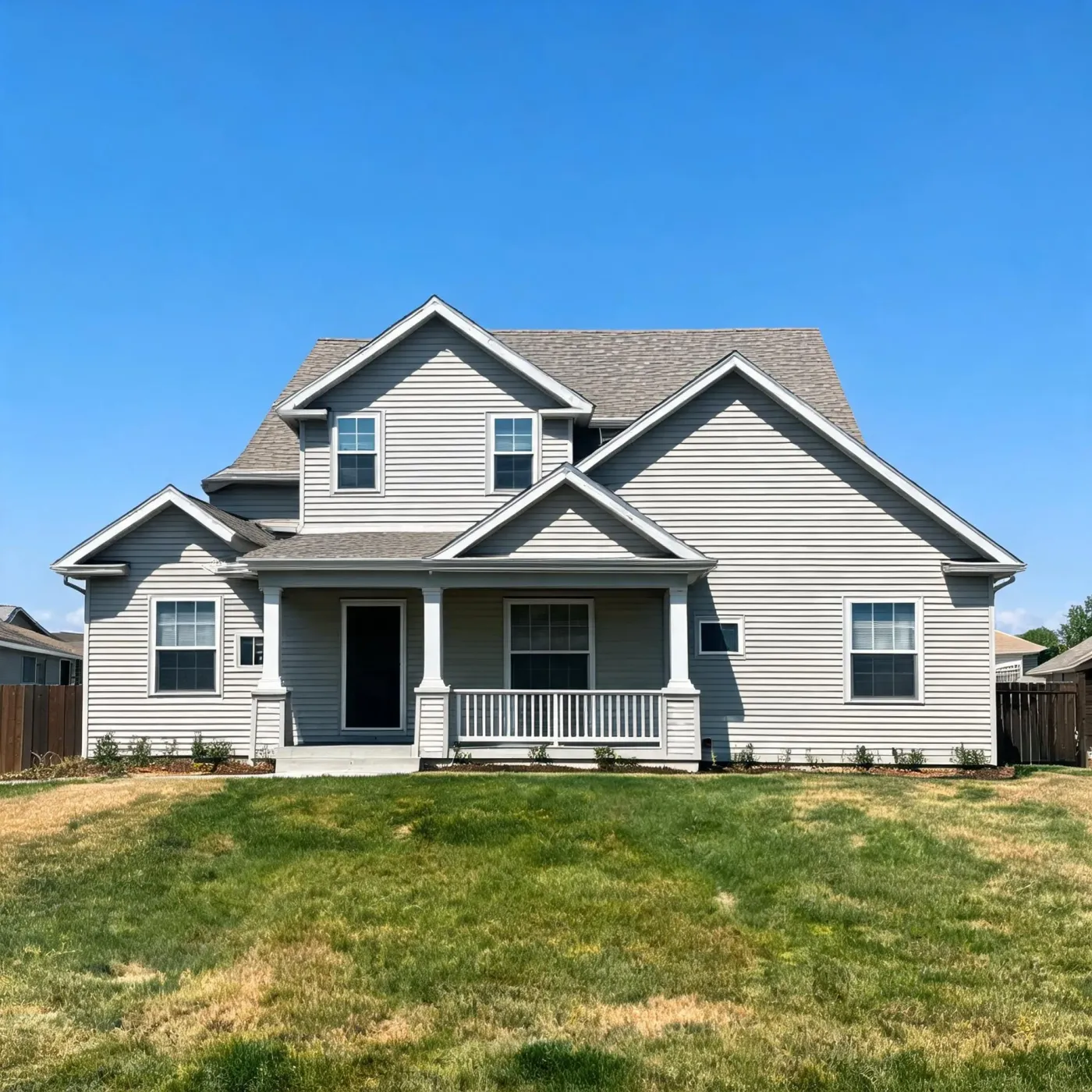
A two-story gray horizontal-siding house with multiple gables, a covered front porch with white columns and railing, and a dark front door, fronted by a patchy green and brown lawn under a clear blue sky.

The weather service that keeps these records puts the summer dew point across Iowa at an average of 62°F for June, July and August. That's the number that tells you how heavy the air actually feels, not just how hot. At 62, most people notice the air on their skin even in shade. A single-stage AC answers that by blasting cold air until the thermostat's satisfied, then shutting off, which cools the room but doesn't run long enough to wring much moisture out of it. You get the temperature you set and a house that still feels damp. A two-stage unit spends more of its time at low speed, moving air slowly and steadily through those same sticky stretches, which is what it takes to actually dry the air out instead of just cooling it.

NASA POWER T2MDEW county cells weighted by homes

A smiling man in a denim shirt and white t-shirt stands in an open dark doorway of a stucco house, facing a woman with long brown hair and a green jacket seen from behind in the foreground.

So is it worth it

A two-stage AC is worth it in an Iowa summer if you're staying in the house long enough to feel the difference season after season. The low speed runs longer, pulls more water out of the air, and does it on cheap power, so the comfort doesn't come with a bigger bill attached. That's the whole case, and it holds up whether you look at the dew point numbers or just remember how last August felt upstairs at nine at night.

What you do with that is get the right unit put in by someone who knows your house, your ductwork, and what size system it actually needs. Send in your information and you'll be matched with a contractor who handles installations like this one, and they'll reach out to go over what your place needs. Once that's sent, you're not the one tracking down who to call anymore. That part's off your plate.

Interior corner of a room with a window and sheer curtain at left, a gray upholstered sofa with a cushion at right, and a round wooden table holding stacked books and a round vase with an olive branch.
A wooden front door with six small glass panes and a narrow sidelight, set in a shingled house entry with white trim, reached by stone steps flanked by a planted urn with purple flowers and leafy branches in the foreground.
Exterior corner of a house with beige horizontal lap siding and a black-framed window, with white hydrangeas, ornamental grasses and low plantings along a flagstone patio.
Corner of a house with tan lap siding and a window, a brick step edge, flowering white hydrangeas and green shrubs beside a flagstone walkway leading to a white picket fence and a tree in backlit sunlight.
House exterior with cream horizontal lap siding, a dark-framed window, a black wall lantern beside a wood door, potted shrubs on stone steps, and white and pink hydrangeas in the foreground garden.
Corner of a cream lap-sided house with a white-framed window and dark shingled roof, beside a white-flowering hydrangea shrub, a clipped hedge, mulched bed and lawn.

A local pro for your air conditioner installation

Send the form and stop researching installers for the new air conditioner.

Connect with a pro

It costs nothing to send, and you don't have to hire anyone.