Profile view of a bearded man wearing a dark baseball cap and a dark gray T-shirt against a plain off-white background.

How to lower your AC bill in an Iowa summer

Step 1 of 3: Equipment

How do I lower my AC bill in an Iowa summer?

You keep your evenings for the things that matter, not for watching a thermostat. But the electric bill climbs every July and August anyway, and you want to know what actually moves the number before you start changing habits or buying gadgets that don't do much.

Keep the system running clean, and the bill tracks the heat, not your habits

The biggest swing in your AC bill comes from how hard the unit has to work to do the same job. A dirty coil or a clogged filter makes the system run longer to cool the same house, and longer runtime is what shows up on the bill. Iowa summers get humid enough that the system is already working to pull moisture out of the air on top of cooling it, so anything that makes it work harder gets multiplied over a stretch of sticky days. Power here is cheap compared to a lot of places, which means the system itself, not the rate you pay for electricity, is usually what decides whether the bill runs high or stays reasonable.

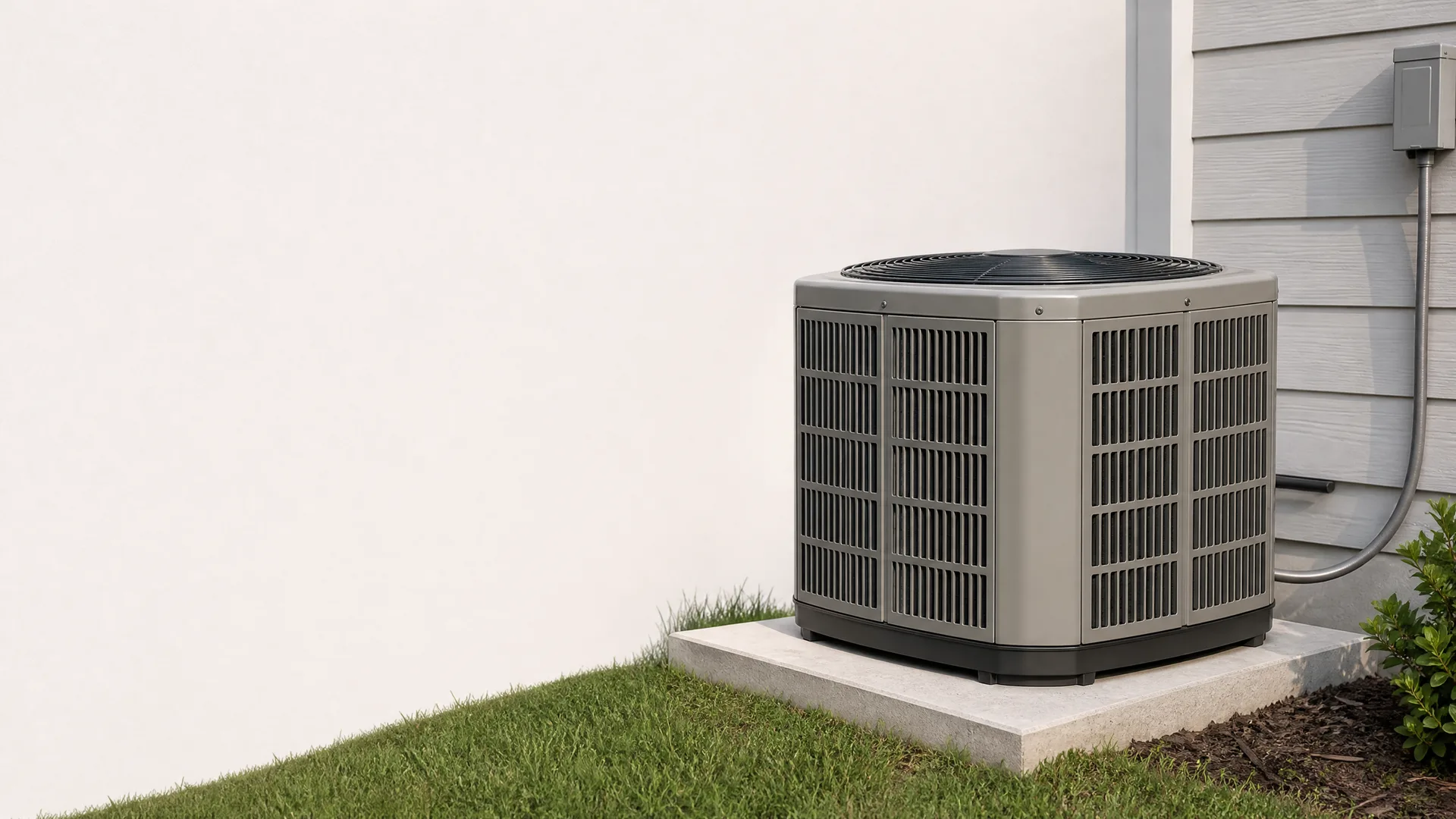
A gray outdoor air conditioner condenser unit on a concrete pad beside a house with horizontal siding, with an electrical disconnect box and conduit on the wall behind it.

Why the coil matters most

A central air conditioner moves heat out of your house by pulling air across a cold coil. When that coil is coated in dust, it can't absorb heat the way it should, so the compressor runs longer to reach the same temperature on the thermostat. A dirty coil is one of the most common reasons a system runs long hours in July and August without actually cooling the house any faster.

An outdoor air conditioner condenser unit on a concrete pad beside a house with horizontal lap siding, with a gray electrical disconnect box and conduit on the wall, grass in the foreground and a plain light wall at left.

What a weak capacitor costs you

The capacitor gives the compressor and fan motor the jolt they need to start. As it weakens, the motors draw harder to start up, and they can short cycle, shutting off and restarting over and over instead of running one steady cycle. Each restart pulls more power than a motor running normally. A technician checking capacitor readings during a seasonal visit catches this before it turns into a system that won't start at all on a 95 degree afternoon.

Skip Maintenance vs. Tune-Up

Skip maintenance

  • A dirty coil makes the compressor run longer to pull the same heat out of the house, and that extra runtime shows up on the July bill.
  • A clogged filter restricts airflow across the coil, so the system works harder for the same indoor temperature.
  • A low refrigerant charge, if it develops, goes unnoticed until the house stops cooling the way it used to.
  • Without someone checking the condenser fan and the capacitor, a minor fault can run for weeks before the system fails outright.
  • You end up calling around for a repair once something breaks, usually on the hottest week of the summer.

Yearly tune-up

  • A technician cleans the coil, so it can pull heat out of the air the way it was designed to, which is what keeps the compressor from running longer than it needs to.
  • Checking the refrigerant charge catches a slow leak before it turns into a system that can't keep up on a 90 degree afternoon.
  • Testing the capacitor and the condenser fan motor catches the kind of wear that otherwise ends in a no-cool call in August.
  • A local contractor who services this equipment every summer knows which parts in Iowa's humidity tend to go first.
  • One visit from one contractor replaces the work of searching, calling around, and explaining the same problem more than once.
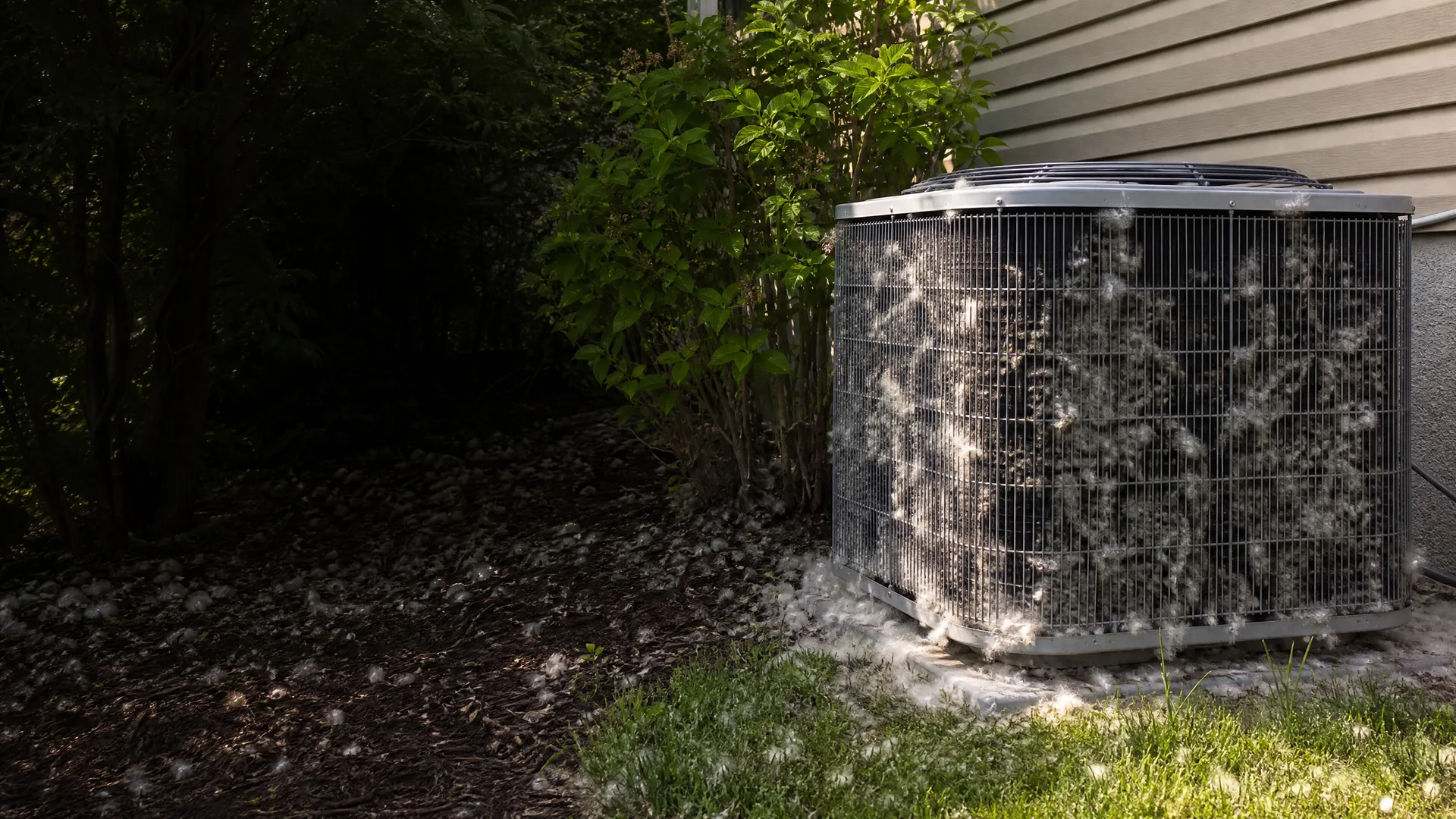
An outdoor air conditioner condenser unit beside a house with horizontal siding and stucco, its coil fins covered in white cottonwood fluff that also collects on the surrounding grass and mulch.

You're out by the side yard in May, coffee still in hand, and you notice the condenser hasn't been touched since fall. The cottonwoods have been dropping fluff for a week, and it's caught in the fins, a thin white mat across the whole face of the unit. You hadn't planned on checking it yet. Summer's still a month off. But the fluff keeps coming, and you know if it sits there it'll bake into the fins once the unit starts running hard in July. You make a note to deal with it before the heat gets going, then head back inside to the rest of your morning.

Skip the search

A licensed local pro takes the request for your air conditioner tune-up.

Sending the form costs nothing.

What's Actually Driving the Number

  • A thermostat set 5 to 7 degrees higher while you're at work can cut compressor runtime without you feeling the difference at night.
  • A refrigerant charge that's low doesn't just cool less, it makes the compressor run longer to pull the same heat out of the house.
  • The blower motor pulls air across the coil, and if the filter behind it is clogged, the motor pulls harder and draws more power doing it.
  • A condenser fan that's weak or dirty can't move enough air past the coil outside, so heat that should leave the house backs up and the compressor works longer.
  • Ductwork that leaks at the joints loses cooled air before it reaches the room, so the thermostat keeps calling for more than the house actually needs.
  • A capacitor that's starting to fail makes the compressor draw a hard start every cycle, and that spike shows up on the meter long before the unit stops working.

The thermostat gets the blame, but it's rarely the only thing changing your bill. Setting it a few degrees higher during the day helps because the compressor simply runs less, and the house doesn't lose that cool air fast enough for you to notice by evening. What matters more is whether the system is moving heat the way it's supposed to. Refrigerant charge is part of that. If it's low, the system doesn't just cool worse, the compressor has to run longer cycles to move the same amount of heat, and that extra runtime adds up over a hot stretch. Airflow matters just as much. The blower pulls air across the indoor coil, and a clogged filter forces that motor to work harder and pull more current to move the same air. Outside, the condenser fan has to push air across the outdoor coil to get rid of the heat the system collected inside. If that fan is weak or the coil behind it is dirty, the heat doesn't leave fast enough, and the compressor keeps running to compensate. Leaky ductwork adds another layer. Cooled air escaping at the joints before it reaches a room means the thermostat keeps calling for cooling the house never actually gets. And a capacitor on its way out makes the compressor draw a hard jolt of current every time it starts, a spike that shows up on the meter well before the unit ever stops cooling.

A woman in a cream sweater with her hair in a bun laughs while seated at a stone counter holding a glass of red wine, in a dimly lit interior with a sofa, houseplants and a large window at night.
A woman with long dark hair in a cream knit sweater laughs while looking off to the side, seated in front of a dimly lit kitchen with an island, stools, open shelving and a potted plant, with a glass of red wine in the foreground.
A smiling woman with long dark wavy hair in a light knit sweater sits at a marble counter with a glass of red wine, with a dimly lit living room and kitchen in the background.
A smiling woman with long wavy brown hair in a beige sweater sits at a white marble counter with a glass of red wine, with a living room, dining table and kitchen cabinets behind her.
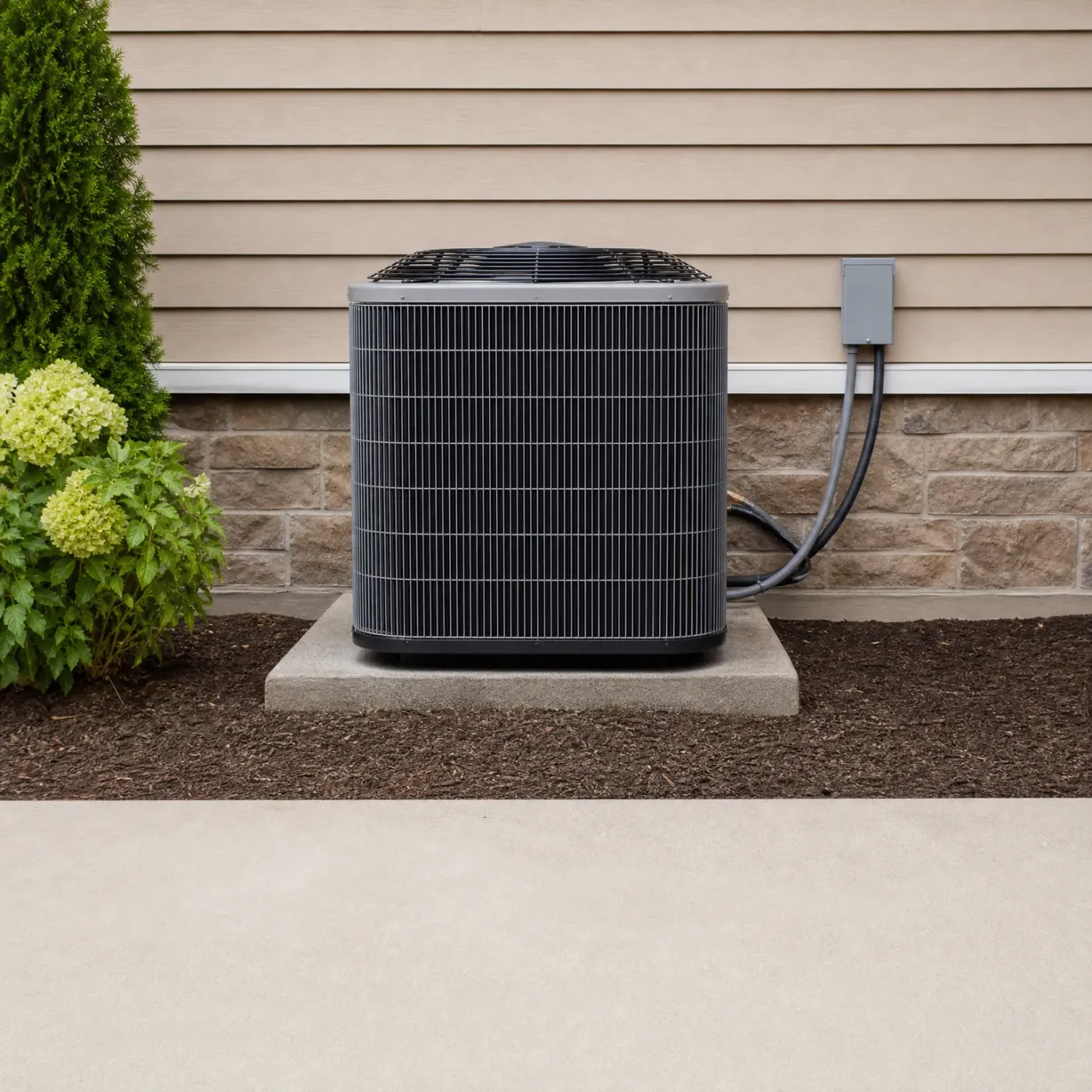
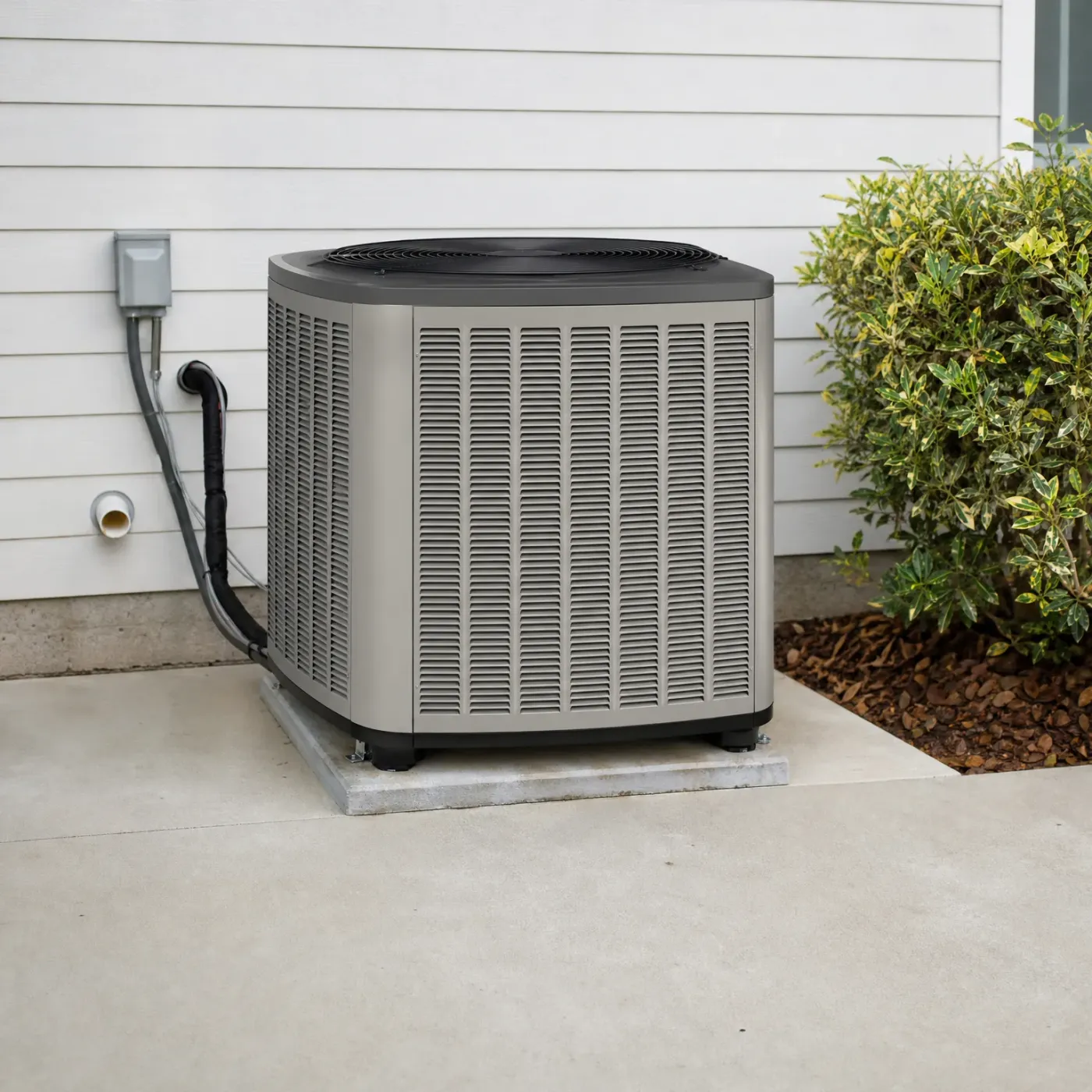
An outdoor air conditioner condenser unit on a concrete pad beside a house with beige horizontal siding and a stone-veneer base, with refrigerant lines running to a gray wall-mounted electrical box, surrounded by dark mulch, a flowering shrub and an evergreen on the left.

Running clean

The coil behind those fins is clear, so the unit pulls heat out of your house on the first try instead of the third. The compressor cycles off instead of grinding through another ten minutes. On a muggy July afternoon, that's the difference your bill sees.

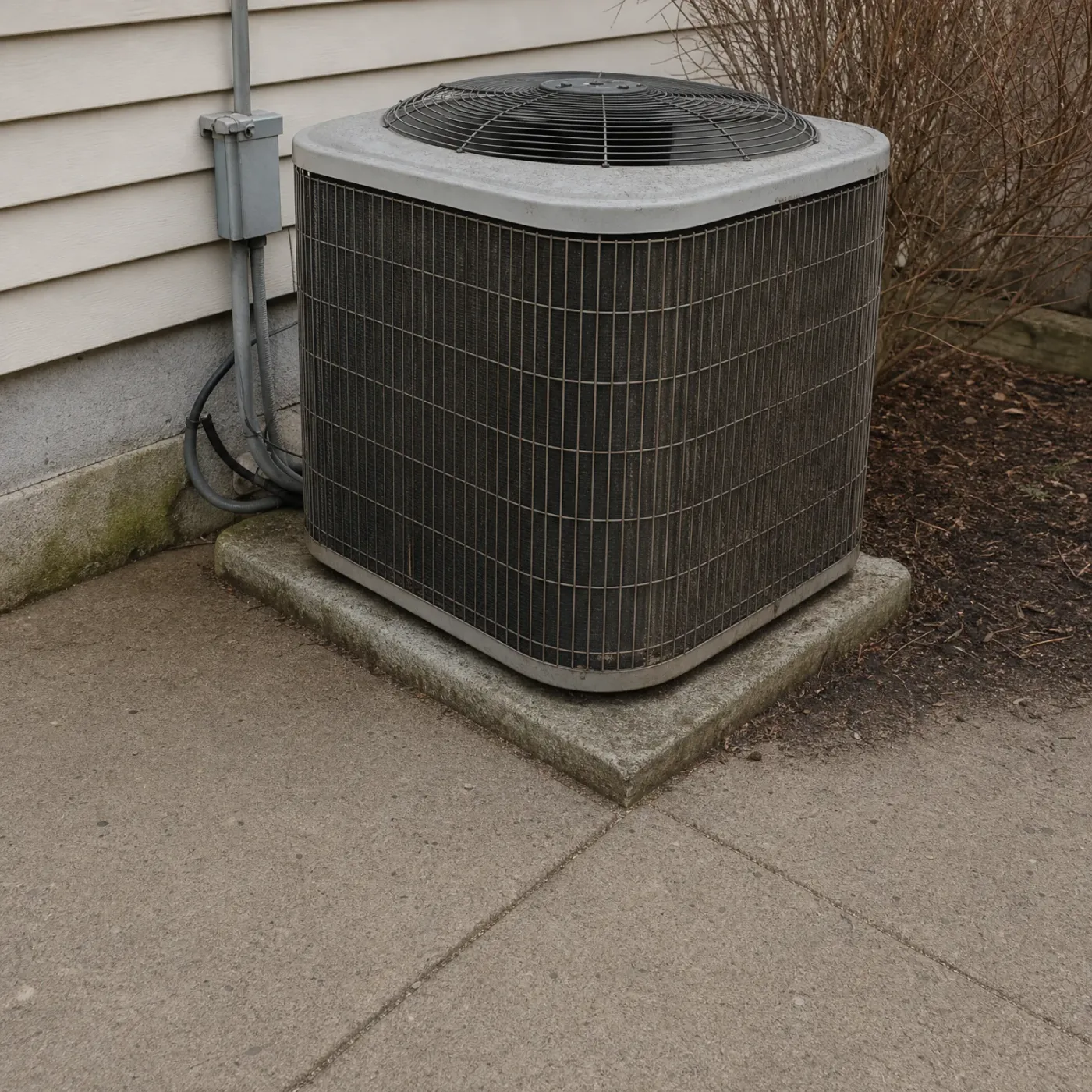
An outdoor air conditioning condenser unit on a concrete pad beside a house with light vinyl siding, an electrical disconnect box and conduit on the wall, bare shrubs and mulch to the right, and a concrete walkway in the foreground.

Working against itself

Bare shrubs don't hide what's wrong here. A coil packed with dust or clipped grass makes the compressor run long after it should have shut off, and the house still feels sticky. Every degree it fights for costs more than it should.

A smiling middle-aged man in a dark green sweater sits at a candlelit table with wine glasses and a plate of greens in a dimly lit interior.
A woman in a dark knit turtleneck sweater reclines on a couch under a cream knit blanket, looking down at an open book, with a lit table lamp and framed pictures behind her.
An outdoor air conditioning condenser unit on a concrete pad beside a house with white horizontal lap siding, with an electrical disconnect box and insulated refrigerant line on the wall and a shrub over mulch to the right.

Clean lines, clear fins

The disconnect box and refrigerant lines sit in open air, and the fins around them are open too. Air moves through the coil without resistance, so the compressor shuts off once it reaches the set temperature instead of running past it.

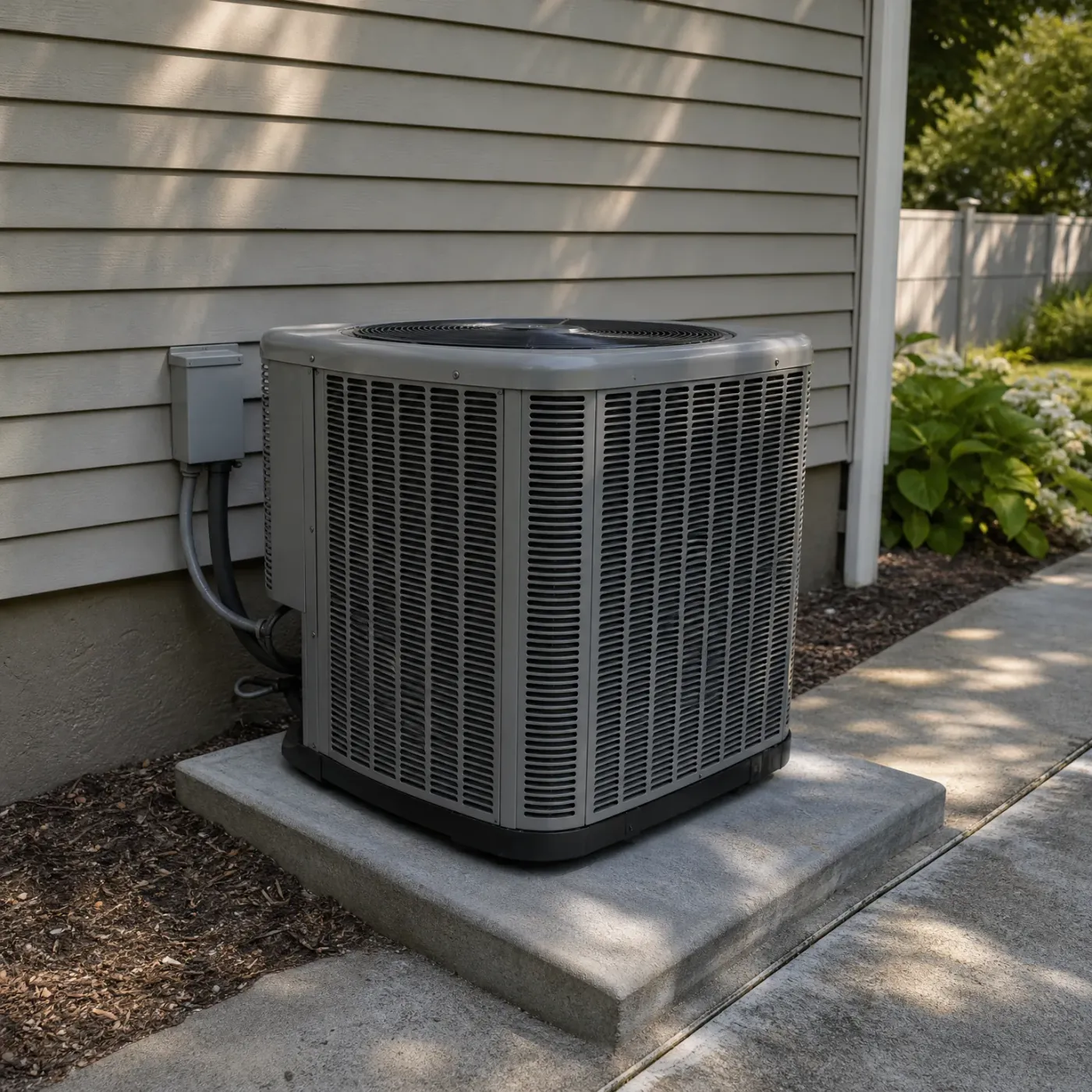
An outdoor air conditioner condenser unit on a concrete pad beside a house with light horizontal lap siding, with an electrical disconnect box and conduit on the wall behind it.

Weathered and working against itself

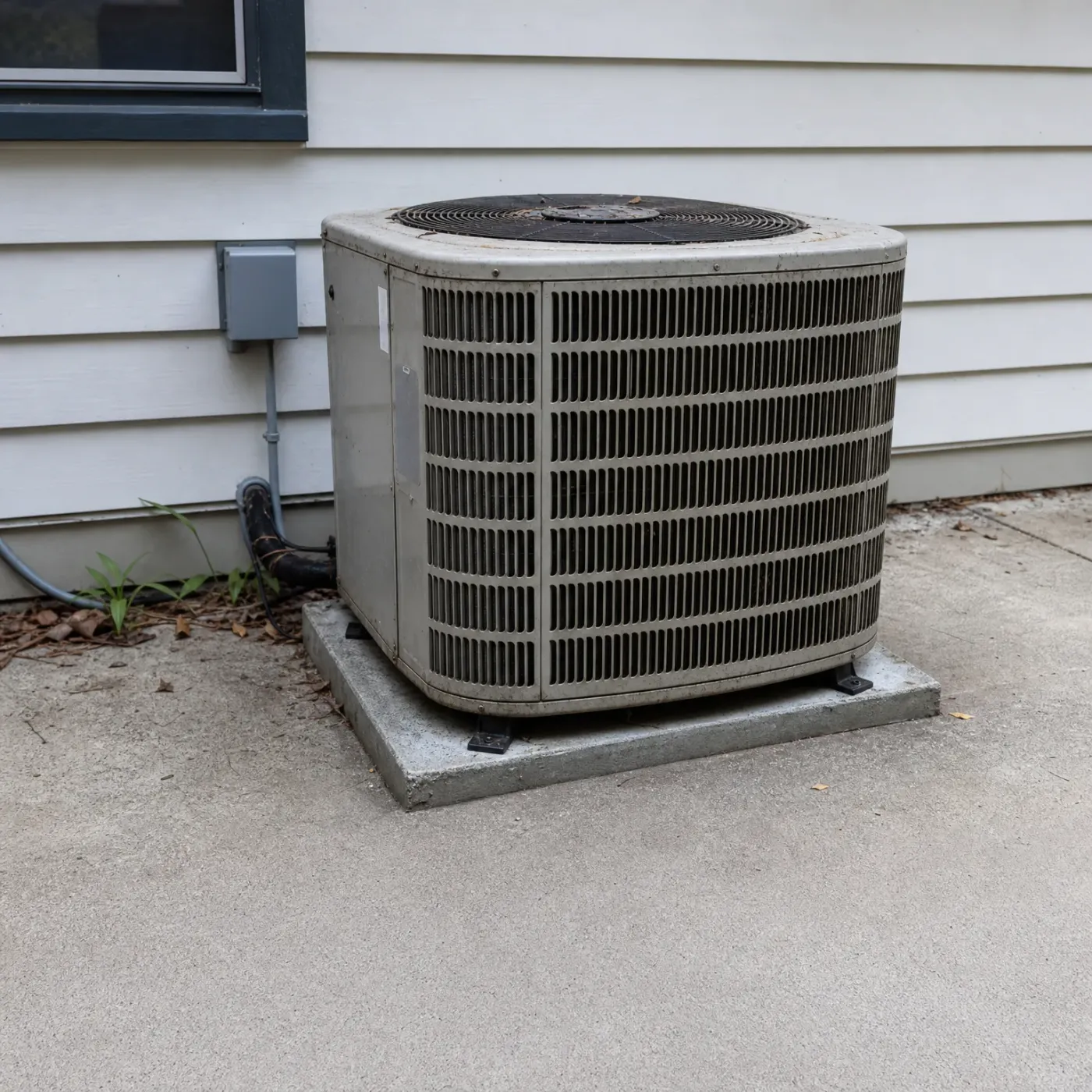
A unit that's sat through a few summers without a look shows it: grime on the cabinet, fins that have lost their shape. The compressor inside is pulling the same current for less cooling, and that gap is what shows up on the August bill.

Power costs 13.62 cents per kilowatt-hour statewide

At 13.62 cents per kilowatthour, every extra hour your compressor runs to make up for a dirty coil or a low charge lands on the bill directly. Keep the system running the way it's supposed to and you keep that rate from working against you all summer.

EIA-861 2025 statewide residential average

A clean coil and a correct charge are what keep your compressor from running longer than it needs to, and that's the whole answer. Nothing about an Iowa summer changes that, it just means the system gets tested every day from June through August. If your unit hasn't been looked at since last fall, someone needs to check the coil, the charge and the filter before the next stretch of 90-degree days. A contractor who works on central air all summer in this state has seen what cottonwood fluff does to a condenser and what a low charge does to a July bill, and knows it before taking the panel off. You won't need to call around or explain the same thing to three different companies. One licensed local contractor gets matched to you, looks at your system, and tells you straight what it needs. From there the bill either comes down or it doesn't, but you'll know which one you're dealing with instead of guessing every time it climbs.

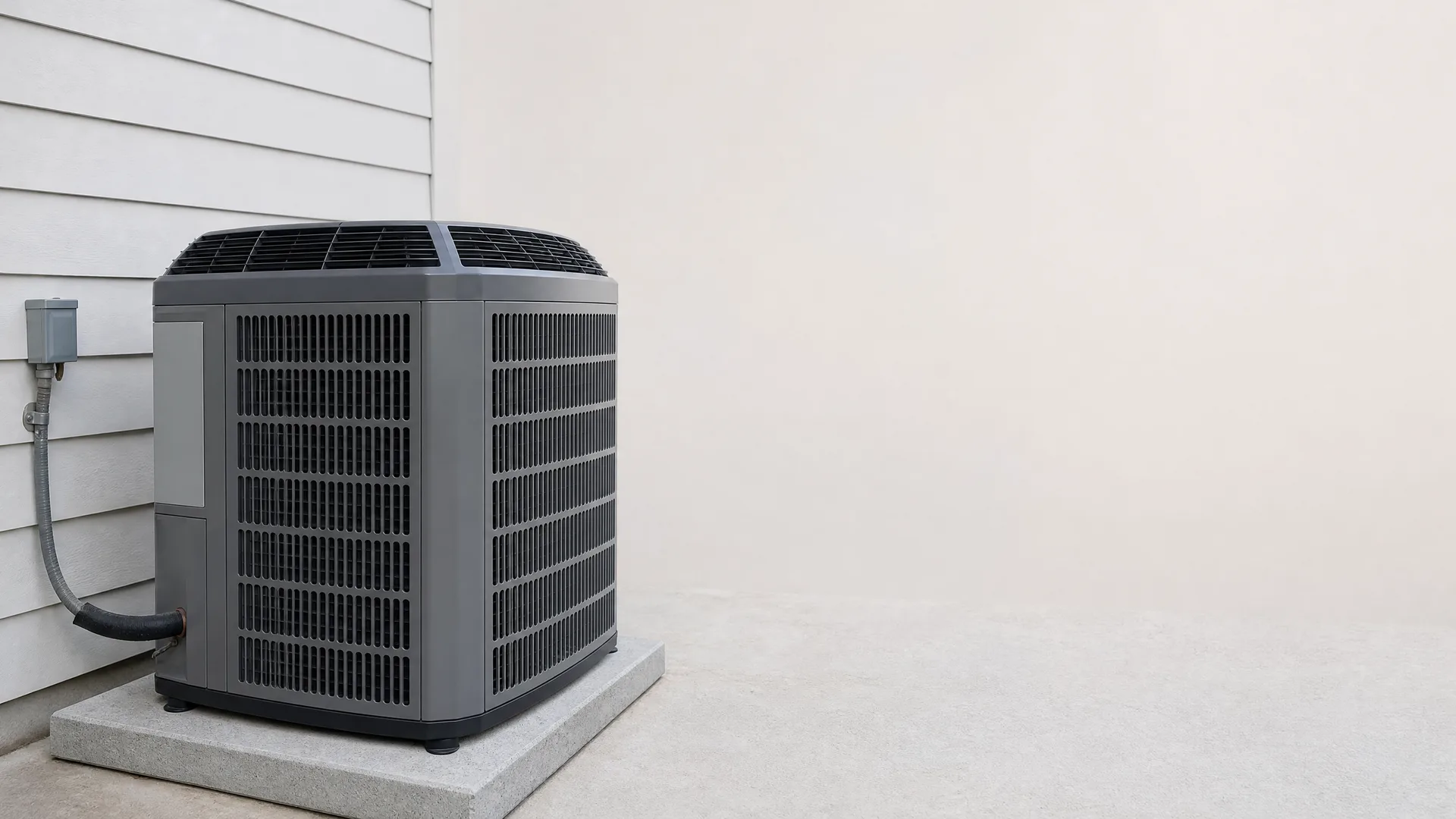
A gray outdoor air conditioning condenser unit on a concrete pad beside a house with horizontal vinyl siding, with a wall-mounted disconnect box and conduit, mulch bed, shrubs, and a concrete walkway nearby.

Explain it one time

Describe it once

Your request stays with one local pro.

You're not committing to anything by asking.