




Get AC Iowa

How long an AC unit lasts in Waukee, IA

Describe your air conditioner job once, to one pro.

Skip the search

How long does an AC unit last in Waukee, IA?

You want a straight number before you start planning around it, whether you're budgeting for next year or wondering if your current unit is on borrowed time. Waukee summers push an AC hard for months, and that kind of use adds up faster than people expect. You're not looking for a sales pitch, just a realistic figure to measure your own system against.

About 12 to 15 years

Most central air conditioners in Dallas County run 12 to 15 years before they need replacing. Summers here get sticky, and a unit that runs hard from May through September wears down faster than one that only kicks on now and then. The compressor and coil take the brunt of that load year after year. If your system came with the house, check the age on the nameplate rather than guessing. A unit past 12 years that starts needing repairs more often is usually closer to the end than the beginning, and it's worth asking whether another repair is worth it or if replacing it makes more sense.

A gray-haired bearded man in a dark knit sweater sits on a light gray sofa in a sunlit living room, looking to his left, with a framed artwork, a potted palm, and a curtained glass door behind him.
A middle-aged man in a dark green sweater sits on a light grey sofa looking toward a sunlit window, with a wooden shelving unit, lamp and potted plants in the background.
A man in a dark green sweater sits on a light grey sofa in a sunlit living room, looking to his left, with a shelving unit, houseplants, framed art and a large window behind him.
A gray-haired bearded man in a dark green sweater sits on a light gray sofa in a sunlit living room with a potted plant, framed picture, and dark shelving in the background.

Is your AC telling you it's close to done?

You'll usually notice it before it quits for good. It runs longer to hit the same temperature, or it cycles on and off more than it used to. Rooms upstairs stay warm while the thermostat says it's satisfied. The outdoor unit hums or rattles instead of running quiet. Your summer electric bills have crept up without a reason you can point to. Sometimes it's a smell when it kicks on, or water pooling near the indoor unit. None of these mean it's finished tomorrow, but they mean the parts inside are wearing out faster than they're being replaced. Keep running it that way through a Waukee summer and you risk it failing on the hottest week of the year, not the mildest one.

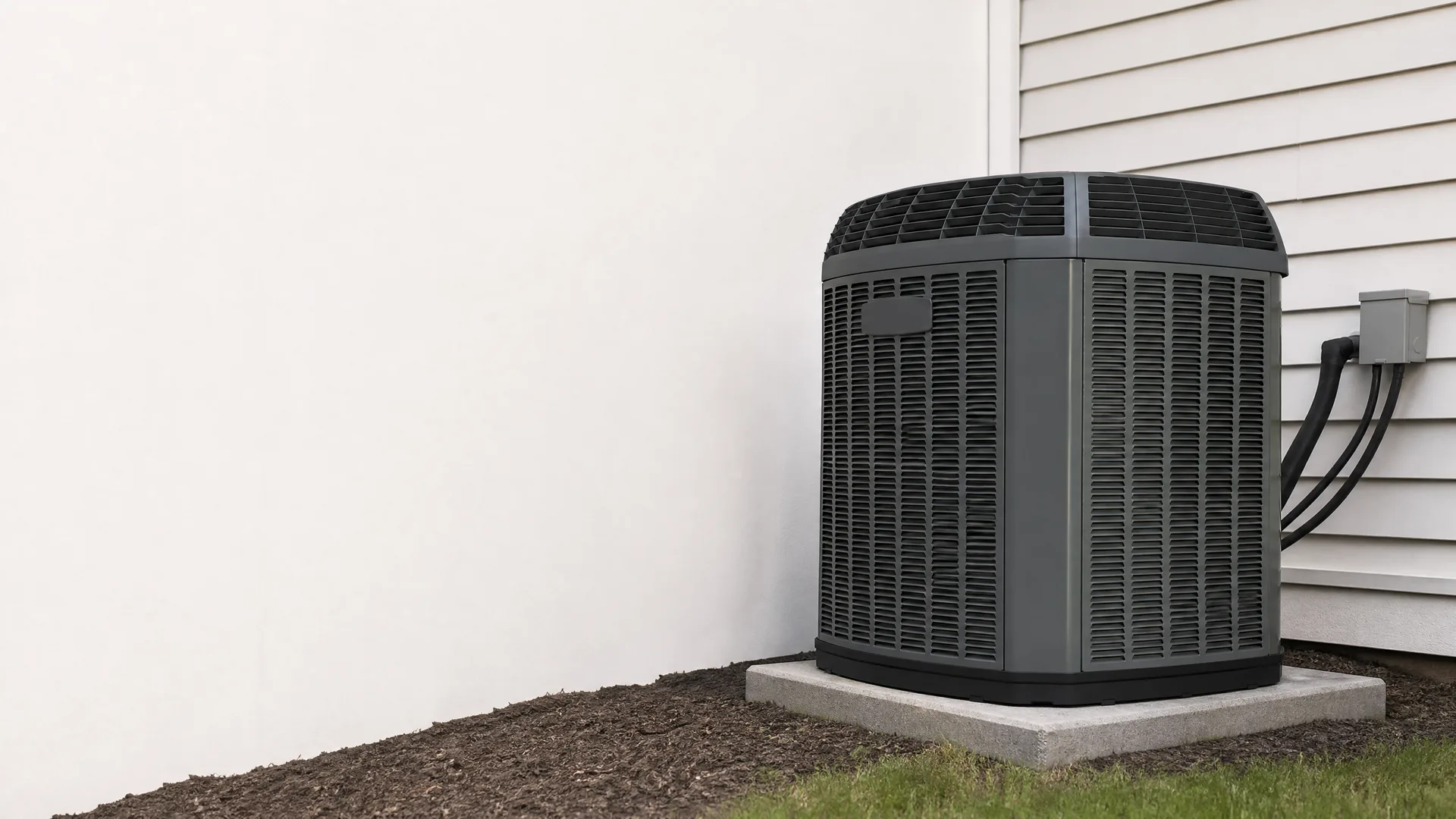
An outdoor air conditioner condenser unit on a concrete pad beside a light-colored stucco wall, with horizontal siding and a small electrical box to the left and gravel at lower left.

Why summer heat shortens its life

An AC unit works by moving heat out of your house, and the hotter it is outside, the harder that job gets. On a 90 degree day in Waukee, the compressor runs longer and under more strain than it would in milder weather. That added strain adds up over the years. A unit that sat through mild summers somewhere else might outlast one that's worked through a string of hot Iowa summers, even if both were installed the same year.

A dark gray outdoor air conditioning condenser unit on a concrete pad beside a house with light siding and a stucco wall, with mulch and grass in the foreground.

What regular maintenance buys you

A unit that gets checked every year, coils cleaned, refrigerant charge confirmed, electrical connections tightened, tends to reach the far end of its expected life. One that's never been serviced is more likely to fail early, often from a problem that would have been caught and fixed cheaply if someone had looked. Skipping maintenance doesn't always show up right away. It shows up five or ten years in, when a part gives out that a yearly checkup would have caught.

Cooling runs June through August

Three months isn't long, but June through August is when your unit earns its keep, running hardest and longest in the worst heat of the year. The other nine months barely touch it. That short, hard stretch is what wears a compressor down faster than the calendar alone would suggest.

NOAA nClimDiv 1991-2020

Replace it now or wait it out

If your AC is past 12 years and starting to struggle, you can nurse it through another summer or replace it before it fails. Nursing it means another repair bill or two, and no guarantee it makes it to September. A compressor that's straining in July heat doesn't usually get better in August. You're also running it less efficiently than a new unit would, so the power it pulls to do the same job costs more than it should. If it's been reliable and the repairs so far have been minor, waiting one more season is a reasonable bet.

What replacing it before it fails gets you

Choosing the timing yourself means you're not shopping for a contractor in the middle of a heat wave with your house at 85 degrees, taking whoever can show up first. You can get a local contractor who installs AC units in Dallas County every year and knows which sizes and setups hold up to Iowa summers, and get it done on a week that works for you instead of an emergency one. A unit that fails in August usually fails on the hottest day, because that's when it's working hardest. Planning around that instead of reacting to it is the main advantage of going early.

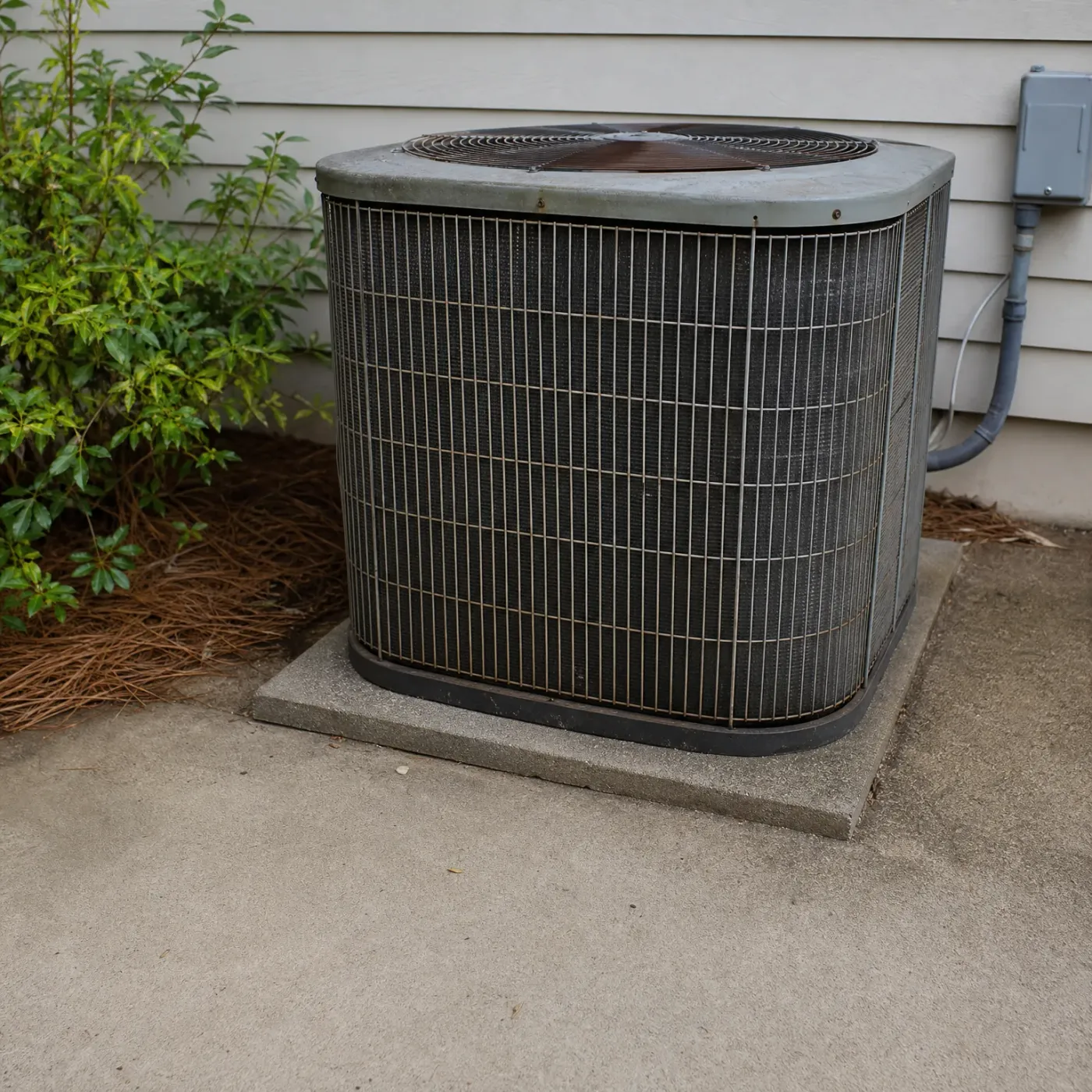
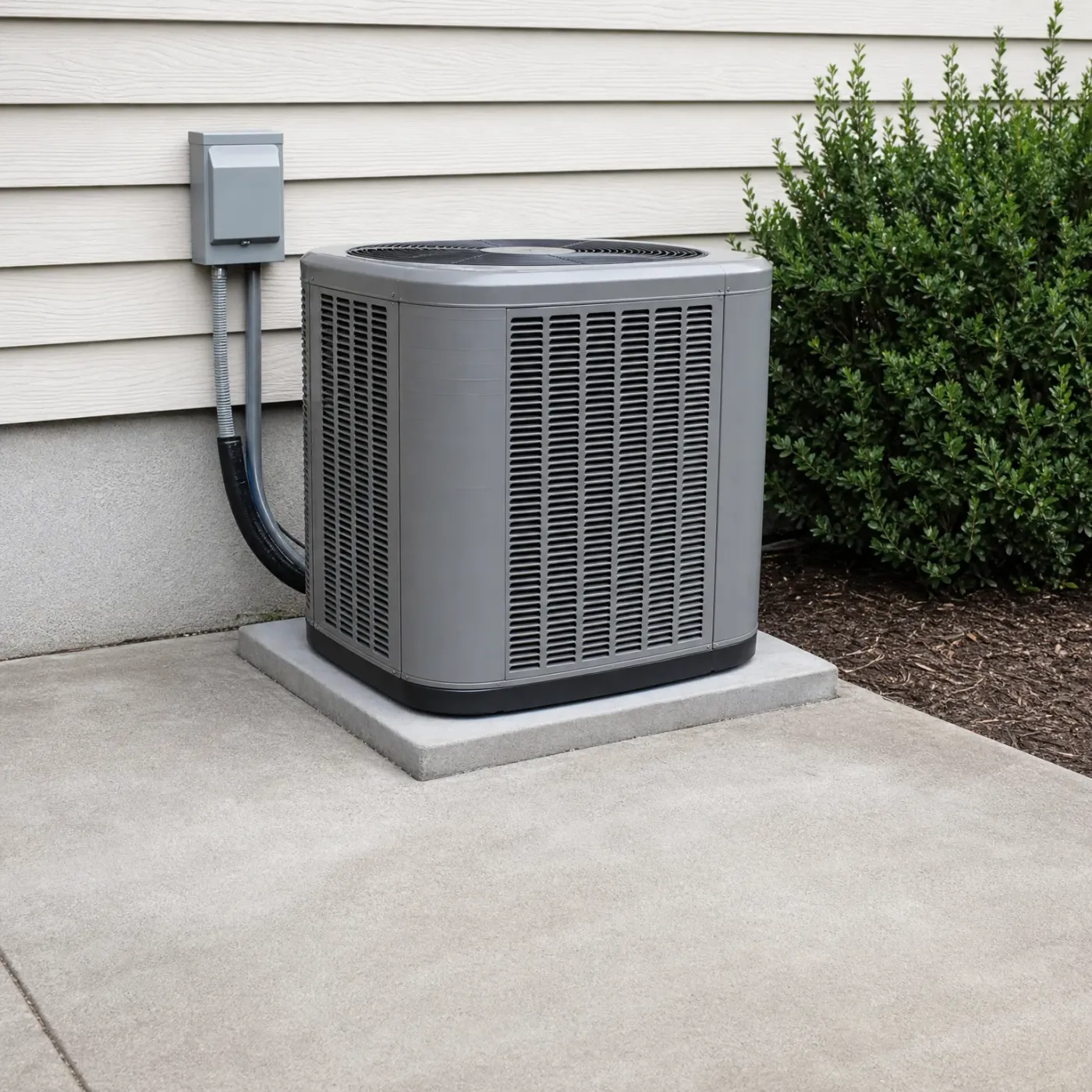
An outdoor air conditioner condenser unit on a concrete pad beside a house with horizontal lap siding, with a gray electrical disconnect box and conduit on the wall and a green shrub over pine-needle mulch at left.
Before you get your air conditioner installation
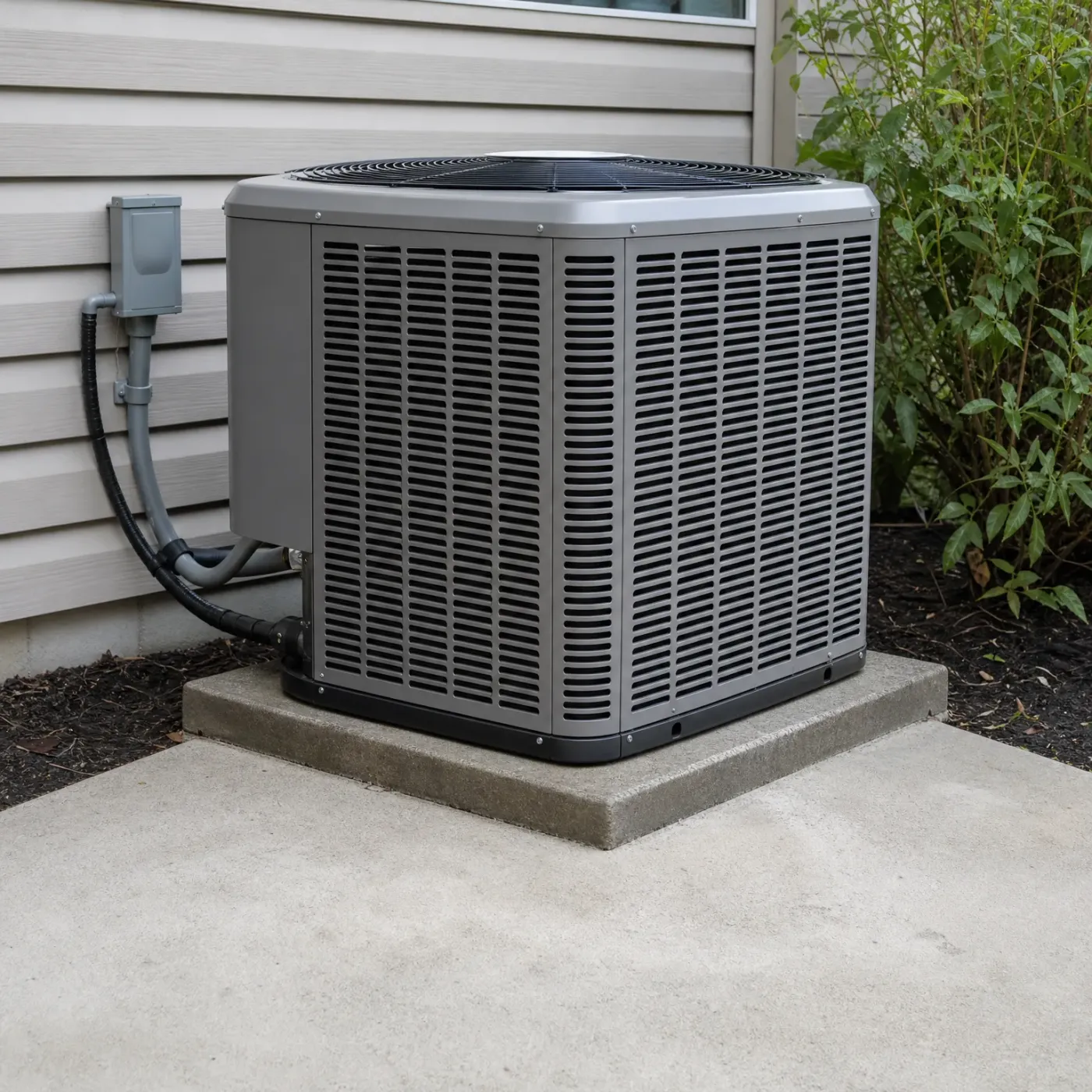
A gray outdoor air conditioner condenser unit on a concrete pad beside a house with light vinyl siding, with an electrical disconnect box and conduit on the wall and a leafy shrub with dark mulch to the right.
After you get your air conditioner installation
A gray outdoor air conditioning condenser unit on a concrete pad beside a house with horizontal lap siding, with a wall-mounted disconnect box and conduit to the left and a green shrub with mulch to the right.

What a working unit looks like

A clean condenser outside your house, sitting on its pad with the disconnect box mounted nearby. The coil fins are open and clear, air moves through them freely, and the compressor isn't fighting dirt on top of the heat.
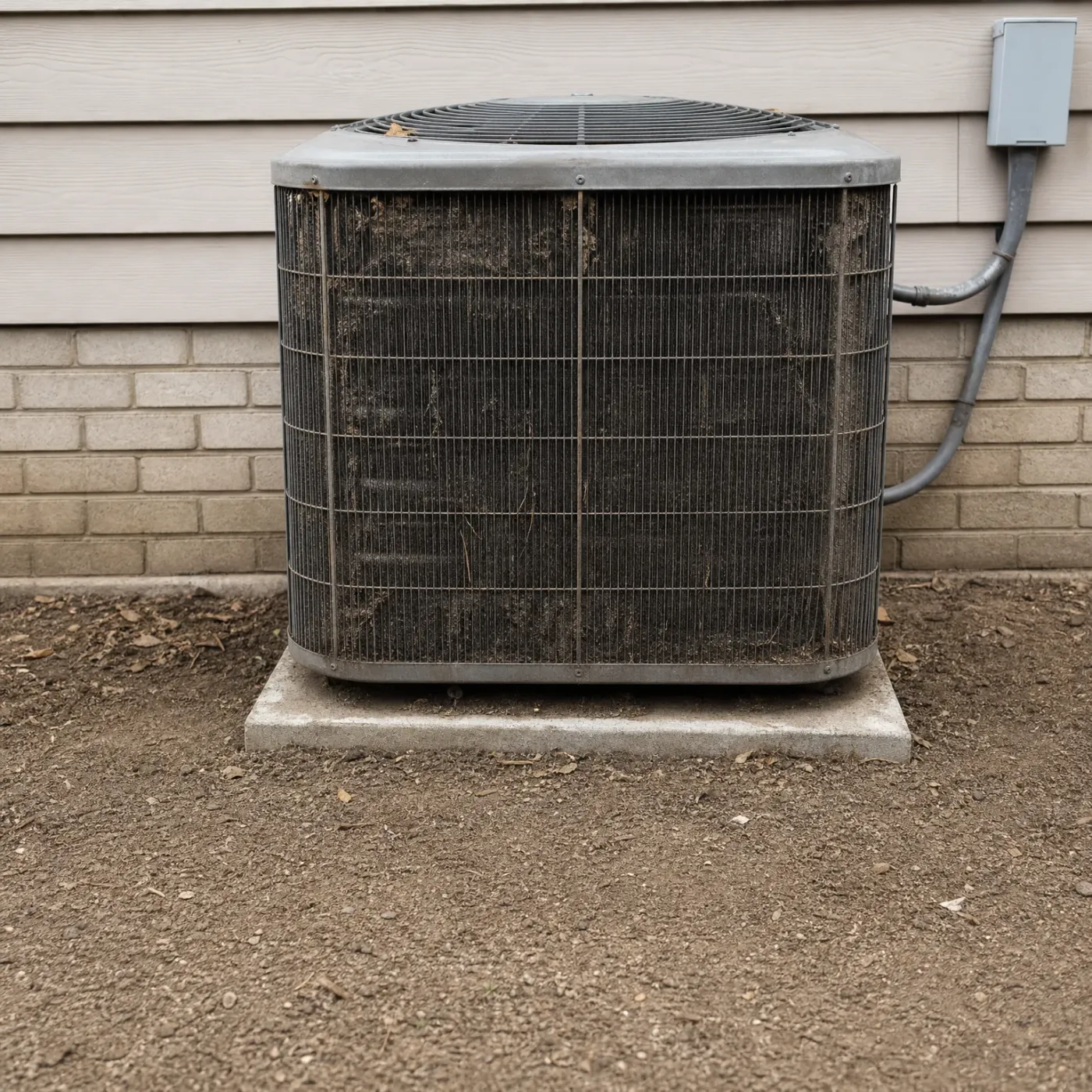

A dirty outdoor air conditioning condenser unit on a concrete pad beside a house wall with horizontal siding above a painted brick foundation, with a gray electrical disconnect box and conduit on the wall.

What a struggling unit looks like

Coil fins packed with dirt and grime, the wire cage clogged so air barely passes through. The compressor has to work harder to push heat out through that buildup, and in a Waukee summer that's extra strain it didn't need.

A wooden table in the foreground holds a closed laptop and a ceramic mug of coffee, with a spindle-back wooden chair behind it, a beige wall with paneled wainscoting, a window at left, and a kitchen counter with a cutting board, bowl of fruit and greenery at right.

What actually fails inside the unit

Most AC deaths come down to the compressor, and it doesn't usually just stop. It gets weak first. Refrigerant pressure drops a little, or the windings inside start to break down from years of starting and stopping, and the unit works harder for less cooling. Some units go a different way: the capacitor, a small part that gives the compressor and fan motor the jolt they need to start, wears out and gets replaced for a few years before the compressor itself finally goes. Either way, once the compressor fails, you're not repairing the AC. You're replacing it.

If you've gotten this far wondering whether yours is close, you already know the next step isn't straightforward. A contractor who works on these units every summer in Dallas County can look at the compressor, the refrigerant charge, and the coil and tell you in one visit whether you're looking at a repair or a new system, instead of you pulling apart quotes from a handful of companies to guess at the same answer.

A gray upholstered sofa with a beige cushion and knit blanket beside a curtained window, with a white mug and a book on a dark wooden table in the foreground and a lit lamp in the background.
A woman with shoulder-length dark brown hair in a cream knit cardigan sits in an upholstered armchair beside a window, looking off to the side, with a white bookshelf and potted plant blurred behind her.
A woman with dark hair in a bun sits wrapped in a chunky knit blanket on a couch with a child resting his head on her shoulder, eyes closed, beside a lit lamp and bookshelf indoors.

No calling every shop in Dallas County

The pro who gets in touch is licensed in Iowa and works in Dallas County.

You're not committing to anything by asking.

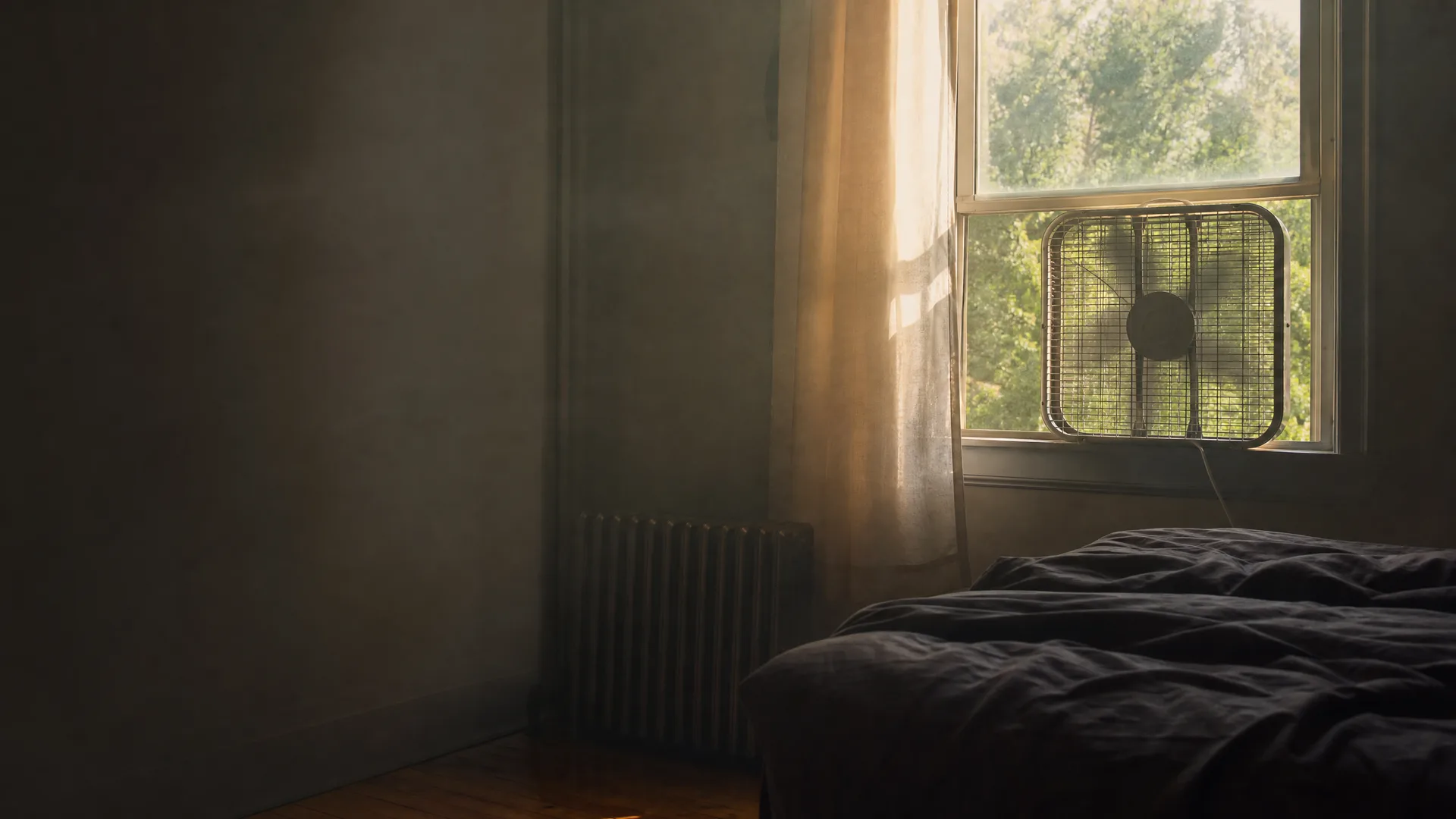
A dim bedroom with a bed covered in gray bedding, a cast-iron radiator against the wall, and sunlight entering through a window fitted with a box fan and a sheer curtain, with green trees outside.

It's just past eight and still light out, the sky that late-June orange that hangs on past dinner. Upstairs the bedroom holds the heat from the day, the air thick enough you can feel it on your arms. A box fan sits wedged in the open window, pulling in air that isn't much cooler than what's already in the room. Downstairs the thermostat reads 72. Up here it doesn't feel like it. You've stripped the bed down to a sheet and left the door open for whatever air might move through the hall. The fan hums along, pushing the same warm air around, and you lie there waiting for it to do more than that.

Repair It or Replace It

Repair the old unit

  • A single repair now costs less than a new system, which matters if money's tight this month.
  • You already know how it runs, its quirks, its sound, so there's no learning curve with a new thermostat or setup.
  • If the compressor itself is still sound and it's a capacitor or a fan motor, that repair can buy you real time.
  • You're gambling that the next failure doesn't land in late July when every contractor in Dallas County is backed up.
  • A unit past 12 years that's already been repaired once is a weaker bet the second time around.
  • Parts for an older unit can take longer to source, so a repair might mean days without cooling instead of hours.

Replace it now

  • A new unit comes with a warranty, so the next repair bill for years is someone else's problem.
  • Correct sizing and a clean install mean it runs the way it's supposed to from day one, not patched around old wear.
  • You stop guessing whether this summer is the one it doesn't make it through.
  • A proper install takes checking your ductwork and your home's load, not just dropping in a bigger box outside.
  • It's a bigger cost up front than a repair, with nothing coming back except the system itself.
  • You lose whatever's left of the old unit's working life, even if that's only a season or two.
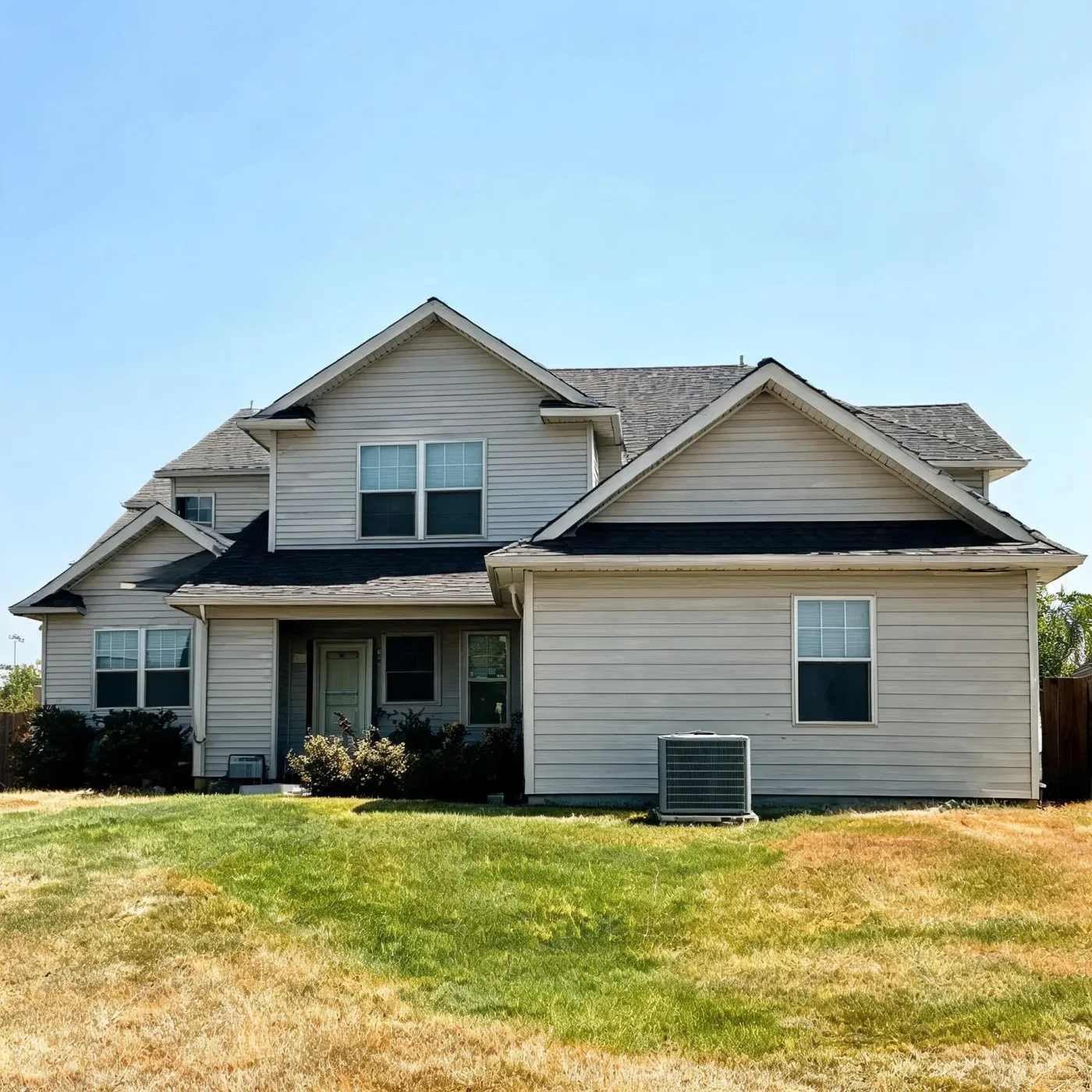
Two-story house with beige horizontal siding, gray shingled gable roofs and a covered front entry, with an outdoor air conditioning unit beside it and a partly dry grass lawn in front under a clear blue sky.

The dew point in Dallas County averages 63°F through June, July and August, and that's the number that decides whether your house feels comfortable or just cooled. Dew point measures how much moisture is actually in the air, not the temperature, and 63 sits in the range where the air feels heavy even when the thermostat reads 72. Your AC has to pull that moisture out as it runs, not just drop the temperature, and that extra load falls on the same compressor doing the cooling. On the muggiest days you'll notice it in how long a cycle runs and how clammy the house feels right after it shuts off. Source: NOAA climate normals for Dallas County, IA.

NASA POWER T2MDEW

A Waukee AC unit lasts about 12 to 15 years, and Dallas County summers tend to land that number on the shorter end rather than the longer one. Past that age, a unit that's struggling is telling you something real, not just having a bad week. Once you decide to replace it, the job is finding someone who'll install it right, and that's where most of the hassle usually sits: calling around, explaining the same thing to three different companies, sorting through quotes that don't quite match up. When you request help through this page, it goes to one licensed, local contractor, someone who installs and services AC units in this area every summer and knows what tends to go wrong in homes around Waukee. No pile of calls to sort through, no repeating yourself. Just one contractor who already knows the climate your new unit has to work in.

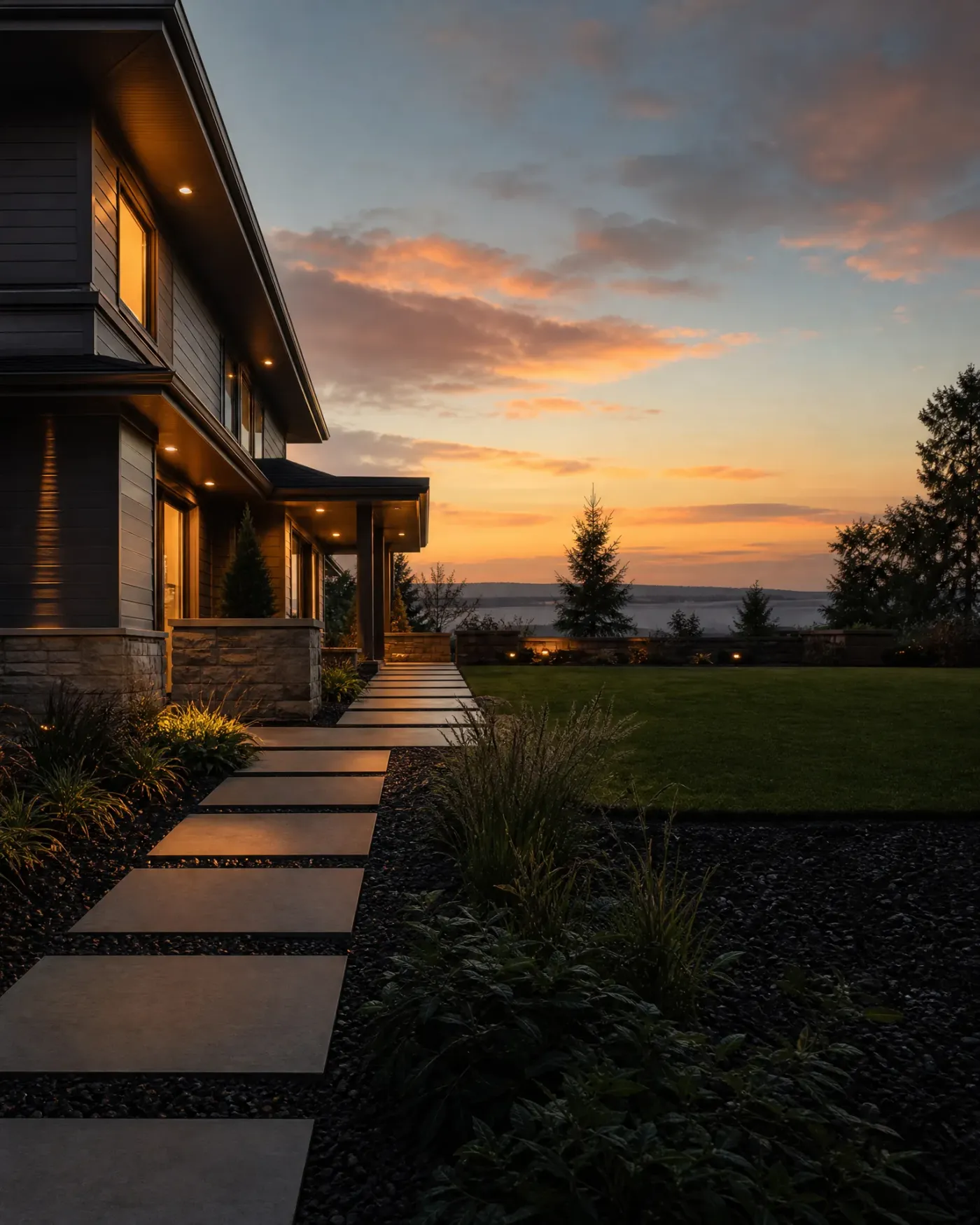
A modern two-story house with dark siding and stone base at dusk, with lit soffit lights, a path of large rectangular pavers set in dark gravel, planting beds, a lawn, and an orange and blue sunset sky above distant trees and water.

Air Conditioner Installation

No quotes to chase

Step 1 of 3: Equipment
  • A beige upholstered armchair with an olive cushion sits in a sunlit corner beside a wooden side table holding a ceramic vase with leafy branches, under a framed abstract artwork, on a woven rug over a wood floor.
    • Get matched with someone who does this kind of work in Dallas County.
    • Your new air conditioner project goes to an installer who works in Dallas County.
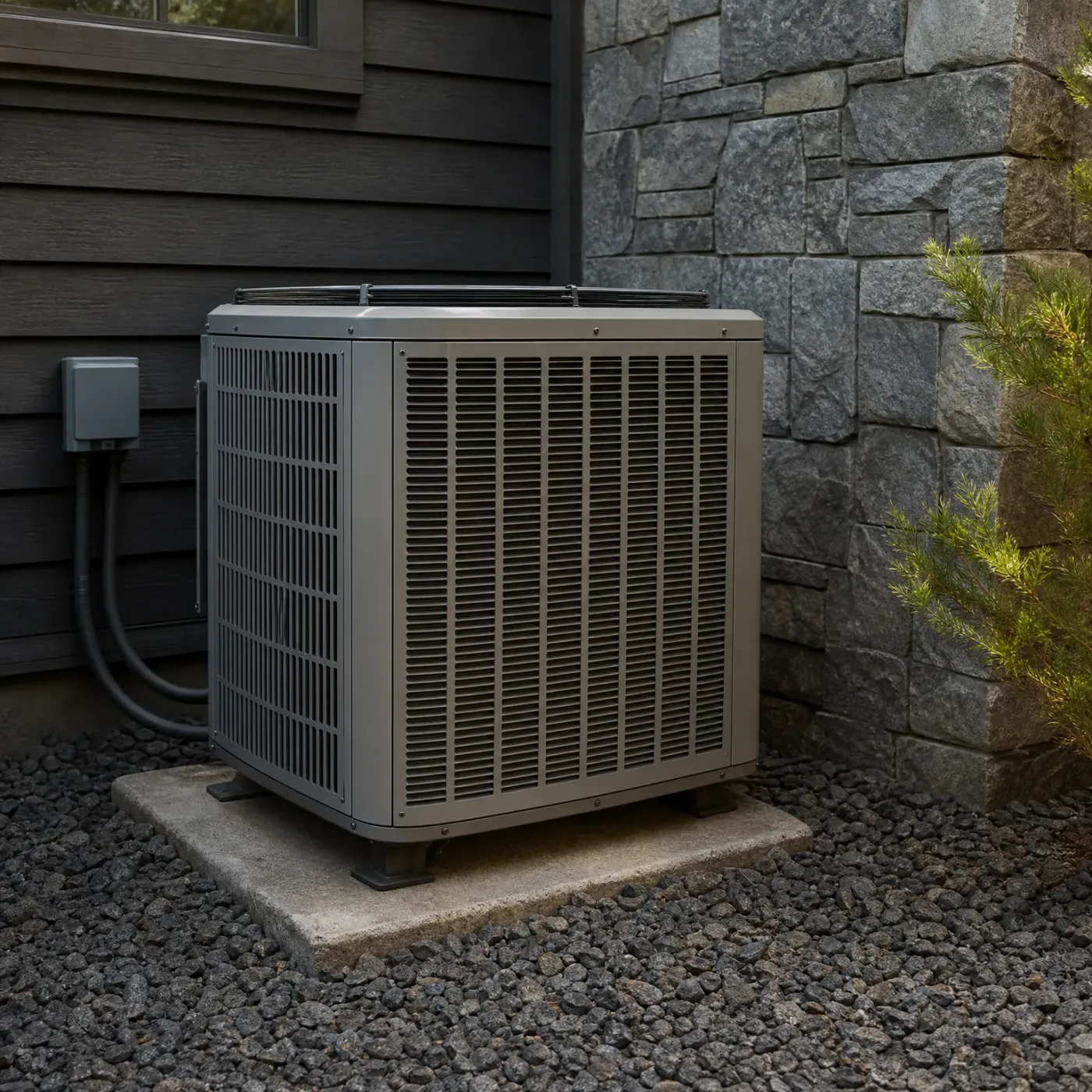
  • A gray outdoor condenser unit on a concrete pad surrounded by dark gravel, beside a dark wood-sided wall with an electrical disconnect box and a stone veneer wall with a small evergreen shrub.
    • Send the form and stop researching installers for the new air conditioner.
    • One request ends the search for an air conditioner installer.
  • A beige upholstered oversized armchair with a matching cushion and a knit throw draped over one arm, beside a round wooden side table holding a vase of greenery near a curtained window, with a framed landscape print on the wall and a woven rug on a wood floor.
    • Explain the job once and skip repeating it on every call.
    • Skip searching for an air conditioner pro and answer a few questions instead.
  • Sunlit living room corner with a beige upholstered sofa, cushion and knitted throw, a round wooden side table holding a white ceramic vase of leafy branches and a small wooden bowl, a framed landscape painting on the wall, and a window at right.
    • A licensed installer who works in Dallas County gets your project.
    • One installer gets your project, so there's no bidding war over it.