Get AC Iowa

How long an AC should run on a hot Iowa day

Step 1 of 3: Equipment

How long should my AC run on a hot day in Iowa?

On a muggy Iowa afternoon, your AC might seem like it never shuts off. You start wondering if that's normal or if something is working harder than it should. It helps to know what a system is supposed to do on a day when the heat and humidity both push past what the house can shed on its own.

It should run for long stretches, sometimes most of the afternoon

On a 90 degree day with Iowa's humidity, your AC is pulling moisture out of the air as well as heat, and that takes longer than cooling dry air. A unit that runs for an hour or more at a stretch during the hottest part of the afternoon is doing what it's built to do. What matters more than how long it runs is whether the house actually cools down and whether the system ever shuts off at all. One that never cycles off, even overnight when it's cooler out, is telling you something is off, maybe low refrigerant, a weak capacitor, or a system that's sized wrong for the house.

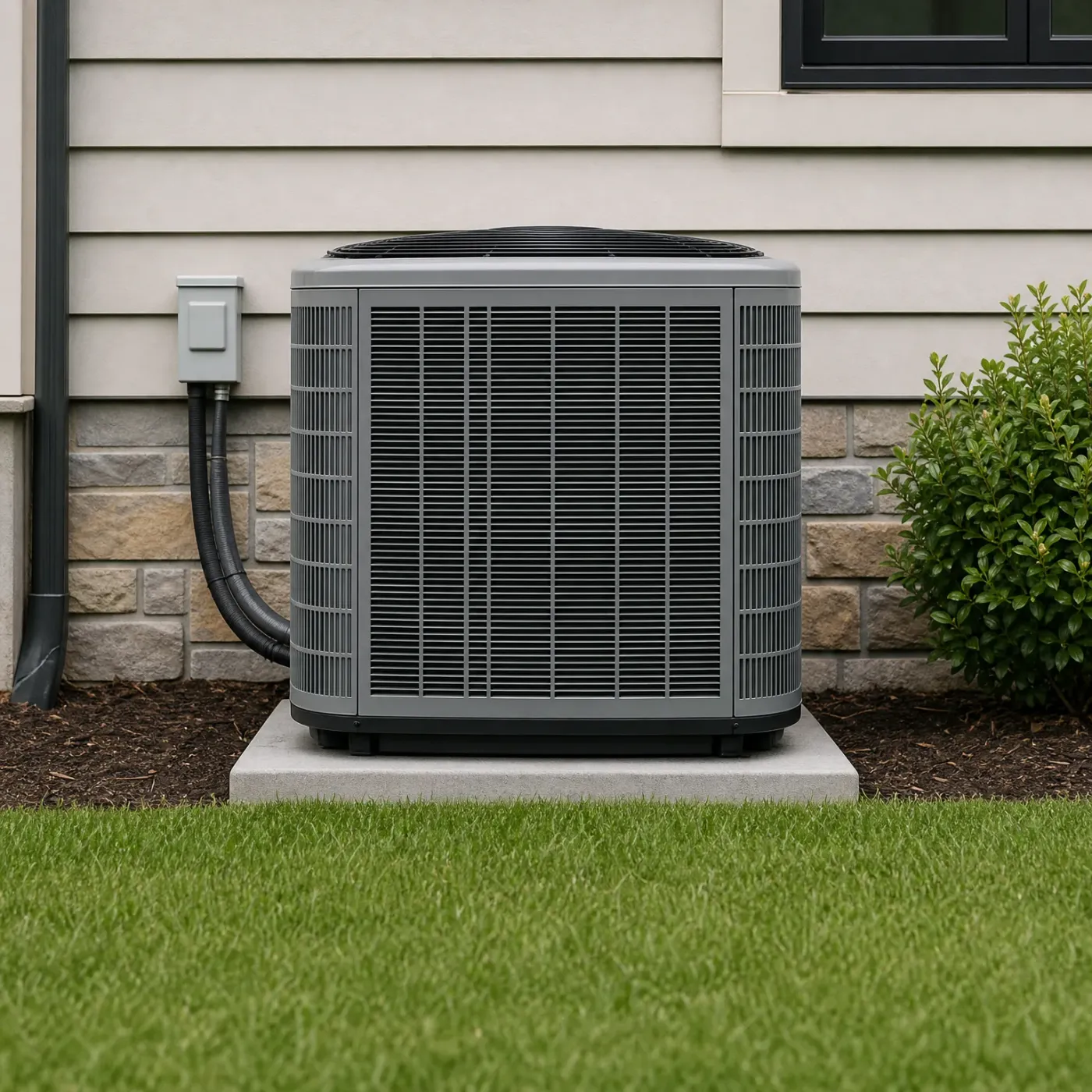
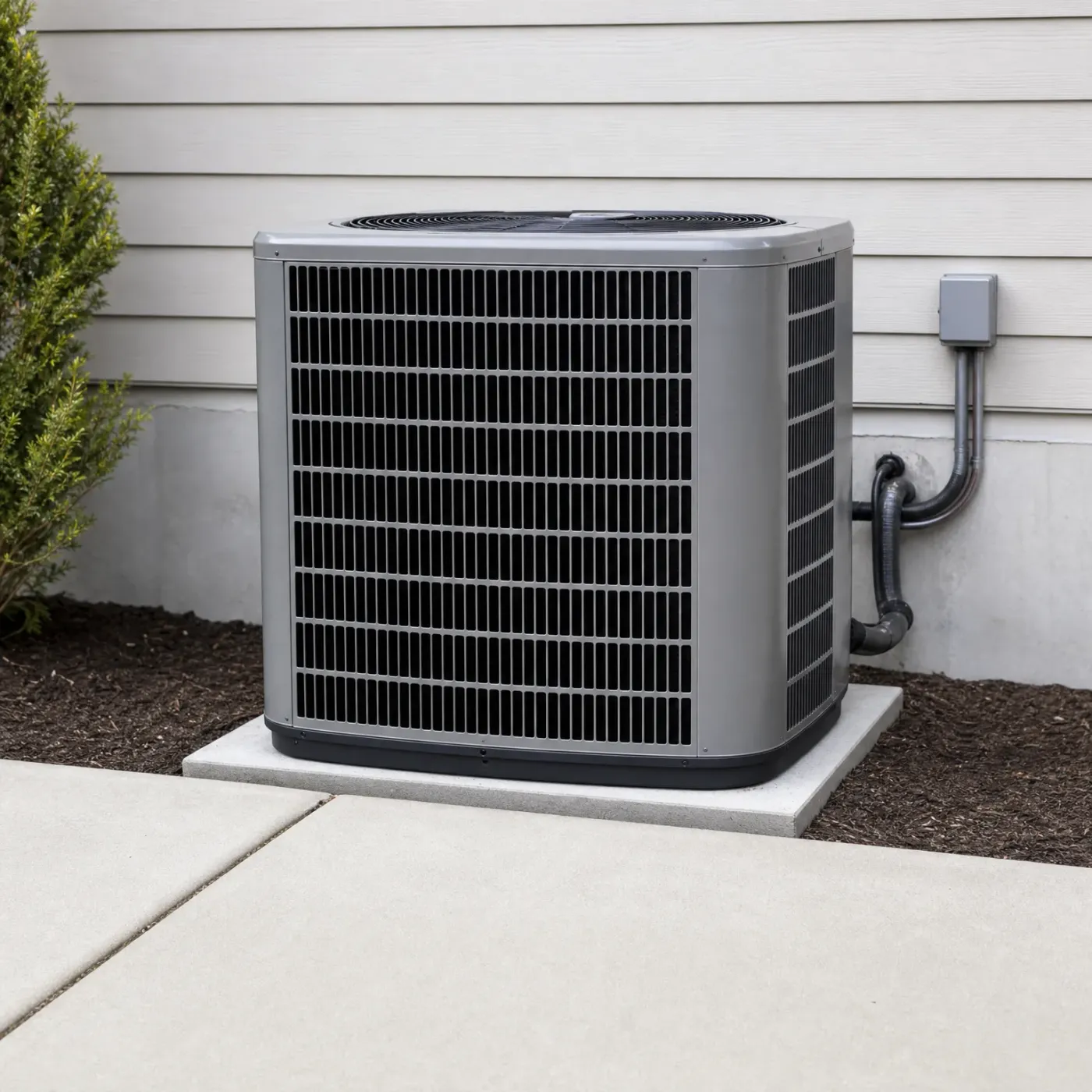
A gray outdoor air conditioner condenser unit sits on a concrete pad beside a house with horizontal lap siding, with conduit and an electrical disconnect box on the wall, dark mulch and a shrub to the left, and a concrete walkway in the foreground.

Running long because it has to

On a 90 degree day, a healthy AC can run almost nonstop and still be doing its job. The outdoor unit cycles long because the heat load is high, not because anything is wrong. It should still cool the house down and cycle off once in a while overnight.
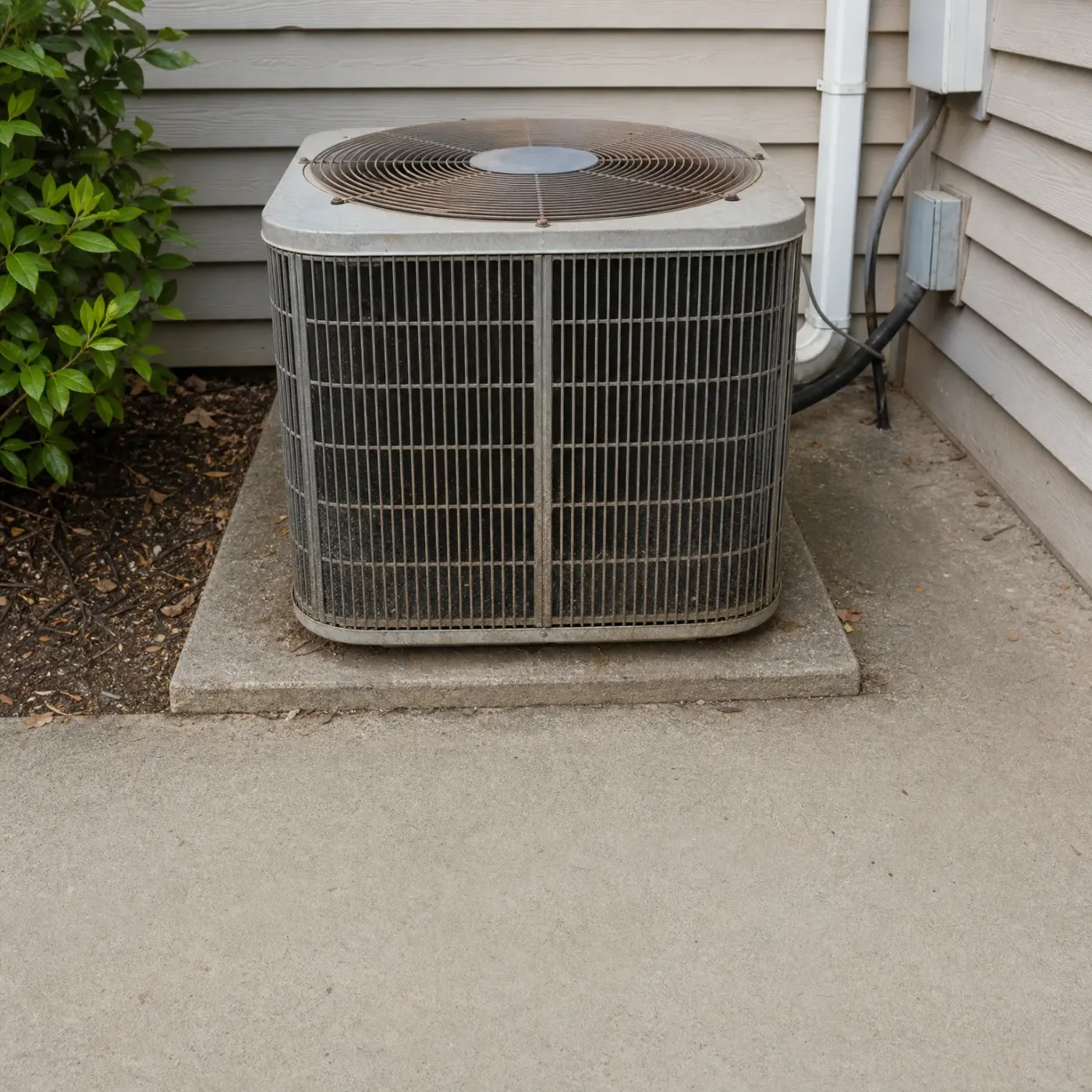

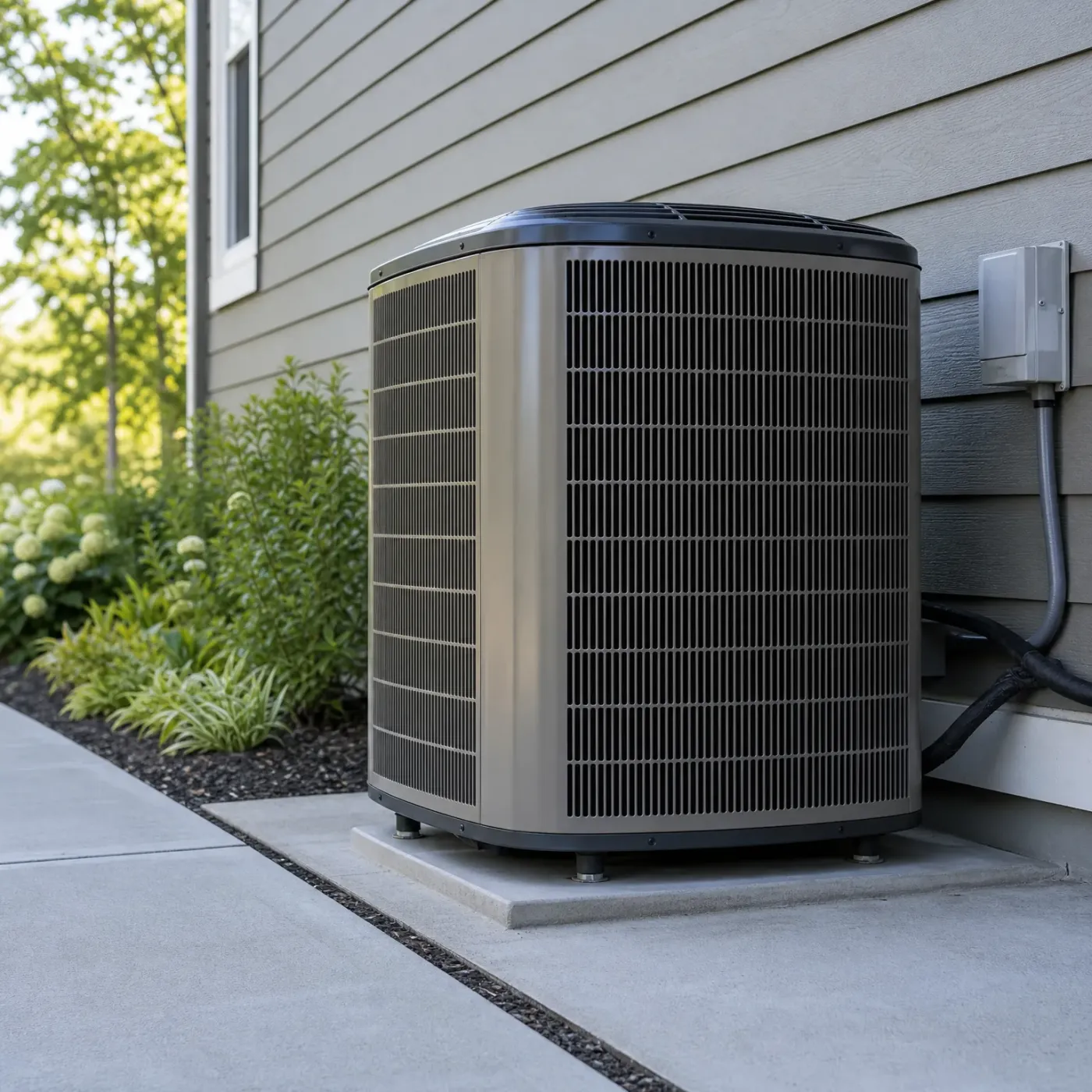
An outdoor air conditioning condenser unit on a concrete pad beside a house with horizontal lap siding, with a shrub and mulch bed to the left and conduit and a small electrical box on the wall to the right.

Running long because it's struggling

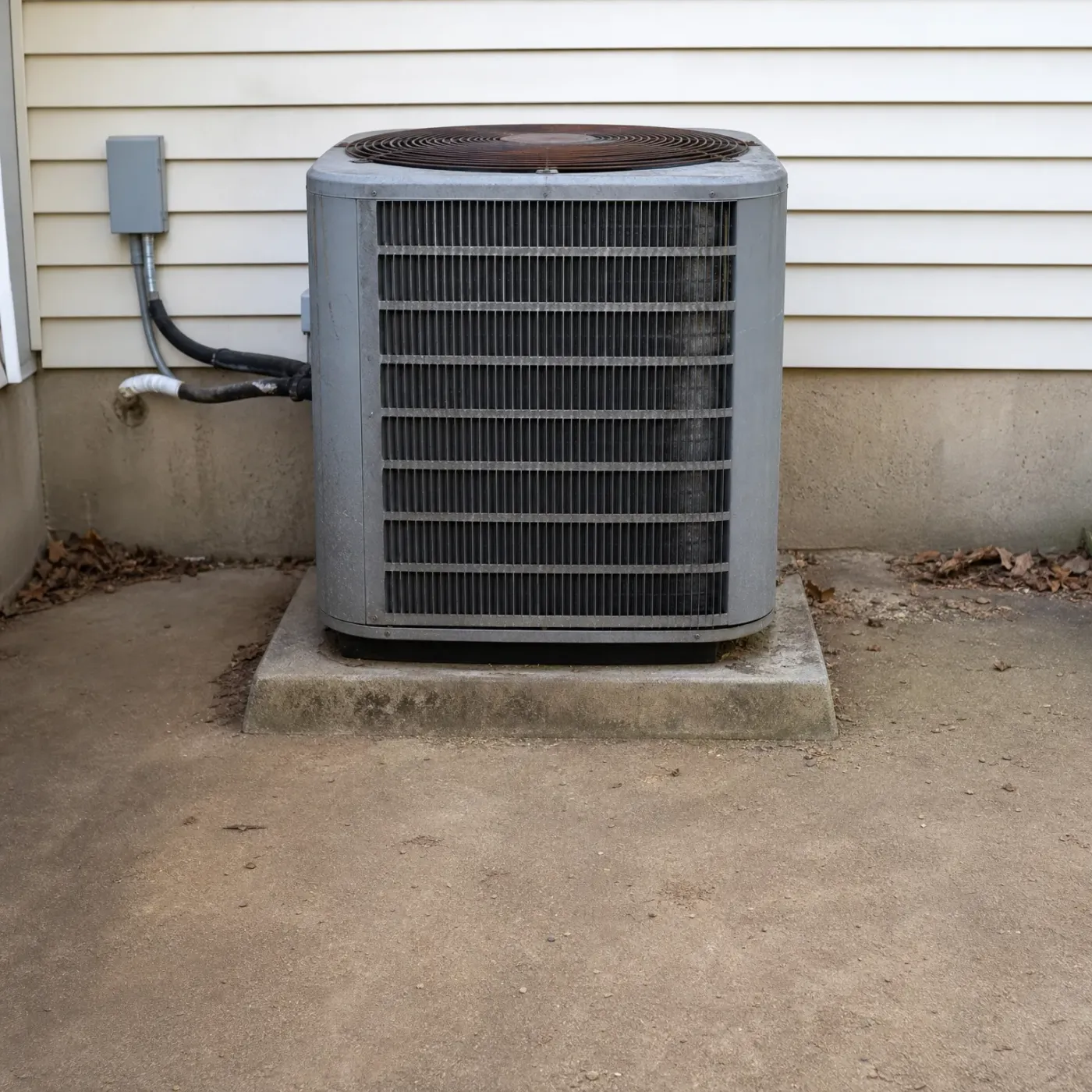
A dirty condenser like this one can't shed heat the way it should, so the compressor runs longer to move the same amount of heat. Years of grime on the grilles, a weak capacitor, or a refrigerant leak all show up the same way: a unit that runs and runs but barely keeps up.

A smiling woman with dark shoulder-length hair in a cream V-neck sweater sits at a marble counter with a glass of red wine, with a kitchen and softly lit living room behind her.
A woman in a dark green sweater laughs while seated at a marble kitchen island with a glass of red wine, with open shelving, cabinets and a living room visible behind her.
A woman with long dark hair in a cream knit sweater laughs while looking off to the side, seated at a counter with a glass of red wine, in a dimly lit living room with a sofa, lamp, framed pictures and houseplant behind her.
A smiling woman with long dark hair in a beige sweater sits at a marble kitchen counter with a glass of red wine, with a dimly lit living room behind her.

What's actually happening during a cycle

  • The thermostat calls for cooling once the room drifts a degree or two above the setpoint, and that starts the cycle.
  • Refrigerant moves from the indoor coil to the outdoor unit and back, carrying heat out of the house with every pass.
  • The compressor is the part doing the real work, and it runs the whole time the cycle is on, not just at startup.
  • The blower keeps moving air across the indoor coil the entire cycle so the house actually feels the cooling, not just the equipment running.
  • A cycle ends when the indoor coil pulls the air down past the setpoint, which on a hot day can take a while to reach.
  • Short, frequent cycles that never settle into a steady run are a different pattern than one long run, and worth a tech looking at.

Your thermostat is the switch, but the compressor is the engine. Once the room drifts above the setpoint, the compressor kicks on and stays on for the whole cycle, pushing refrigerant out to the outdoor unit and back to the indoor coil. That coil is where the heat actually leaves your air. The blower's job is separate from the compressor's but just as constant. It pulls air across that cold coil and pushes it through your ducts, which is why you feel the house cooling even though the compressor outside is the part doing the harder work. None of this is quick by design. The compressor runs until the air passing over the indoor coil has pulled the house down past the setpoint, and on a 90 degree day with the sun on the roof all afternoon, that can take a long run to finish. A system cycling for 20 or 30 minutes straight on a hot day is just working through that math. What's worth noticing is the pattern, not the length. One long run that ends with the unit shutting off and the house holding steady is normal. Short bursts that start and stop every few minutes without ever settling in point to something else, maybe a refrigerant issue or a sensor misreading the room, and that's a different problem than a system working hard on a hot day.

A gray outdoor air conditioning condenser unit on a concrete pad beside a house with horizontal lap siding and a stone veneer base, with a disconnect box and conduit on the wall, mulch bed and shrub to the right, and mowed grass in the foreground.
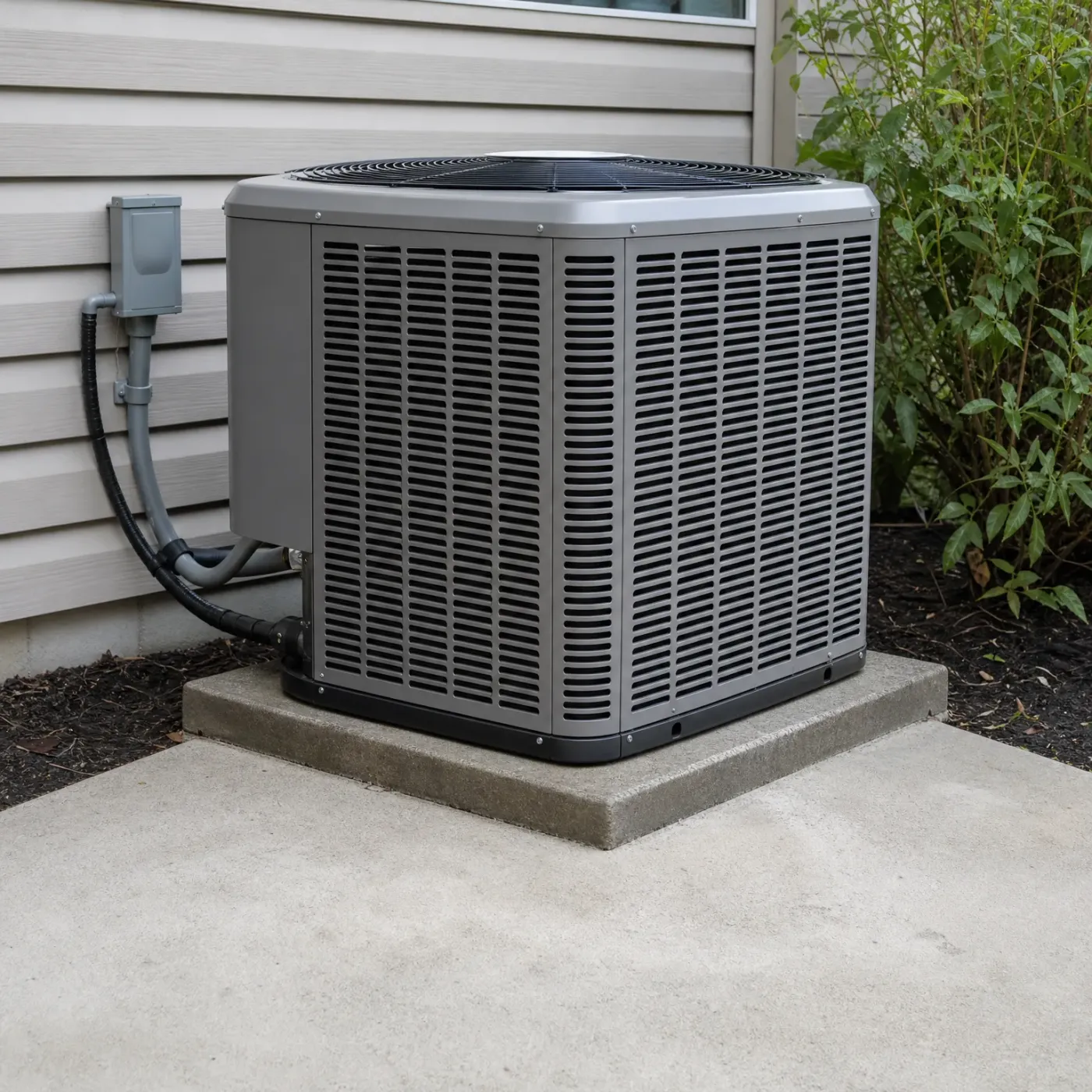
A clean condenser like this one can move heat all day long without falling behind, even when the air is thick and still.
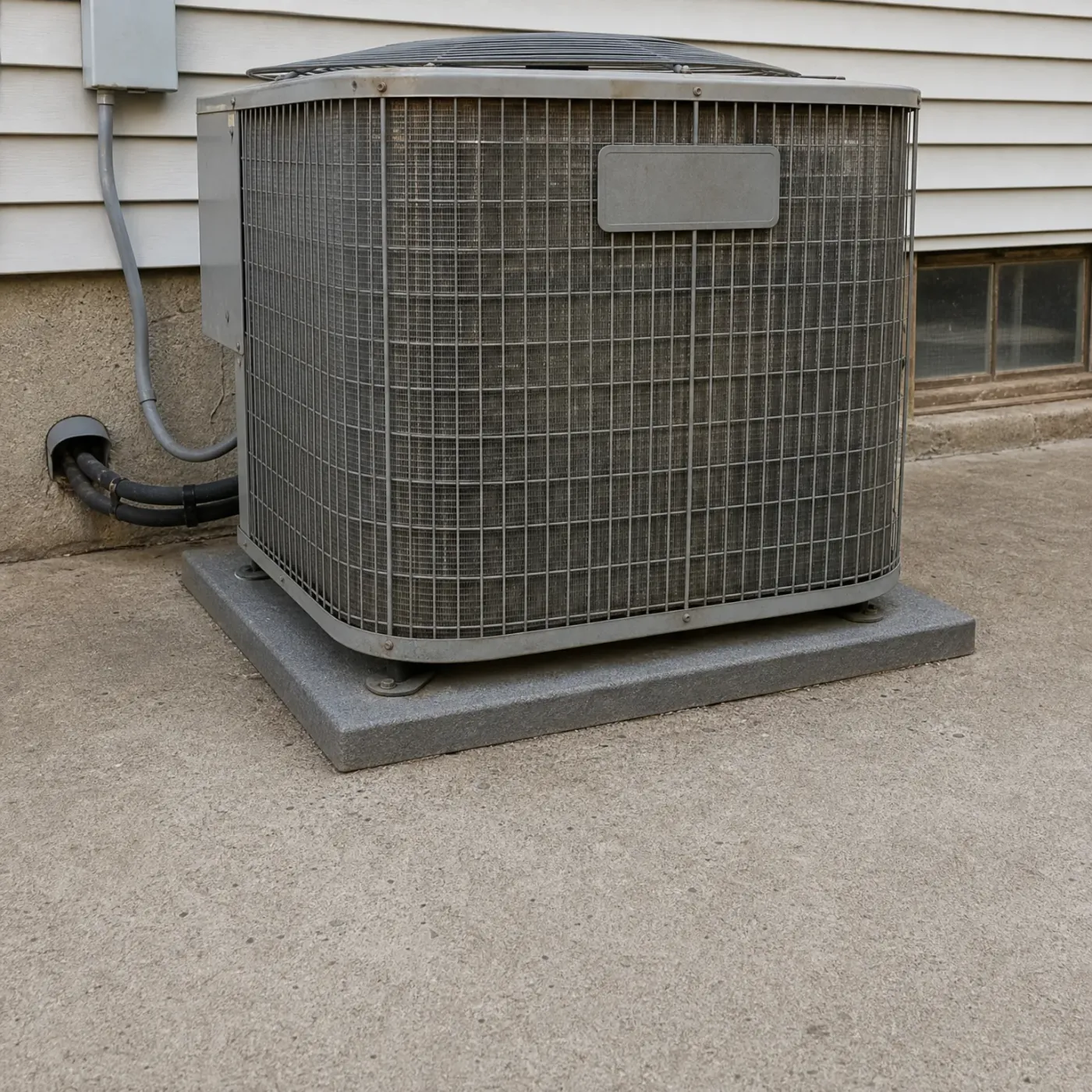
An outdoor air conditioner condenser unit on a gray composite pad beside a house with horizontal siding, a concrete foundation, a basement window, and a conduit and disconnect box on the wall.
Dirt packed into the fins like this makes the unit run long and still lose ground, because the coil can't shed heat through the grime.
A smiling bearded man in a navy crewneck sweater sits at a dinner table with a glass of red wine, plates and glasses in the foreground, in a dimly lit room with a lamp and framed picture behind him.
A woman in a dark gray sweater reclines on a light sofa with eyes closed and a slight smile, under a textured gray blanket with an open book resting on her lap, with a lit table lamp and plant in the background.
An outdoor air conditioning condenser unit on a concrete pad beside a house with horizontal lap siding, with a gray electrical disconnect box and conduit on the wall and green shrubs and trees to the left.

No phone calls to make

A licensed local pro takes the request for your air conditioner tune-up.

One form instead of hunting for a pro who does air conditioner tune-ups.

Skip calling around

Sending the form costs nothing.

Long Runtime: Normal Load or Neglect

Skip maintenance

  • A dirty condenser outside has to work longer to push the same heat out of the house, so your runtime creeps up over the summer.
  • A clogged filter cuts airflow across the indoor coil, and the system stretches its cycles trying to make up for it.
  • Low refrigerant from a slow leak means less heat moves per cycle, so the unit runs longer and the house still lags behind the setpoint.
  • A failing capacitor can make the compressor labor to start and run, adding strain you won't see until the unit quits on the hottest day.
  • Nobody's looked at the coil, the charge or the electrical parts since last year, so you're guessing at why the runtime climbs.

Get it serviced

  • A contractor who works on these systems every summer can tell you if the long runtime on a 90 degree day is normal or a sign something's off.
  • Cleaning the condenser coil restores the surface area the unit needs to shed heat, which can bring runtime back down to what the heat load actually calls for.
  • Checking the refrigerant charge against the manufacturer's spec catches a slow leak before it turns into a system that can't keep up at all.
  • One licensed local contractor looks at your specific unit instead of you explaining the same problem to several companies and sorting through different answers.
  • Testing the capacitor and electrical connections now catches the part that's about to fail before it does, instead of after the compressor's already struggling.
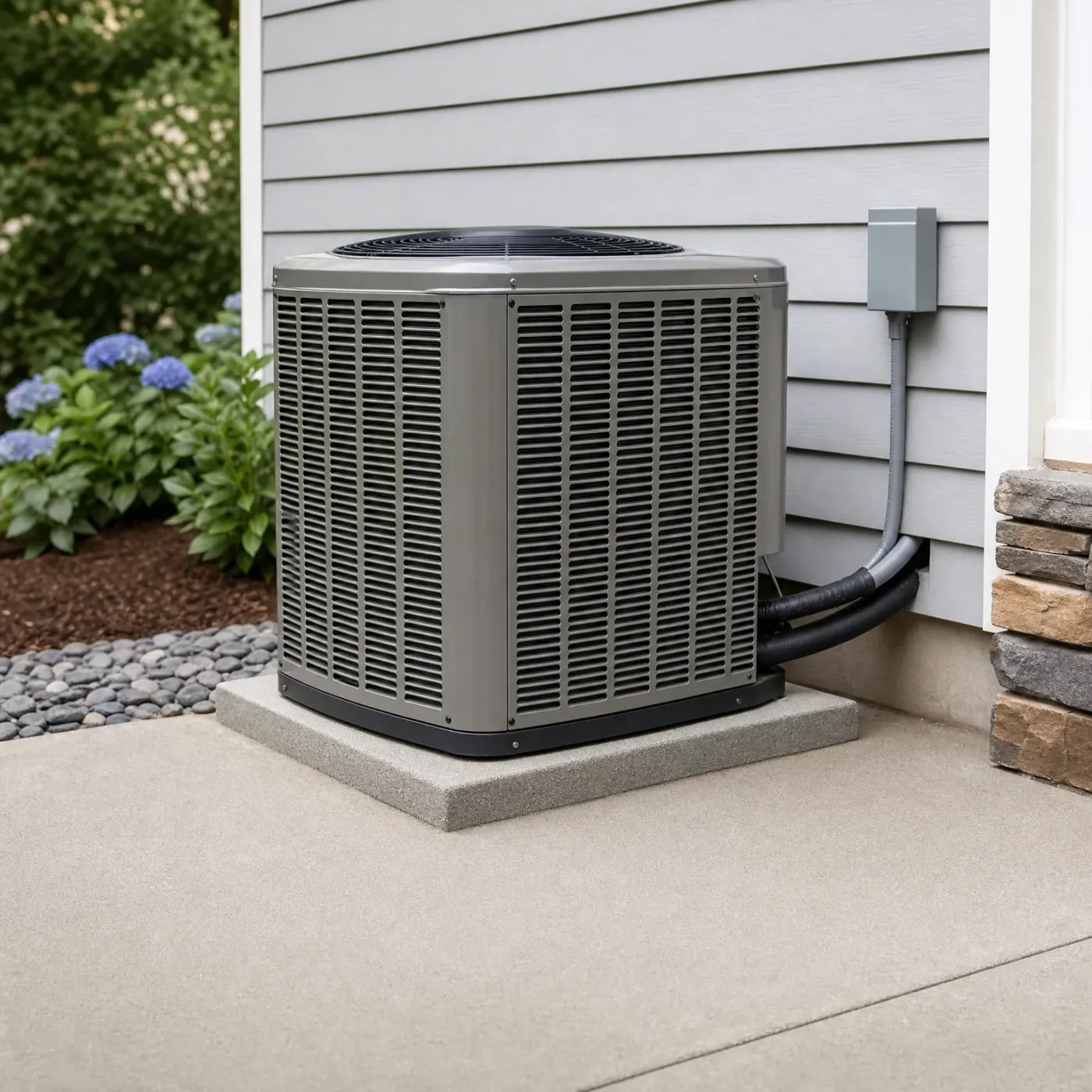
A gray outdoor air conditioning condenser unit on a concrete pad beside a house with horizontal gray siding, with a wall-mounted electrical disconnect box and insulated refrigerant lines, and blue hydrangeas in a mulched bed to the left.

Running normally

This unit sits clean on its pad, lines running straight into the house. Air moves through the fins without resistance, so heat leaves as fast as the compressor can pull it. It runs long on a hot Iowa day, then shuts off and stays off until the thermostat calls again.

A gray outdoor air conditioner condenser unit on a concrete pad beside a house with beige horizontal siding, with an electrical disconnect box and insulated refrigerant lines on the wall and dry leaves on the ground.

Running worn down

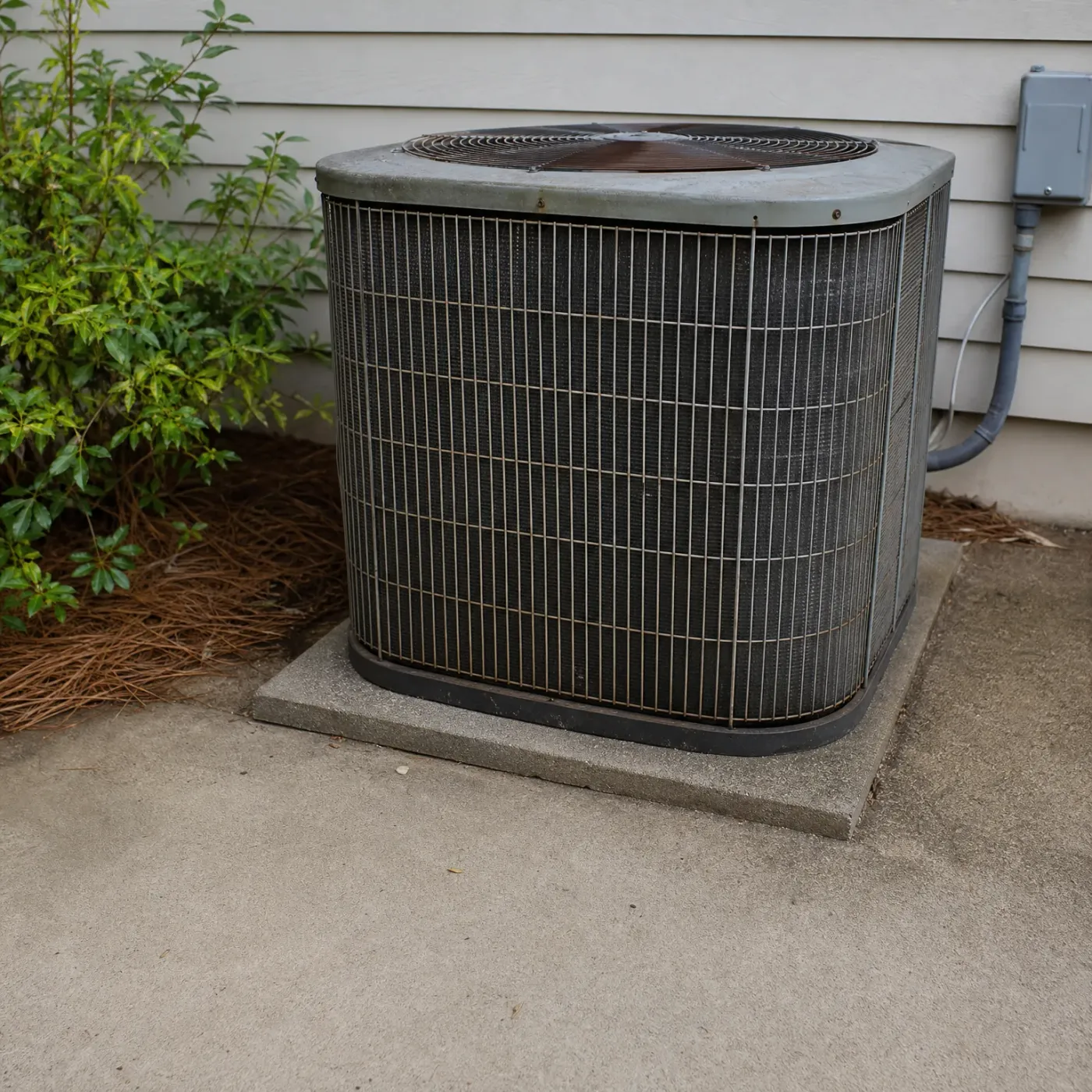
Rust on the shroud and dirt packed into the fins tell you this one has gone a while without a look. It still runs, but every cycle takes longer to do less. Left alone through another Iowa summer, that gap between effort and result only grows.

Is my AC running longer than it used to?

You might notice the outdoor unit is on every time you walk past it, or that the house takes longer to feel cool once you're home from work. Maybe the air coming out of the vents doesn't feel as cold as it did a summer or two ago, or you catch the unit cycling on again just minutes after it shut off. A system that's lost ground against the heat will run these longer stretches and still leave the house a few degrees warmer than the thermostat says. Left alone, that strain on the compressor tends to get worse, not better, and summer in Iowa is long enough that a struggling unit has a lot of hot afternoons left to get through.

  1. The thermostat senses room air a degree or two above setpoint.

  2. The compressor starts and pulls refrigerant into the outdoor unit.

  3. The indoor coil absorbs heat from air moving across it.

  4. The outdoor condenser releases that heat into the outside air.

An outdoor air conditioner condenser unit on a concrete pad beside a house with horizontal lap siding, with a gray electrical disconnect box and conduit on the wall and a green shrub over pine-needle mulch at left.
Before you get your air conditioner maintenance
A gray outdoor air conditioner condenser unit on a concrete pad beside a house with light vinyl siding, with an electrical disconnect box and conduit on the wall and a leafy shrub with dark mulch to the right.
After you get your air conditioner maintenance

Power costs 13.62 cents per kilowatt-hour statewide

At 13.62 cents a kilowatt-hour, a long runtime on a 90 degree day doesn't have to mean a big jump in your bill. But a dirty condenser or a weak capacitor makes the unit pull power for longer than it needs to, and that's where the cost creeps in.

EIA-861 2025 statewide residential average

A long runtime on a hot Iowa day is normal. What matters is whether your AC still shuts off and stays off once the house cools, or whether it keeps grinding without catching up. If it's the second one, something is making the unit work harder than it should, and that's worth a look before the next heat wave. A contractor working on AC units around Iowa all summer has seen what usually causes it, a dirty condenser, a weak capacitor, a filter that hasn't been changed, and knows what to check first. Finding that person usually means a few calls, explaining the same thing twice, and waiting on quotes to compare. Here you'd be matched with one licensed local contractor who already knows the kind of summer your system is dealing with, not a handful of companies competing for the job. You'd know where you stand without chasing it down yourself.

A covered porch with a wood front door with six upper glass panes, a lantern wall sconce, tapered column on a stone base, potted ferns and flowers, a woven doormat, and wide steps leading to a paver walkway bordered by shrubs and white hydrangeas.
A beige upholstered sofa with a cream cushion and chunky knit throw sits beside a white-framed window, with a leafy potted plant in a stone vase against a tan wall.
Sunlit corner of a room with a linen curtain beside a window, built-in shelves holding ceramic vases, wooden bowls, a potted green plant, stacked books and a woven basket, above a textured rug.
A dark wood three-drawer dresser against a pale wall holds a tall ceramic vase with leafy branches, stacked books and a shallow bowl, with a framed print above, a woven basket on the wood floor at left, and an upholstered sofa with a green pillow in the foreground.
A cream upholstered sofa with a textured ivory cushion and a rust-colored cushion sits beside a window with sheer linen curtains, with a potted leafy plant behind it and a wooden bowl on a wood table in the foreground.

One form, no calling around

Your request stays with one local pro.

Fill out one form

You're not committing to anything by asking.