Get AC Iowa

AC unit frozen up in Indianola, IA

Step 1 of 3: Equipment

A frozen AC unit almost always means air isn't moving across the indoor coil the way it should. A dirty filter, a closed vent, or a blower struggling to pull air through the system lets the coil get cold enough to ice over, even on a muggy Indianola afternoon in July. Low refrigerant does the same thing, dropping the coil temperature below freezing so moisture in the air turns to frost instead of condensation. Once ice builds up, it blocks airflow even more, so the problem gets worse the longer the system runs. Turn the unit off and let it thaw completely before anyone looks at it. Running it while frozen can push liquid refrigerant back to the compressor and cause damage that costs more to fix than the original problem. A thawed coil tells a technician what to check first. A refrigerant leak needs a licensed hand to find and seal it properly, and that's not something to leave for later once summer heat is still ahead.
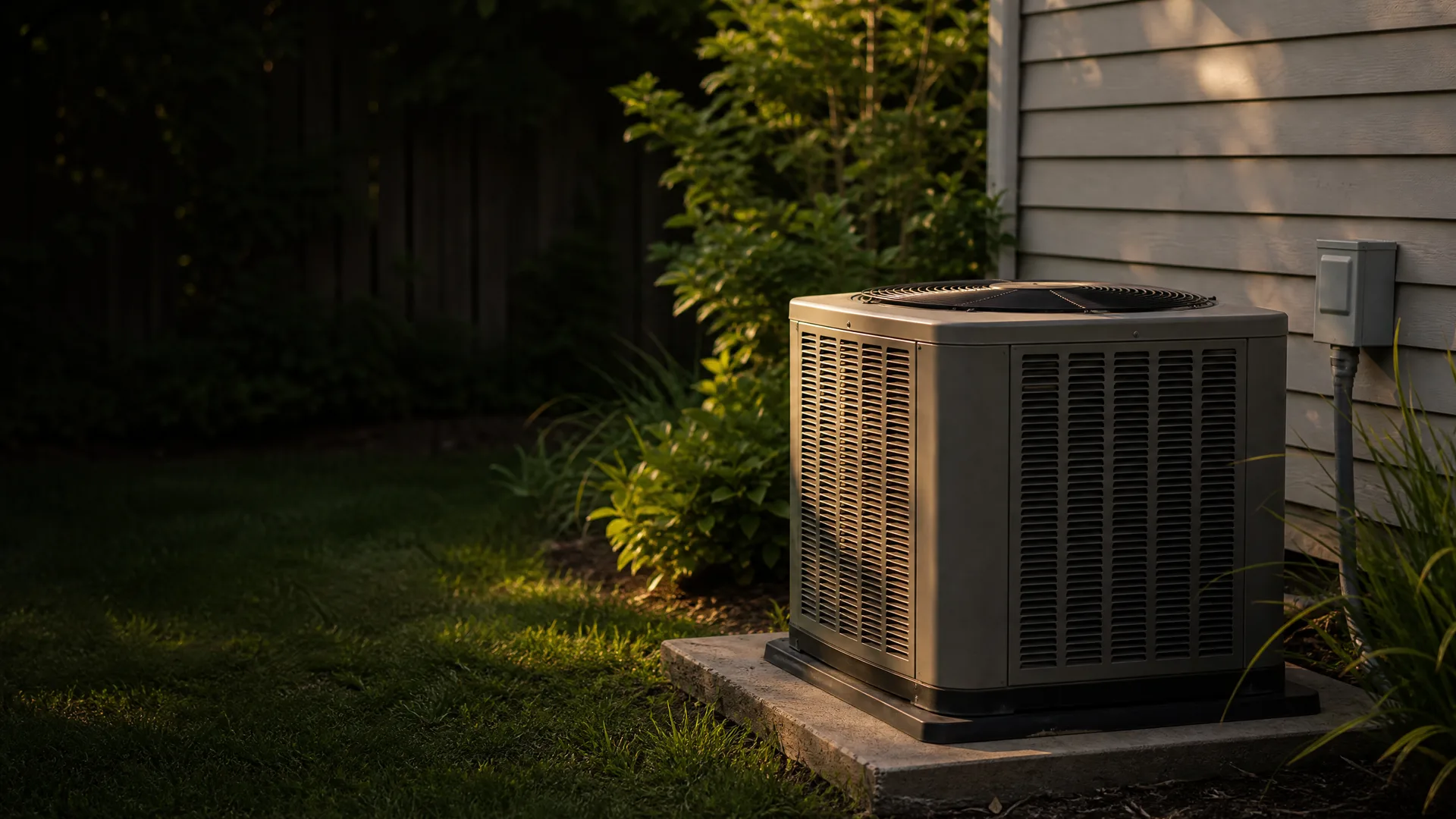
An outdoor air conditioner condenser unit sits on a concrete pad beside a house with horizontal lap siding, surrounded by grass and shrubs in low evening light.

You're out mowing the last strip of yard before it gets dark, and that's when you notice it. The condenser by the fence has gone quiet. No hum, no fan spinning behind the grille. It's a little past seven, still warm enough that the cicadas are going, and the air coming out of the vent inside had felt weak all afternoon. You walk over and see a thin crust of ice creeping along the copper line into the unit. Inside, the house is starting to feel like it's losing the fight against the evening heat still sitting in the walls. You turn the thermostat off, like you've heard you're supposed to, and go back inside to let it sit.

Why does ice keep building on the line even after it melts?

You turn the system off, the ice melts, you turn it back on, and within an hour it's frozen again. That's the pattern worth paying attention to. You might notice the copper line running to the outdoor unit wearing a thick white coat, or water pooling near the indoor unit as the ice thaws between cycles. The air coming from your vents feels weak or barely cool, even though the system is running. Left alone, this doesn't just mean warm rooms. A compressor forced to run while the coil stays iced over can take damage that turns a simple airflow fix into a much bigger repair.


A middle-aged man with grey hair and a beard, wearing a grey knit sweater, sits on a light sofa in a sunlit living room with a houseplant, wooden cabinet and framed landscape picture behind him.
A man with greying hair and a beard in an olive sweater sits on a sofa in a living room, looking to his left, with an armchair, round side table and large glass doors onto trees behind him.
A gray-haired bearded man in a dark blue shirt over a white t-shirt sits on a leather sofa in a living room with built-in shelves, a floor lamp, an armchair and large windows, looking off to the side.
A man with gray-brown hair and stubble in a dark sweater sits on a light-colored sofa in a living room, looking off to the side, with a houseplant, framed picture, shelving and a sunlit window behind him.
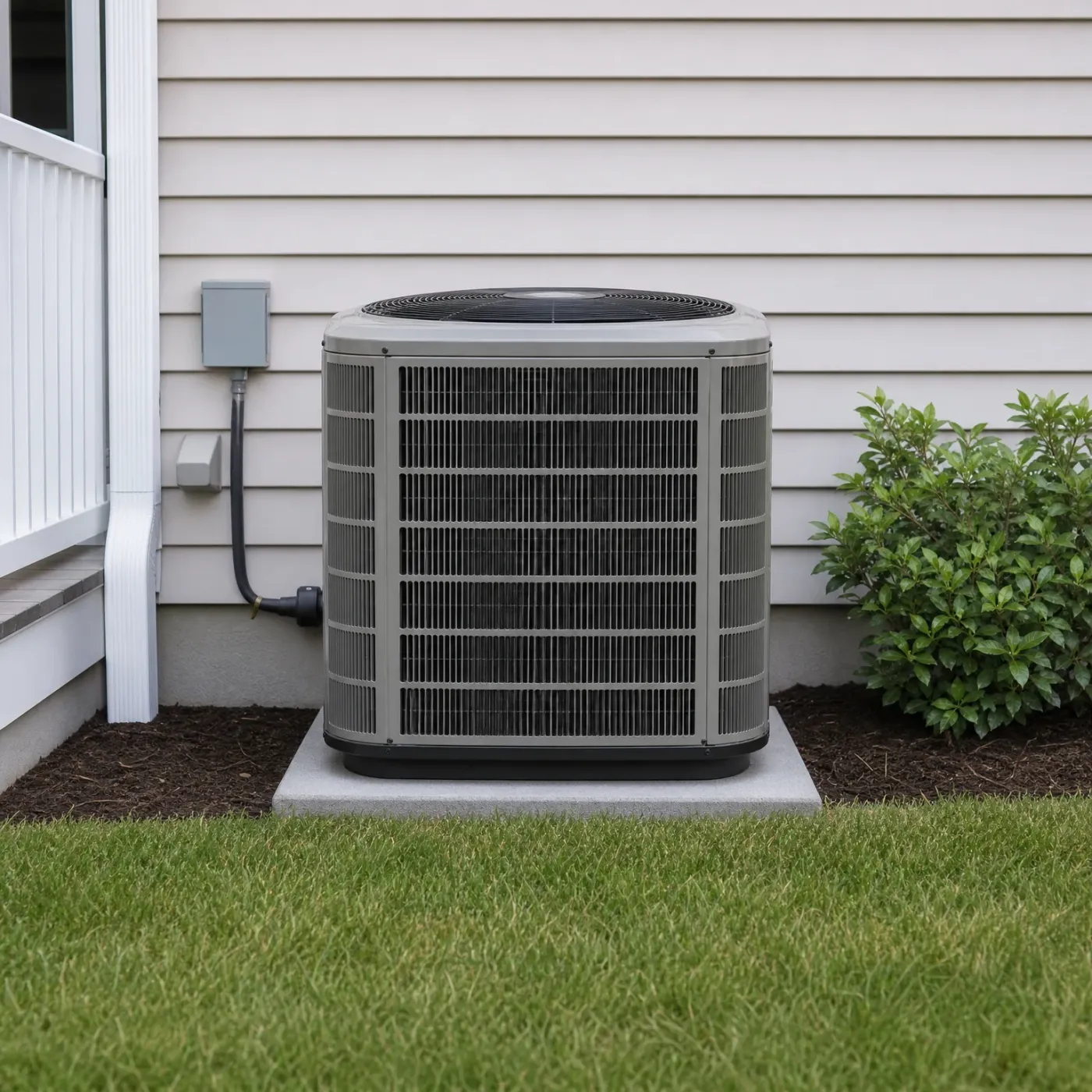
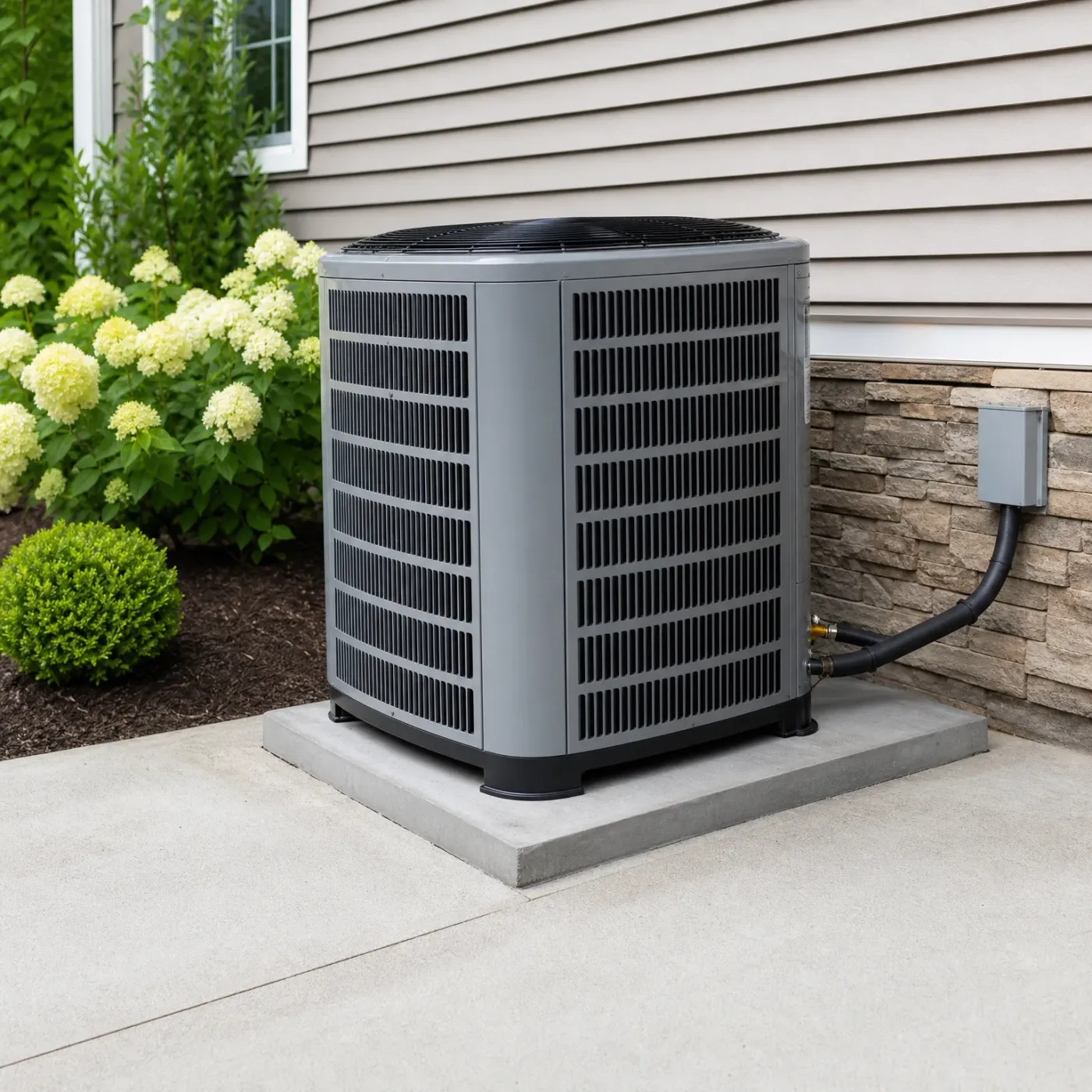
An outdoor air conditioning condenser unit on a concrete pad beside a house with horizontal lap siding, with a gray electrical disconnect box and conduit on the wall, mulch bed and shrub to the right, and mown grass in the foreground.
The coil here is clean and the guards are clear, so air passes through freely and the system cools without strain.
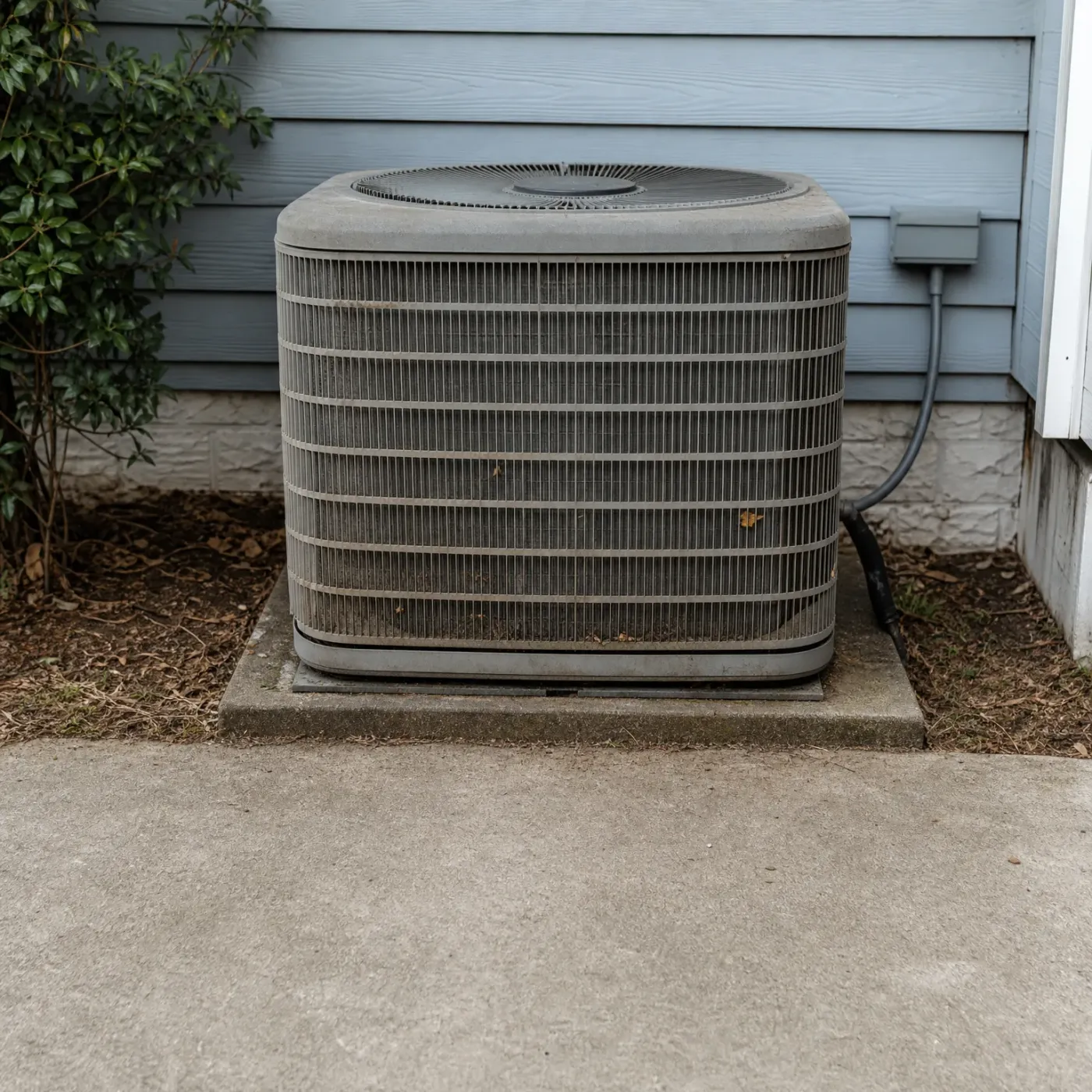
An outdoor air conditioning condenser unit on a concrete pad beside a house with light blue horizontal siding, with a shrub to the left and a conduit and disconnect box on the wall to the right.
Dust packed into the coil guards blocks airflow the same way a clogged filter does, and ice can start from here too.

The indoor coil needs warm air moving across it constantly. That airflow is what keeps the coil above freezing even while refrigerant inside it runs cold. Slow that air down, whether it's a dirty filter, a closed vent, or a blower that's losing strength, and part of the coil drops below 32 degrees. Once that happens, the moisture the system is supposed to pull out of the air and drain away as condensate freezes onto the coil instead. That ice blocks more airflow, which drops the temperature further, which grows more ice. It doesn't stop on its own. Low refrigerant causes the same thing from a different direction, since low pressure in the line lets the coil run colder than it should no matter how well air is moving. The outdoor unit can be running fine the whole time, because the fan out there isn't what's failing. If the system keeps running with ice already on the coil, liquid refrigerant can end up going back to the compressor, and the compressor is the expensive part to replace.
Why the Coil Freezes

  • Warm air crossing the indoor coil keeps it above freezing, so the first thing to go wrong is always something slowing that airflow down.
  • Once part of the coil drops below 32 degrees, moisture in the air freezes onto it instead of draining away as condensate.
  • Ice on the coil blocks even more airflow than before, so the problem feeds itself until the whole coil is wrapped in frost.
  • A system low on refrigerant produces the same frozen coil because the line pressure drops low enough for the coil to run too cold.
  • The blower motor and the fan outside depend on each other, so a failing indoor blower can show up as ice while the outdoor unit runs fine.
  • Running the system with ice still on the coil can push liquid refrigerant back to the compressor, which is the part that costs the most to replace.
An outdoor air conditioner condenser unit on a concrete pad beside a house with light gray horizontal siding, with mulch and green shrubs on either side and a concrete walkway in the foreground.
Before you get your air conditioner repair
A gray outdoor air conditioning condenser unit on a concrete pad beside a house with horizontal siding and a stone veneer base, with refrigerant line and electrical disconnect box on the wall and flowering shrubs to the left.
After you get your air conditioner repair
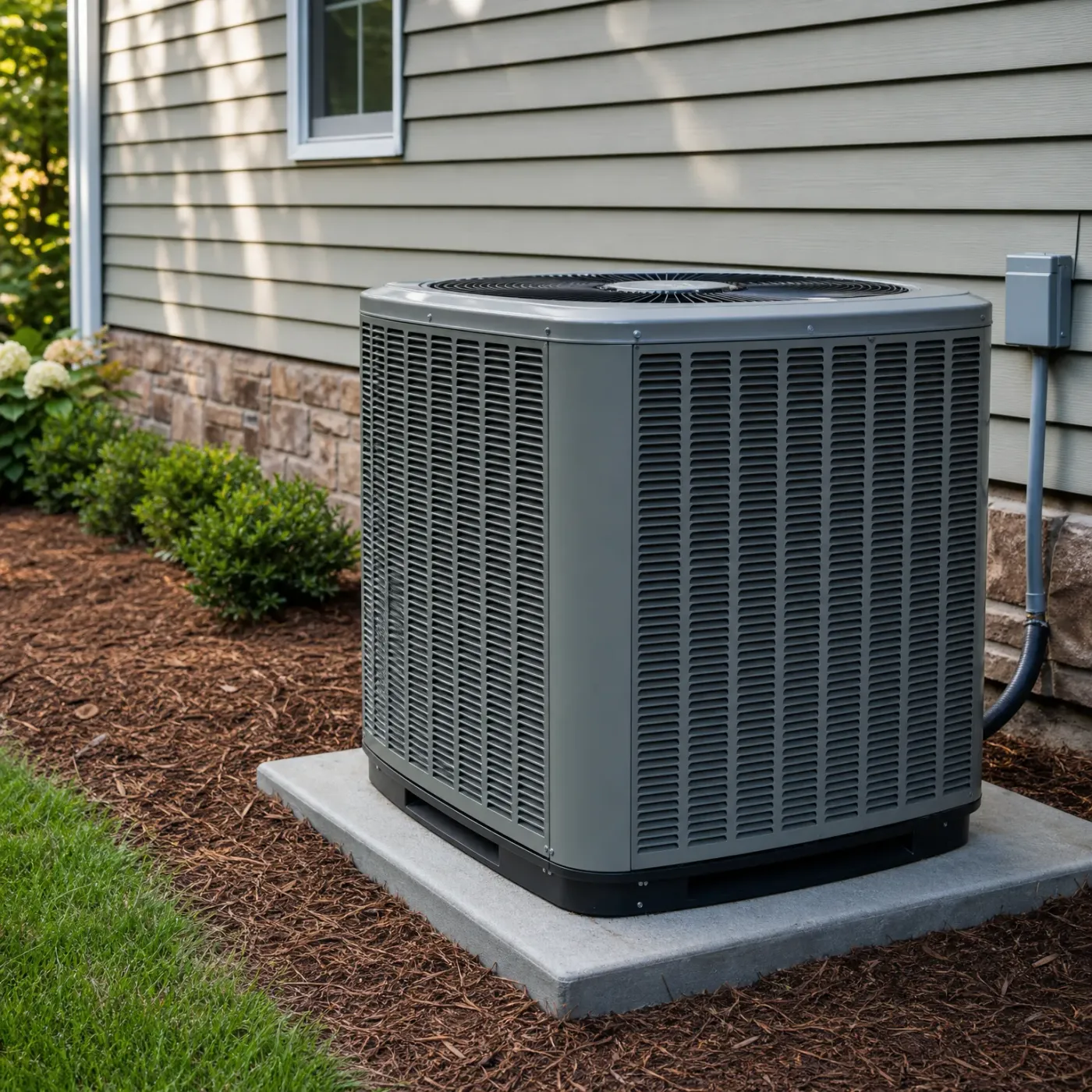
A gray outdoor air conditioner condenser unit on a concrete pad beside a house with horizontal siding and a stone veneer base, surrounded by mulch, shrubs and grass.

It's off your list after this

A licensed pro who works in Warren County gets your request.

After this form, you can stop searching for an air conditioner pro.

Find a local pro

There's no charge for the request.

Why does my AC freeze up but still blow warm air?

Why does my AC freeze up but still blow warm air?

Because the coil is covered in ice instead of cold refrigerant

Once ice builds up over the coil, it acts like a wall. Air from the blower still pushes through the ducts and out your vents, but it never touches enough cold surface to actually cool down, so what comes out feels warm or just barely cool. The compressor outside may keep running the whole time, trying to do its job while the indoor side is blocked solid. Running it longer doesn't fix this. It just keeps feeding warm, humid air across a coil that can't absorb any more heat, and the ice keeps growing until something is done to clear it and find what stopped the airflow in the first place.
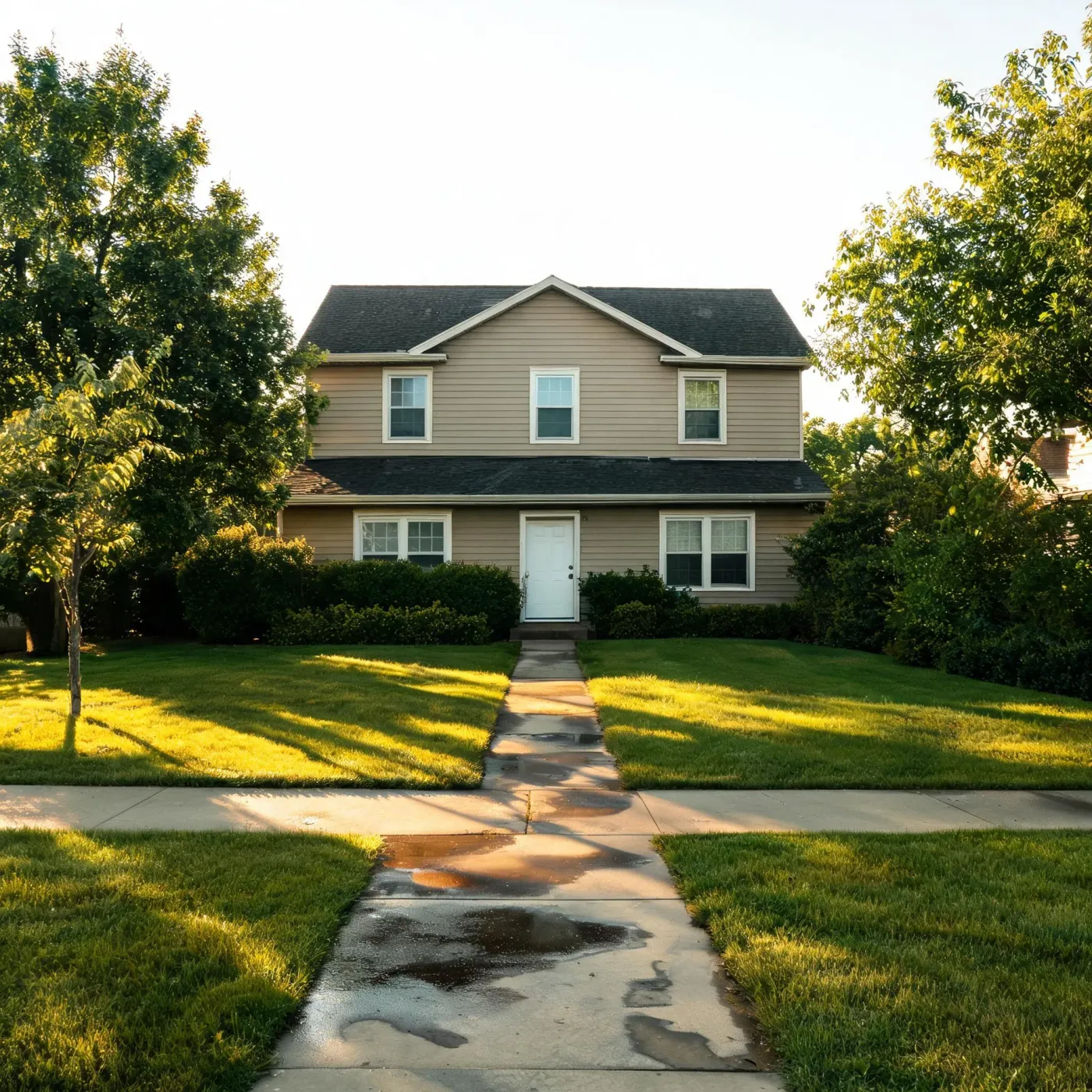
A two-story house with tan horizontal siding and a dark shingled roof, fronted by a mowed lawn, trimmed shrubs, leafy trees on both sides, and a concrete walkway leading from a wet sidewalk to the white front door.

Warren County summers run humid, with a dew point that averages 63°F across June, July and August, according to NOAA climate data. Air that heavy carries a lot of moisture for your indoor coil to pull out as it cools your house. That's extra moisture passing over the same coil that ices over when airflow drops, so on a muggy Indianola day a dirty filter or a closed vent has more moisture working against it than it would on a drier one. You'd notice the system running longer to keep up, and once ice starts to form, that moisture in the air is what feeds it.

NASA POWER T2MDEW
Wait It Out or Get It Fixed

Turn it off and wait

  • Shutting the system off lets the ice melt so the coil stops getting colder while air still can't move across it.
  • The thermostat set to off doesn't fix a clogged filter or a closed vent, so the ice comes back once the system runs again.
  • Running the blower fan alone, without the compressor, can speed up melting since warm house air keeps crossing the coil.
  • Water from the melting ice has somewhere to go only if the drain pan and condensate line are clear, otherwise it ends up on the floor.
  • Waiting tells you whether the freeze was a one-time thing or a pattern, which matters once a contractor starts diagnosing it.

Get it looked at

  • A contractor can check refrigerant charge, which a homeowner can't do without gauges, and a low charge is one of the common causes of a frozen coil.
  • Checking the blower motor and the ductwork for a restriction finds the airflow problem that caused the ice in the first place.
  • A licensed, local contractor who works on these systems all summer in Warren County has seen this exact freeze pattern before.
  • Sending one request means one contractor handling the call, not several companies competing for the job.
  • Fixing the cause means the system runs the rest of the summer without icing over again on the next muggy afternoon.
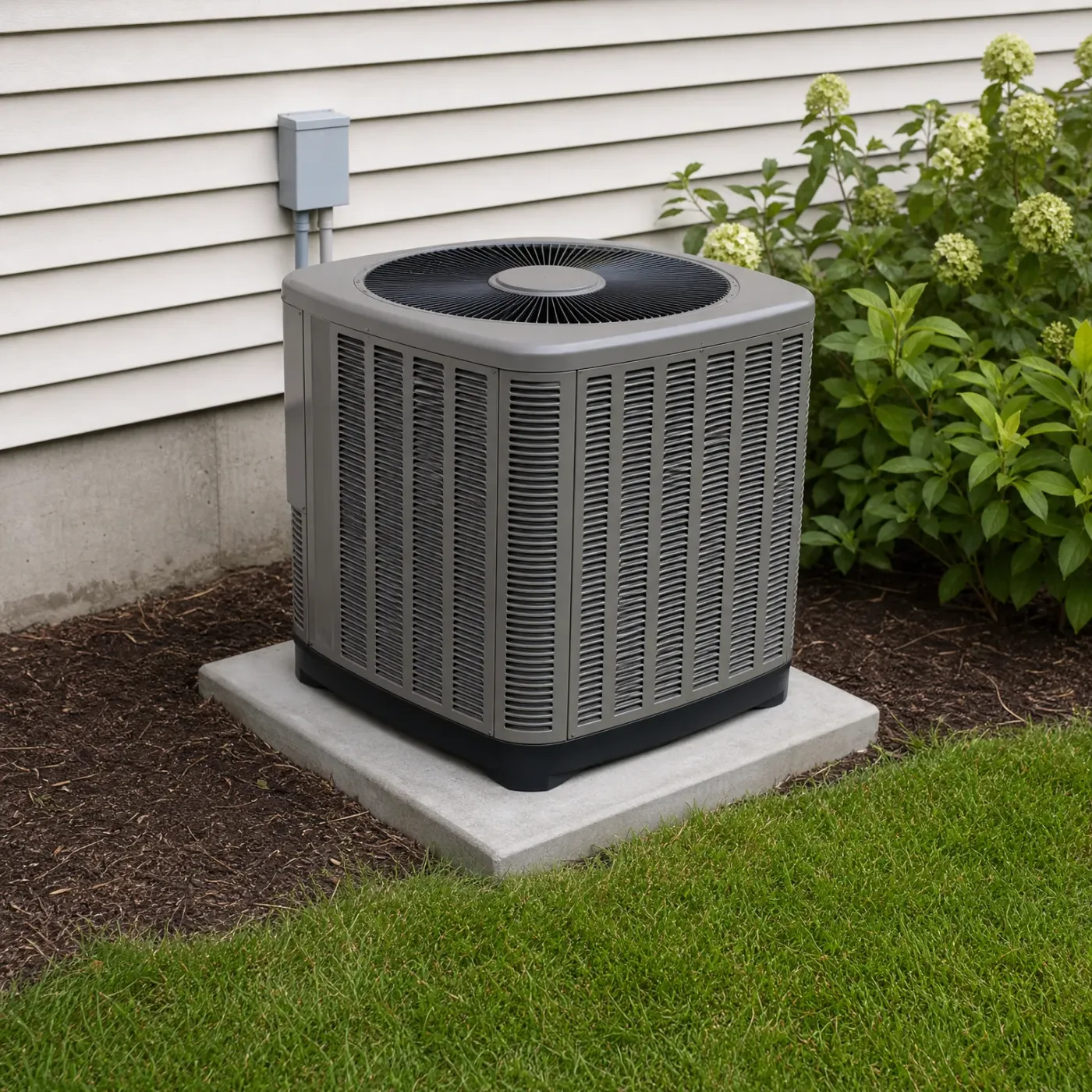
A gray outdoor air conditioner condenser unit on a concrete pad beside a house with horizontal vinyl siding, surrounded by mulch, flowering shrubs, and lawn.

Airflow is doing its job

Mulch and grass trimmed back, the cabinet clear on all sides, and air passes through the fins without a fight. A unit that looks like this is pulling in the air it needs and sending warm air back out, not ice.
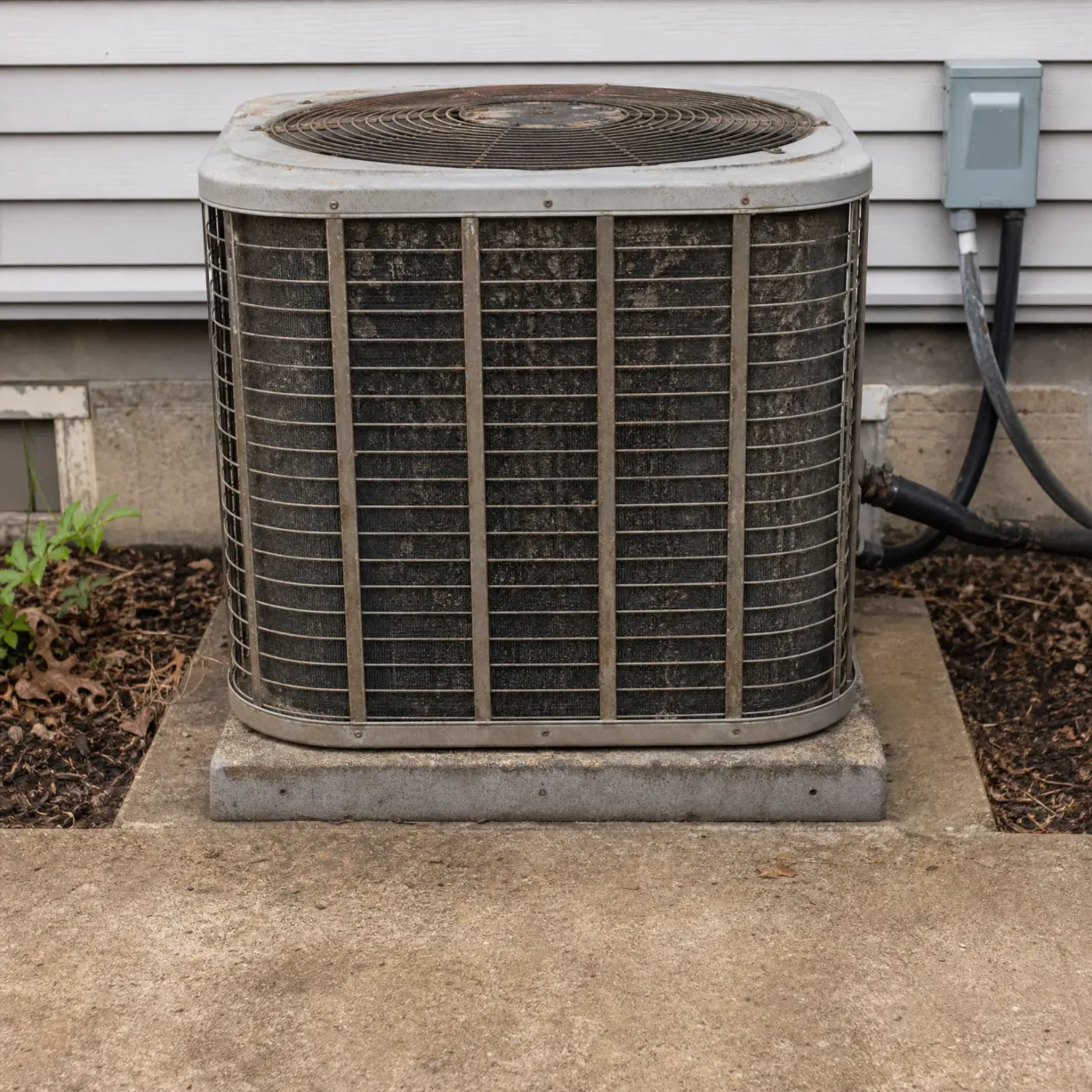
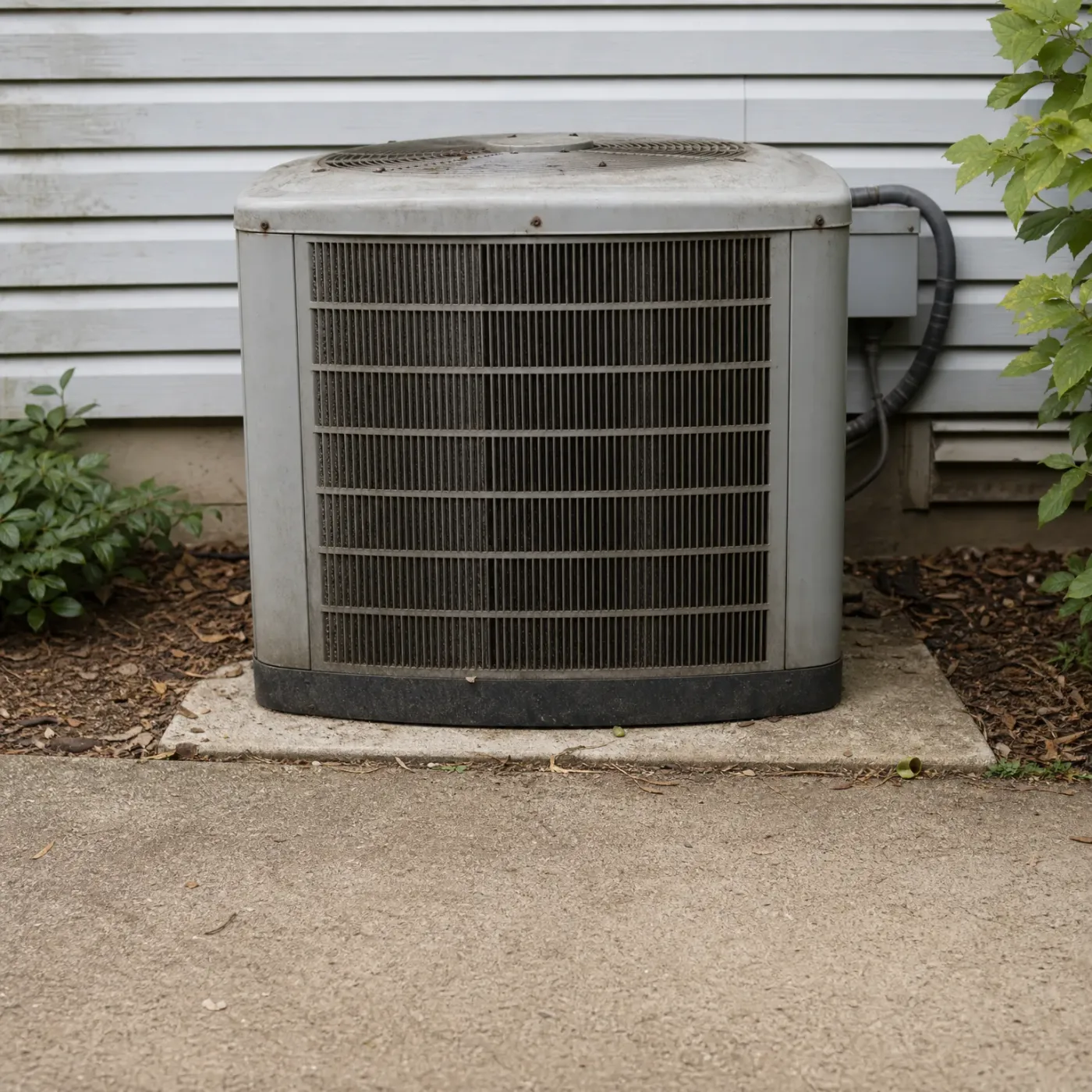
A weathered outdoor air conditioning condenser unit on a concrete pad beside a house with light horizontal siding, an electrical disconnect box and conduit on the wall, and mulched soil on either side.

The fins are clogged

Grime packed into the coil fins and the cage around it blocks air before it ever reaches the coil. The system still runs, but it's pulling air through a wall of dirt, and that's often where the freezing starts.


A woman with shoulder-length graying brown hair in a cream knit cardigan sits in a dark armchair indoors, looking off to the side with a slight smile, with a shelf, window and houseplant blurred behind her.
A woman with dark hair in a bun sits on a sofa with a child resting his head on her shoulder, both wrapped in a cream knit blanket, with a lit lamp and bookshelf in the dim background.

63°F average dew point

That's the moisture load on your coil all summer. High humidity air needs the coil working right, or ice builds up faster than it melts.

Get a licensed local pro

One coil, one freeze point

Indoor coil temperature only has to drop below 32 degrees in one spot for ice to start. A contractor can find why air stopped moving there.

Get a licensed local pro

Cooling runs June through September

Four months of cooling is what your air conditioner gets asked to do here, June through September, and it has to do it without a break once the heat sets in. A system icing up in the middle of that stretch isn't getting a day off to sort itself out, so the freeze just comes back worse each time it runs.

NOAA nClimDiv 1991-2020

What a Frozen AC Comes Down To

  • A frozen coil comes from blocked airflow, not from a lack of cooling power, so running the system harder never fixes it.
  • Letting the ice melt on its own only buys a short reset before the same airflow problem freezes it again.
  • A tech who works on Warren County systems every summer knows which of these causes shows up most and checks it first.
  • One licensed, local contractor takes the call, so you're not fielding quotes from three different companies while your AC sits frozen.
  • Clearing the cause, whether it's the filter, a vent, or the coil itself, is what lets the system run the rest of the summer without icing over again.
  • You'll know what caused it and what it takes to run without freezing up again.

A frozen coil is always an airflow problem. Something is keeping warm air from crossing the indoor coil the way it needs to, and until that's fixed, ice keeps coming back no matter how many times you shut the system off and let it thaw. That might mean a filter packed with dust, a vent shut somewhere it shouldn't be, or a blower that isn't pulling air through like it used to. It could also be the coil itself, caked with enough dirt to choke off airflow from the inside. None of this sorts itself out by waiting, and none of it gets better by running the system harder once it's back on.

This is where someone who works on Warren County systems all summer has an edge. They've seen which of these causes shows up most often in homes around here, and they check it first instead of working through a list from scratch. One licensed, local contractor takes the call, so you're dealing with a single tech who knows the equipment rather than fielding quotes from several companies while your AC sits there frozen.

Once the actual cause is cleared, whether that's a filter, a vent, or the coil, the system can run the rest of the summer the way it's supposed to. You'll know what caused it this time and what keeps it from happening again before the heat lets up.


Kitchen corner with cream upper cabinets, oak lower cabinets, white marble-look countertop, beige tile backsplash, a ceramic vase of greenery, a wooden cutting board and bowl, and a black-framed window at right.
Interior corner of a room with a white-framed window and wide sill, beige walls with panel molding, a wooden cabinet holding a ceramic vase with a green leafy plant, and blurred shrubs and trees outside.
A wood-framed armchair with beige cushions and a woven lumbar pillow sits in a corner beside a large window overlooking green trees, with a tall ceramic vase holding leafy branches on the left and plaster walls and wood flooring.
Interior corner with a white-framed window above a sill, beige walls with baseboard molding, a greige shaker-style cabinet with brass knobs and a potted plant on top, light wood flooring and a woven jute rug.
A dark-framed six-pane window with white trim and sill set in gray horizontal lap siding, with hydrangea shrubs below and a white column and shingled roof section at left.

Stop chasing an air conditioner pro

The pro who gets in touch is licensed in Iowa and works in Warren County.

I'm done searching

Asking costs nothing, and the choice to hire stays yours.