


Tune-up before the first 90 degree day
A contractor checks the charge and the coil while the schedule still has room, so a weak capacitor or contactor turns up on a mild afternoon, not during a heat wave.
You've gotten by without one before, and the unit still runs. But Waukee summers turn humid fast, and once the heat sets in, a system that was already struggling has to work through it instead of before it. You're trying to figure out if a tune-up actually changes anything or if it's just something a contractor wants to sell you every spring.
A tune-up catches the things that cause a breakdown in July. A technician checks the refrigerant charge, cleans the condenser coil, and tests the capacitor and contactor, the parts that wear out from a season of running. A coil caked with a winter of dust and yard debris makes the system work harder to move the same amount of heat out of your house, and a weak capacitor can leave you with a unit that hums but never starts. Catching either one in April means you're not finding out about it the first hot week in June, when your system runs long hours against the humidity and a local contractor's schedule fills up fast.

A contractor checks the refrigerant charge against what the system calls for, since a unit even a little low has to run longer to cool the same house. They clean the outdoor coil, which loses its ability to shed heat once it's coated in a season of grass clippings and cottonwood fluff. They also check the capacitor, a part that weakens with age and is a common reason AC units fail on the first hot day.

Dallas County summers get humid fast once they turn, and a strained system has no slow stretch to fail during. It either holds up through the heat or it quits on a 90 degree afternoon with your family in the house. A tune-up done before that stretch catches a weak capacitor or a dirty coil while it's still a scheduled visit, not an emergency call placed when every other AC in Waukee is failing too.
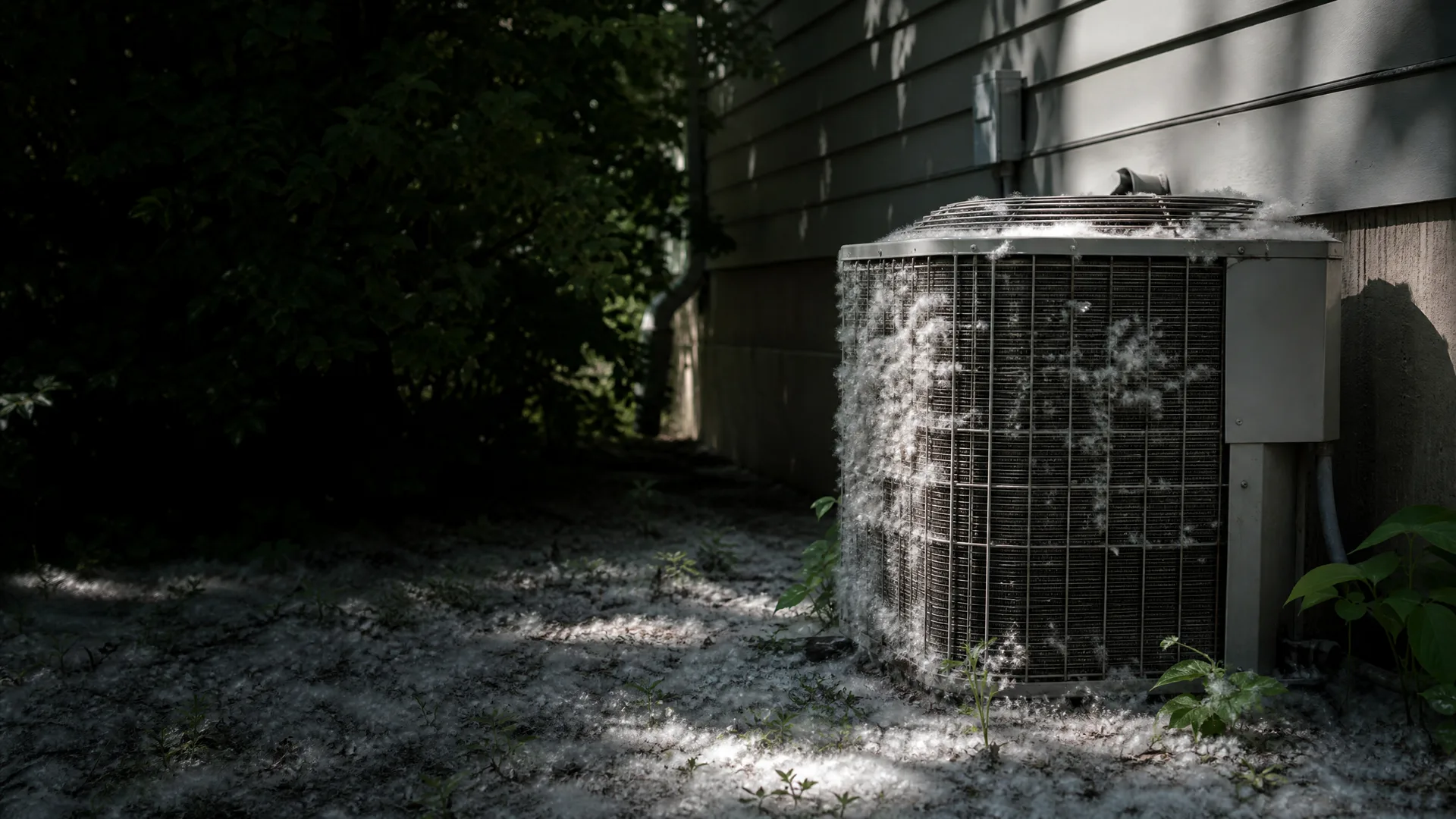
You walk out to the side yard to grab the hose and notice it first in the grass, little drifts of white caught against the fence line. The cottonwoods are going. Up close, the condenser's fins are packed with it, a soft gray-white mat pressed flat across the coil like felt. The fan still spins when you crouch down and listen, but the sound is different, like it's pushing against something. Dallas County gets this every late spring, and it always seems to land right before the first hot week. You brush a handful off the top and more is already stuck behind it. It would take a contractor a few minutes to clear the rest and check what the fluff did to the charge underneath.
A licensed local pro takes the request for your air conditioner tune-up.
Asking costs nothing, and the choice to hire stays yours.
A tune-up is a specific set of checks, not a hose-down and a glance at the thermostat. At the service valves, a contractor reads the refrigerant pressure itself rather than guessing from how cold the line feels, because a system can feel cool to the touch and still be running low. The contactor, the switch that pulls in to start the outdoor unit, gets looked at for pitting on its contacts. A pitted one can hang up and either refuse to close or stay stuck closed, and there's no sound it makes beforehand to warn you. The capacitor, which gives the compressor and fan motor their starting kick, gets tested with a meter that reads out in microfarads and compared against the number stamped on its case, not just checked with a quick pass or fail buzz. The blower motor's amp draw gets measured against its rated load on the nameplate, since a motor drawing more than it should is usually a motor on its way to failing, often weeks before it actually quits. The condensate line gets flushed out, because algae builds up in that narrow tube over a season and a clog there trips a float switch and shuts the whole system down, usually on the hottest day it's working hardest. And the thermostat's reading gets checked against a separate thermometer held near it, since a thermostat that's reading a few degrees off runs the system longer than the house actually needs.




A contractor checks the charge and the coil while the schedule still has room, so a weak capacitor or contactor turns up on a mild afternoon, not during a heat wave.
The system runs until something fails, usually on the hottest, most humid day of the year, when every other AC in Dallas County is calling for help too.
You might notice the air coming out isn't as cold as it used to be, or the system runs longer to get the house down to temperature. Maybe it cycles on and off more than it used to, or you hear a hum when it tries to start and doesn't quite catch. Some houses get a musty smell near the vents, which usually means moisture sitting where it shouldn't. None of this means the unit is done. It means something in it, the charge, the coil, a weak part, is making it work harder than it has to. Left alone through a full Iowa summer, that strain is what turns a small problem into a system that quits on the hottest day of the year.
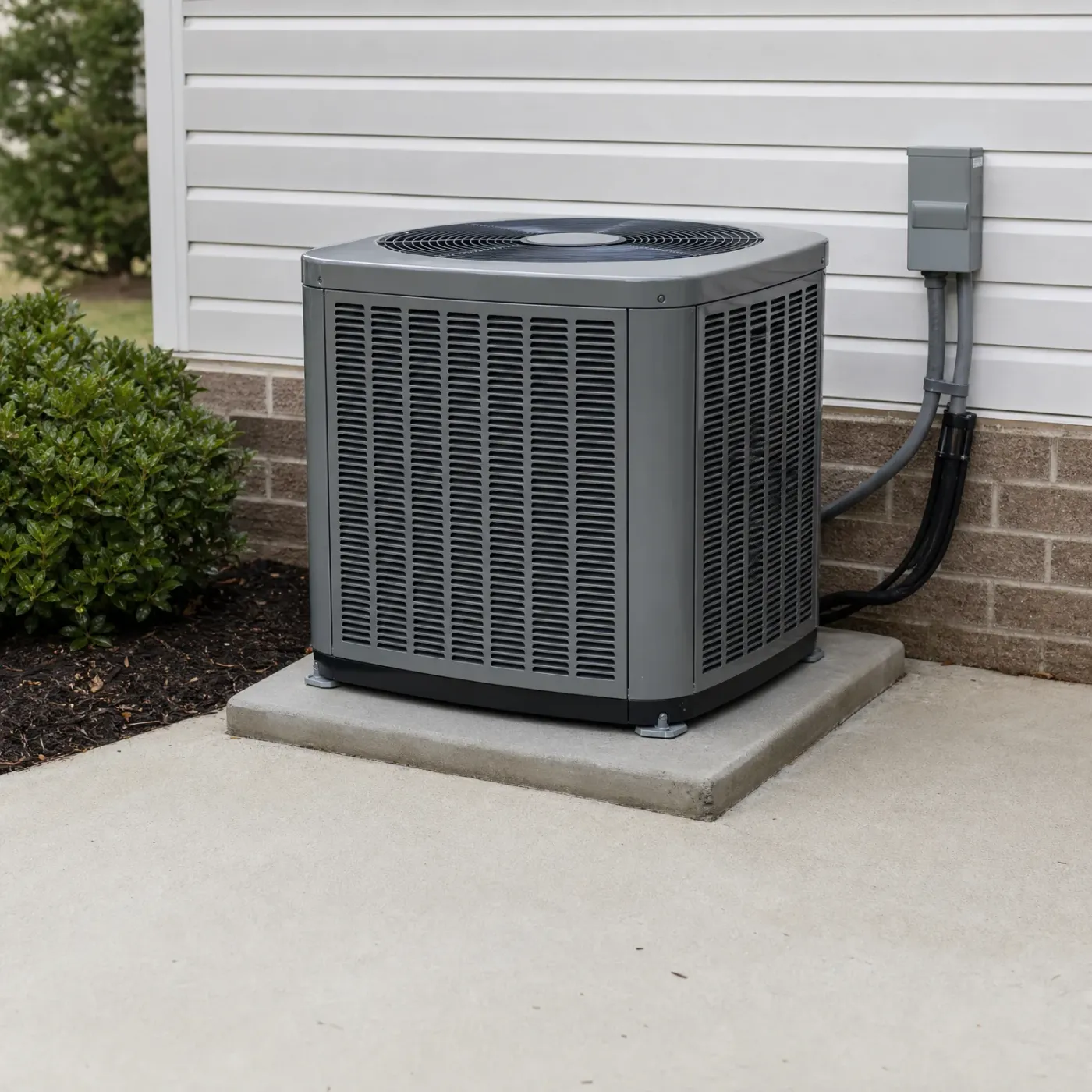
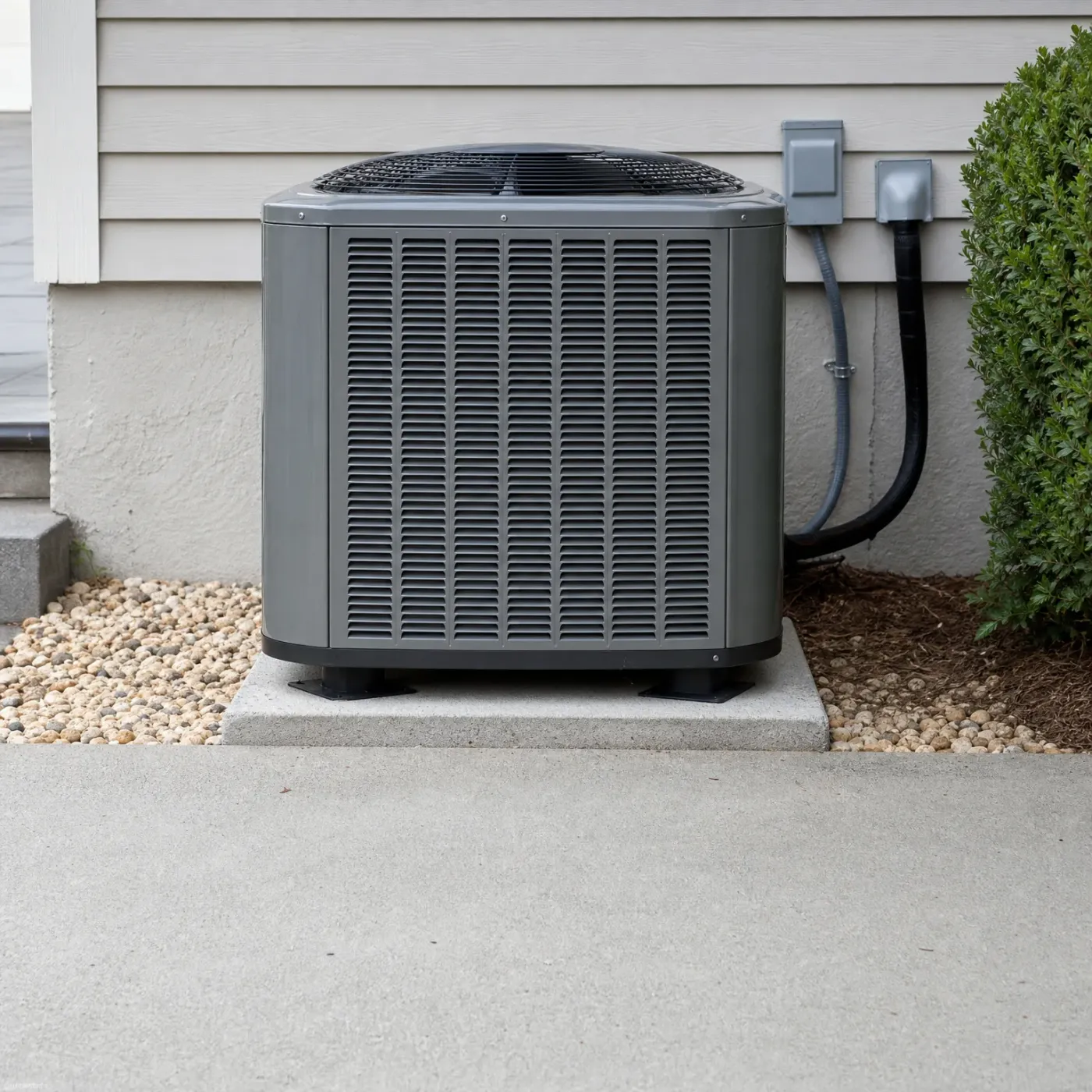
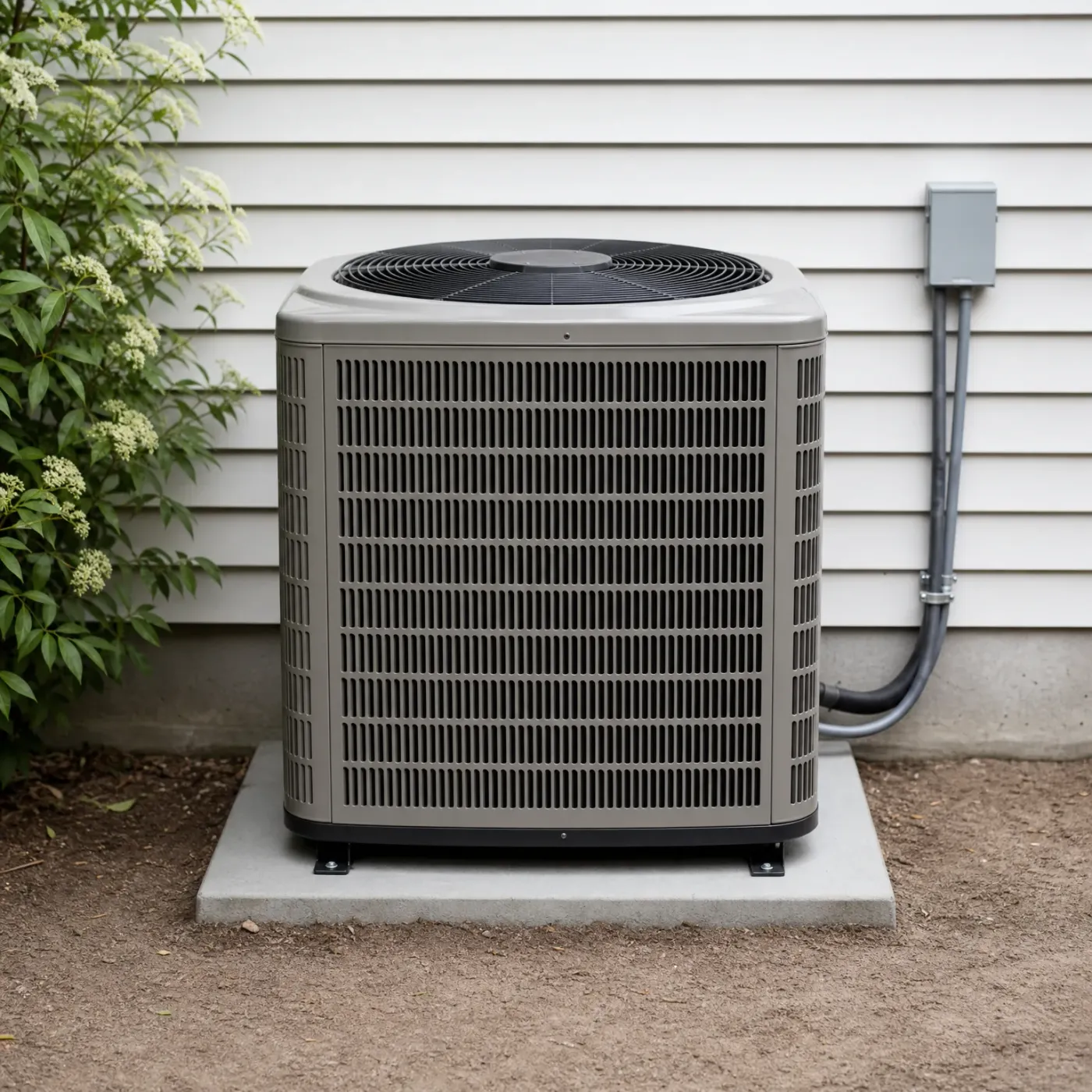
This is what the outdoor unit looks like when air can move through it. The fins are open, the pad is clear, and the lines running up to the disconnect box are doing their job without anything forcing the system to work harder than it has to.
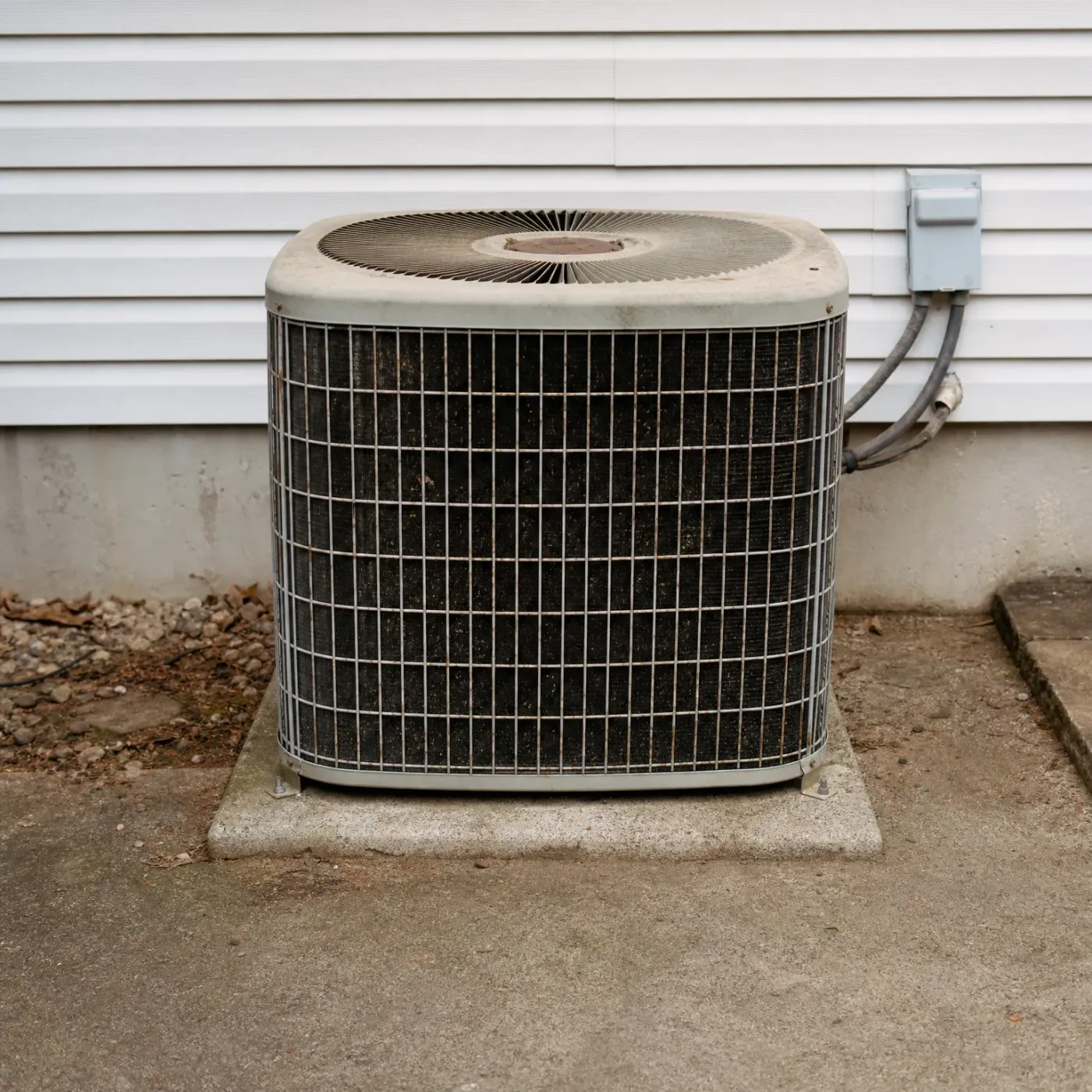
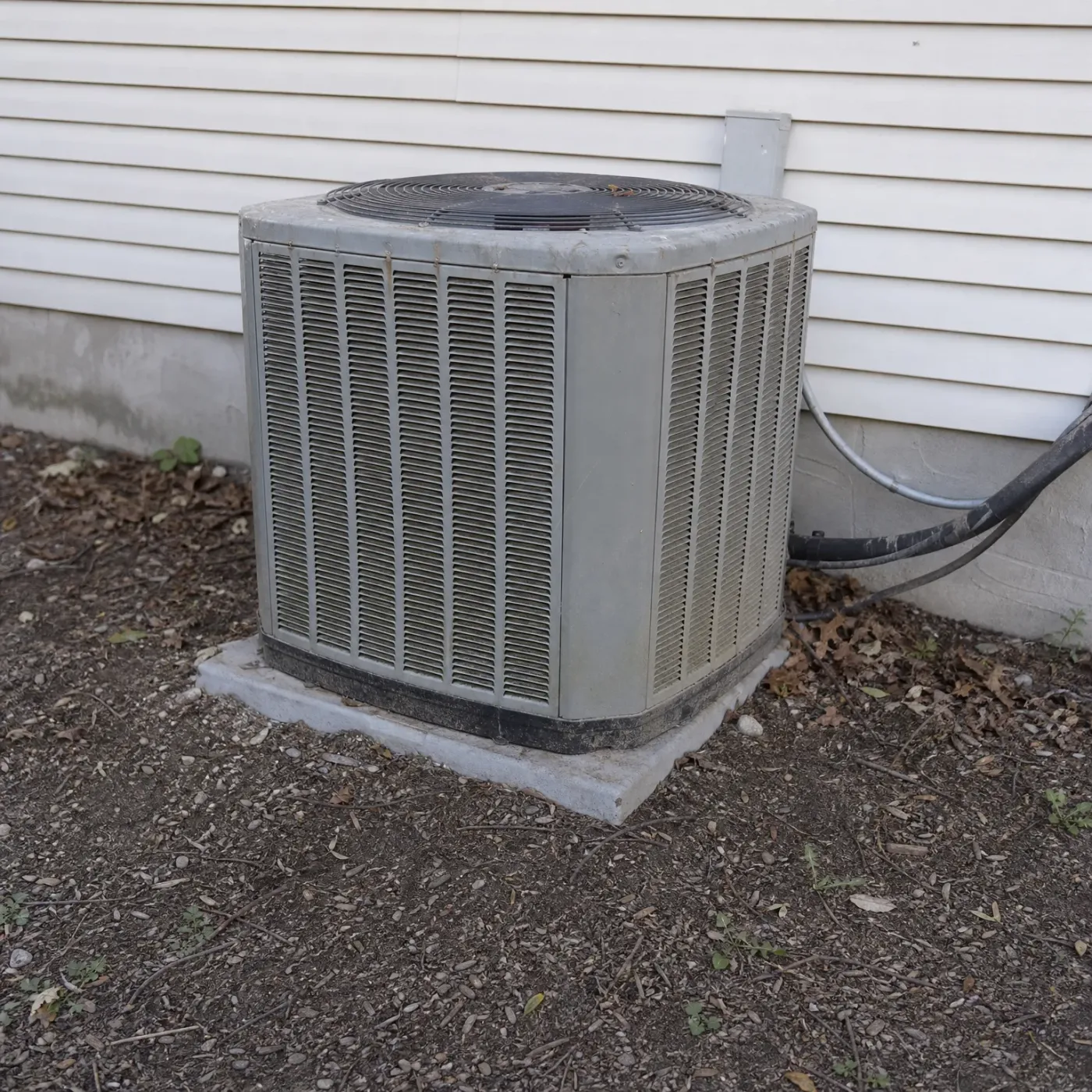
This unit is breathing through a layer of dirt packed into the grille and across the top cover. The coil underneath works the same way the fins do, and once it's coated like this, the system holds onto heat it should be shedding outside the house.
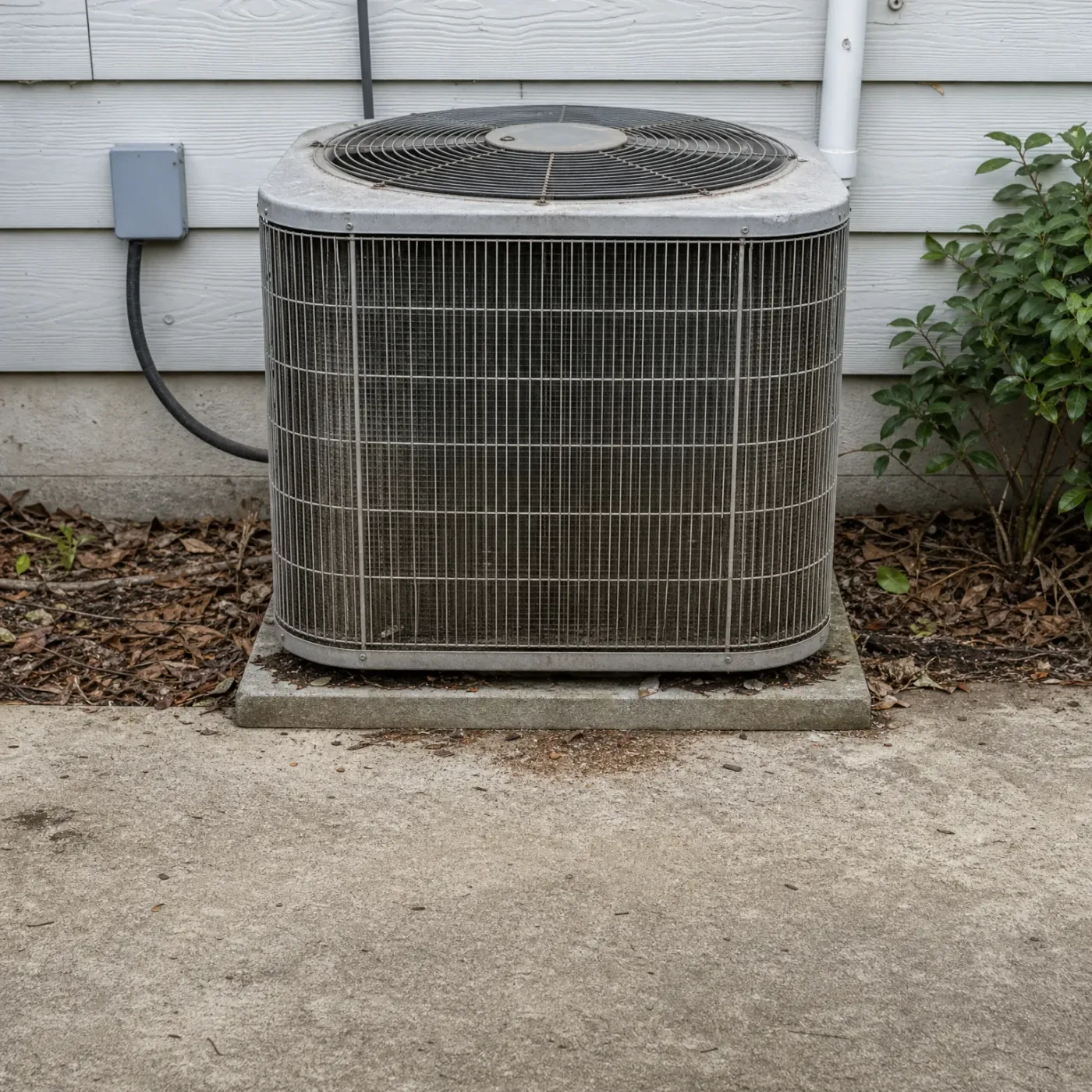

That dew point number is the one that decides how your air conditioner's summer goes. In Dallas County it averages 63°F across June, July and August, according to NOAA climate data. Above 60, air starts feeling heavy even when the temperature itself isn't that high, and your system has to pull moisture out of the air before the house actually feels cool. That's extra work the thermostat doesn't show you. A unit that's low on charge or has a dirty coil loses ground fast on days like that, running long stretches without catching up. You'll notice it as a house that feels sticky even with the AC running, not just one that's warm.
NASA POWER T2MDEW
Three months is all your air conditioner gets to earn its keep here, and all of it falls in the stretch when Dallas County is at its stickiest. There's no mild stretch beforehand to expose a weak capacitor or a low charge before it matters. Whatever shape the system is in going into June is the shape it runs in through August.
NOAA nClimDiv 1991-2020
A tune-up before summer comes down to one thing: catching a weak part while the weather still gives you room to fix it. The charge, the coil, the capacitor, the contactor, all of it holds up fine on a mild day and shows its wear on a hot one. Dallas County doesn't give your system a slow buildup into summer. It gets three months to do its job, and the sticky stretch starts fast. A contractor who checks the system now finds what's already failing before the heat makes the failure complete. That's the whole case for doing it ahead of time rather than after the first breakdown. Nothing about your unit changes by waiting, except the conditions it has to run under when something finally gives out. You know your own system, whether it's struggled before or run clean every year. Either way, you now know what the check covers and why the timing matters more here than it would somewhere with a longer, gentler lead into summer.


A tune-up before the heat sets in means a contractor checks the charge, the coil, the capacitor and the contactor while there's still room on the schedule to fix what's weak. Send the request and a licensed contractor local to Waukee, one who works on these systems every season and knows what tends to fail here, follows up directly. No other companies calling, no comparing bids. Just someone who knows the equipment, reaching out to get it sorted before the first 90 degree day finds it first.
The pro who gets in touch is licensed in Iowa and works in Dallas County.
Sending the form costs nothing.