Send the request today and stop worrying about who to call.
A burning smell from your AC is not something to wait out, especially with a Waterloo summer outside that's already pushing the system hard. It could be dust burning off a coil that just kicked on after sitting idle, and that clears up fast. It could also be a motor winding overheating or wires rubbing somewhere they shouldn't, and that keeps getting worse until something fails or catches.
Either way, this is a job for someone who can get eyes on the unit, not a guess made from the couch. A burning smell means stop running it and get it looked at.
That's where this gets easier than it feels right now. You don't have to find out who's licensed around Black Hawk County, who actually answers the phone, or who can get to you without a week's wait while you run a box fan and hope. You don't have to call three places, describe the smell three times, and sort through three different quotes to figure out who's telling it straight.
Send the form on this page and that search is done. A contractor who works on home AC systems in the Waterloo area gets your information, and finding them stops being something you have to do. You're not waiting on hold. You're not scrolling through reviews trying to tell a real shop from a listing. That part of this is off your plate.
What's left is the part that actually matters: getting someone to look at the system, find out whether it's dust, a motor, or wiring, and deal with it before a smell turns into a system that won't run at all, or worse, in a Waterloo July when a dead AC is not a small inconvenience.
Why does my AC smell like something is burning?
You turned on the AC and caught a burning smell, and now you're not sure if it's safe to let the system keep running or if you should shut it off and call someone. A smell like that usually means something, and ignoring it in the middle of a Black Hawk County summer can turn a small repair into a bigger one.
Usually a motor or electrical problem, not dust
A sharp, acrid smell, almost like burning plastic, points to an electrical issue: a failing capacitor, a motor winding breaking down, or wiring that's overheating. That smell doesn't go away on its own, and running the unit longer can push a bad part to fail completely or trip a breaker. A dusty smell is different and usually fades within a few minutes as the coil heats up. If the smell is sharp and sticks around, or if you see the breaker trip, turn the system off at the thermostat and the breaker. With the system working hard most of the summer here, a part under strain doesn't get a break, and a small electrical fault tends to get worse, not better.
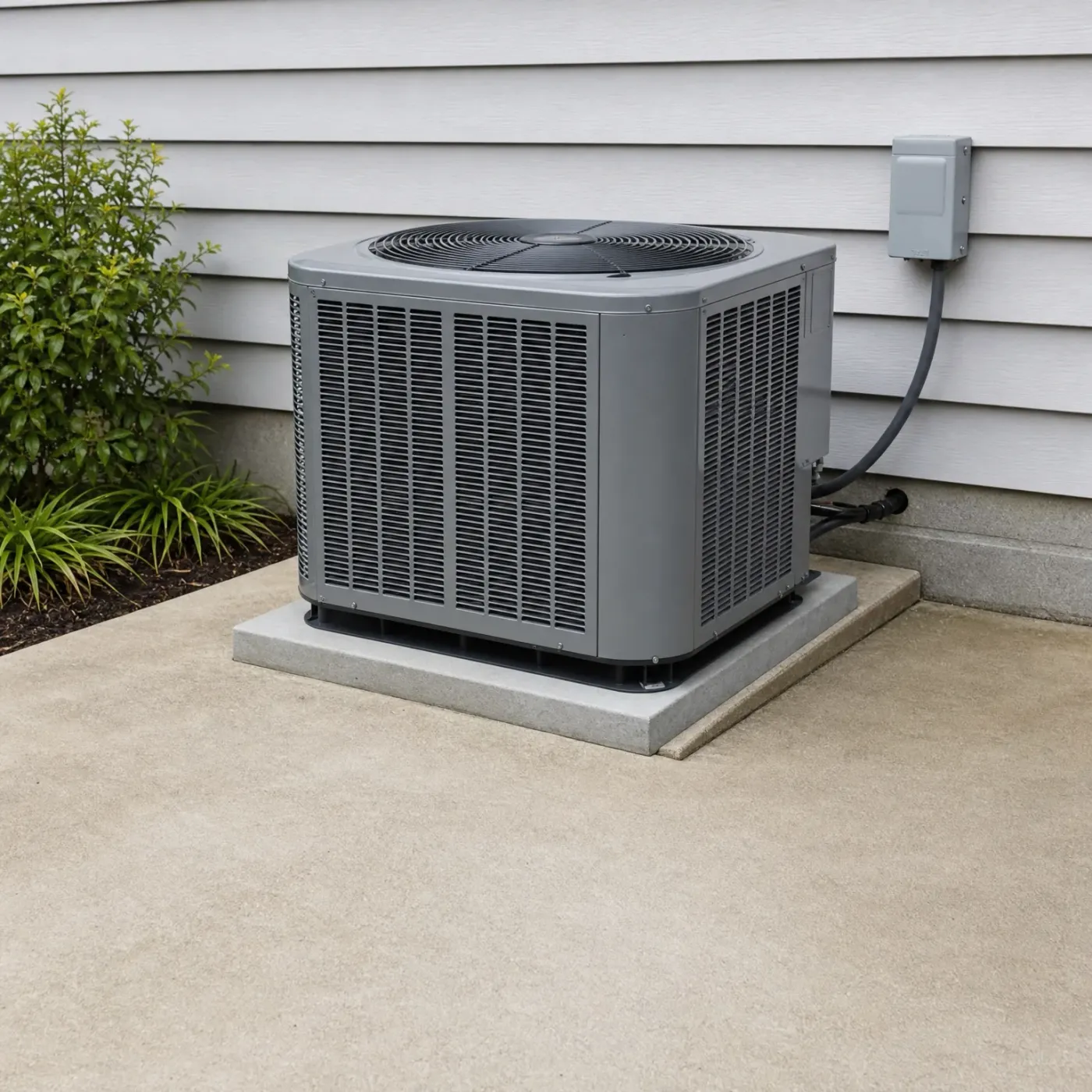
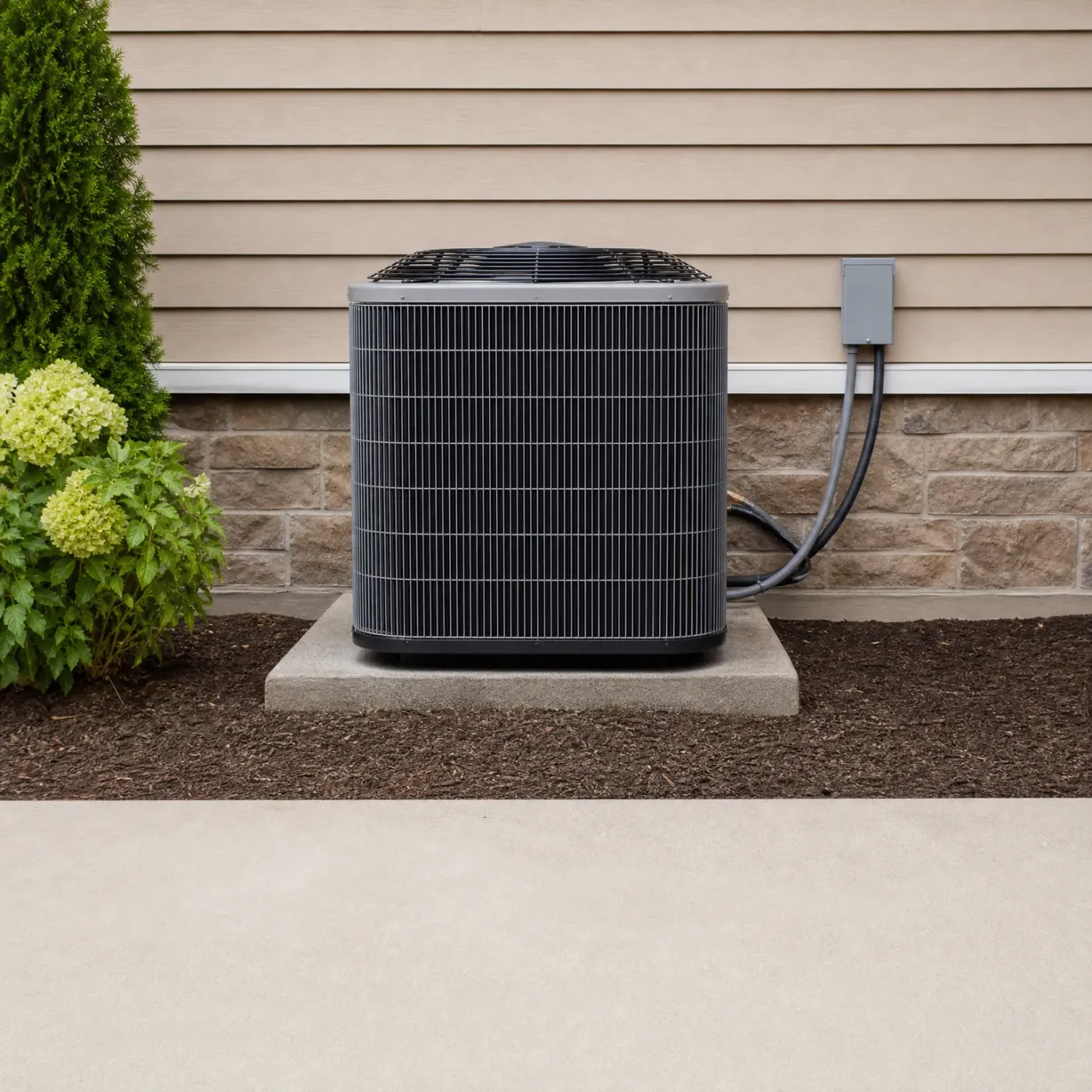
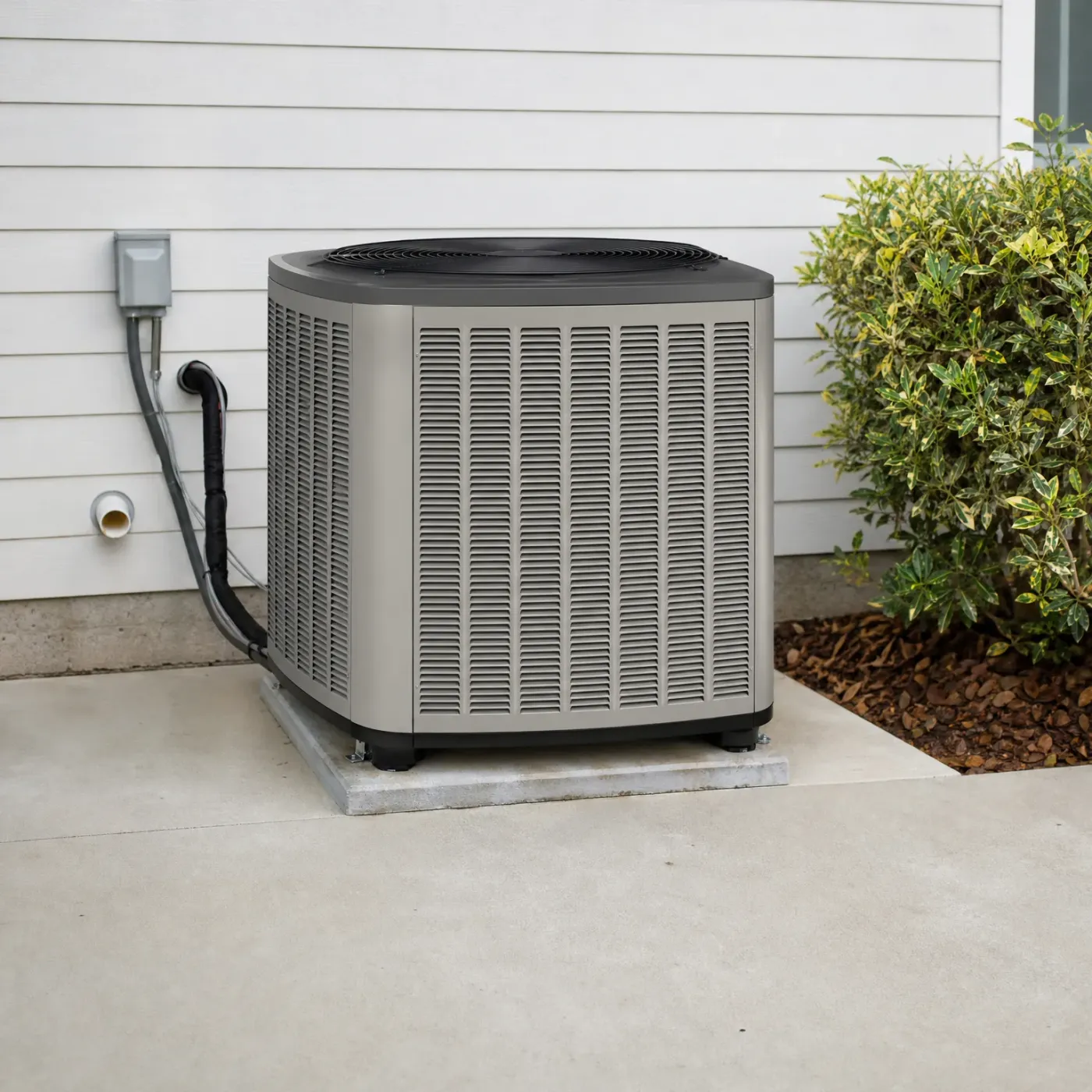
Running clean
Air moves out of the top, the pad is clear, and nothing smells off when the unit cycles on. A condenser like this can run all day through a Waterloo summer without any odor at all. That's the baseline worth knowing before something changes.
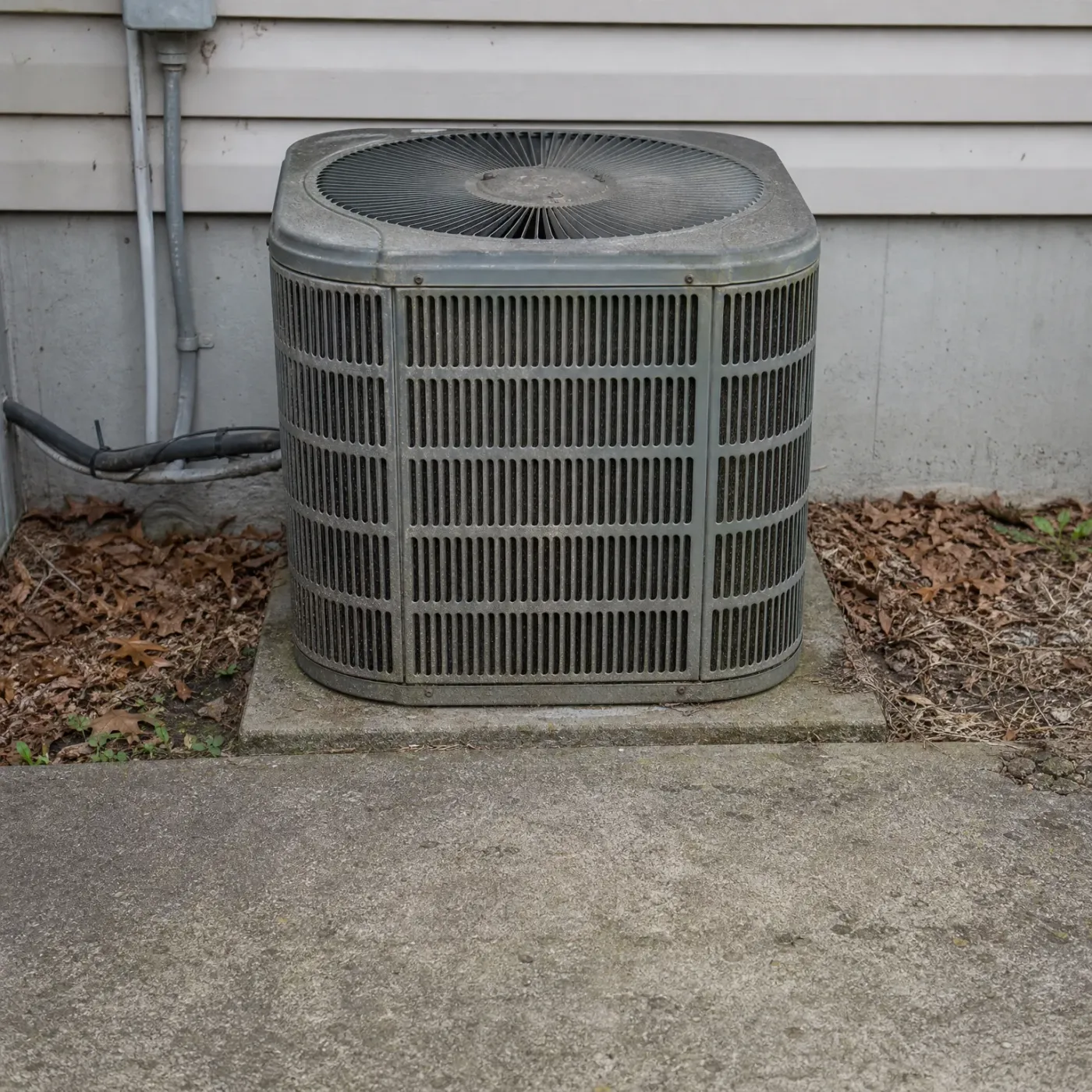
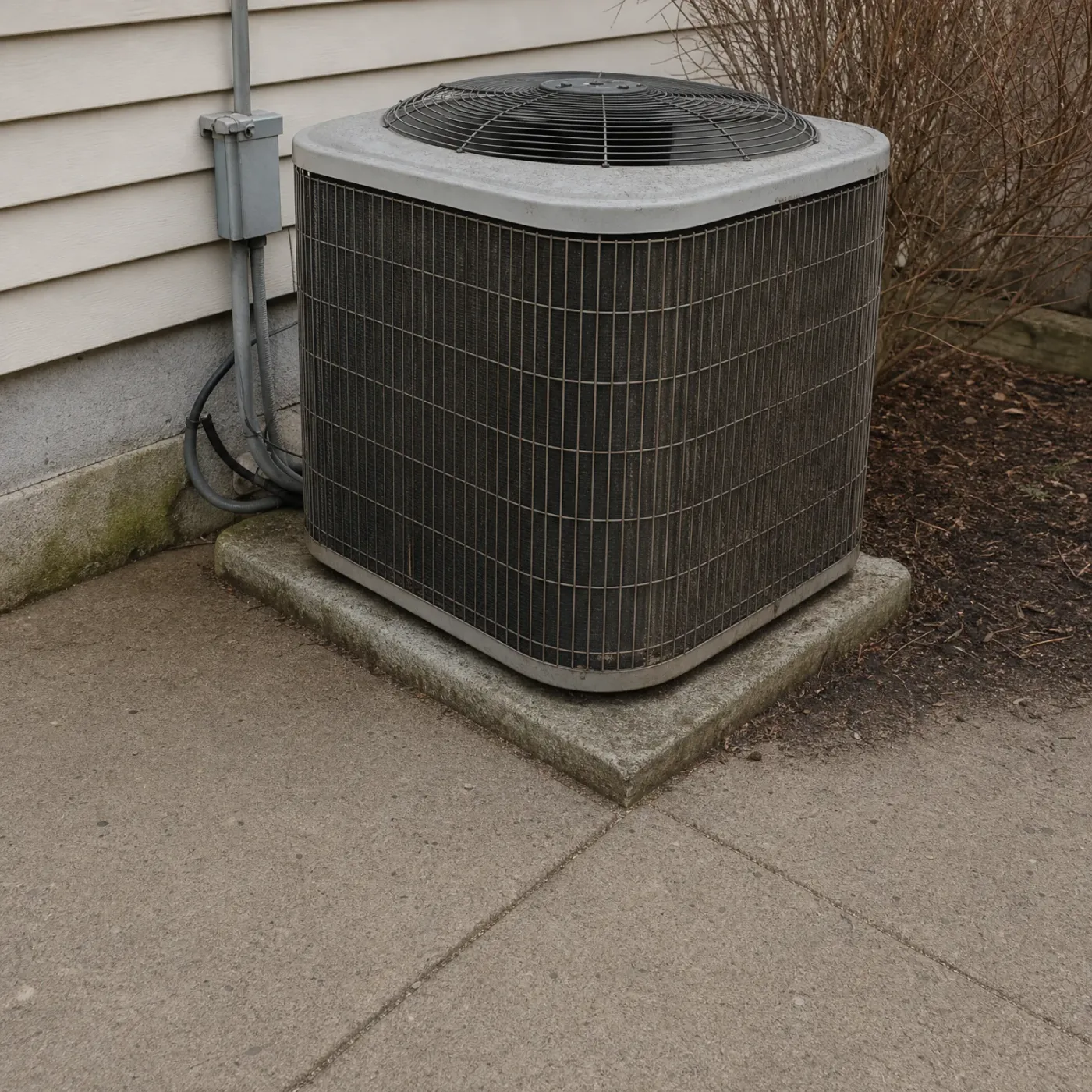
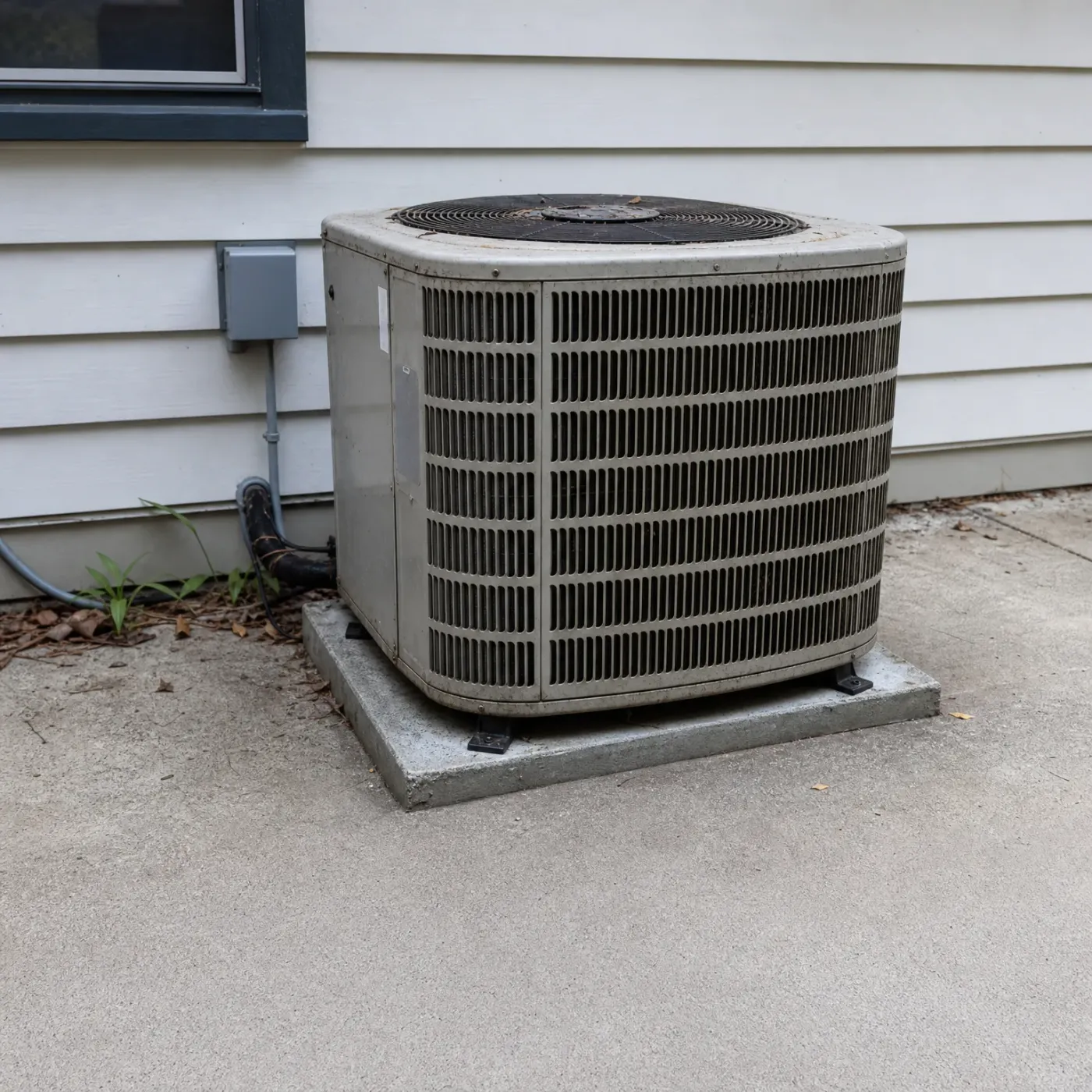
Dirty and worn
Leaves packed against the cabinet, grime coating the fins, lines running along a wall that's seen years of weather. A unit in this shape is more likely to be the source of a burning smell, whether it's dust baked onto a coil or wiring strained from the buildup around it.
Describe your air conditioner job once, to one pro.
There's no charge for the request.
A burning smell usually means the AC keeps running until something stops it outright. If the smell is coming from the outdoor unit, a seized fan motor or failing capacitor can run hot enough to trip the breaker, and now you're without cooling in the middle of a Waterloo summer. If it's coming from inside, near the air handler, the risk is worse. A cracked wire or a motor winding that's burning insulation can mean an electrical fire inside the house, not just a broken AC. You'd smell it before you'd see any smoke, which is exactly why it matters now instead of later. Left alone, a problem like this doesn't fix itself between now and your next cooling cycle. It either shuts the system down on its own or it keeps drawing power through a damaged part until something fails harder, sometimes a blower motor, sometimes the wiring behind it. Either way you're looking at a bigger repair than if the smell had been caught today.
Working as it should, air pulls through the top and the pad underneath stays clear and dry.
Wiring that's overheating or a motor that's seizing up can put a burning smell out through that same vent.
That mugginess outside puts a real load on the AC before it ever gets to cooling your house. Black Hawk County averages a summer dew point of 62°F, according to NOAA climate data, and at that level the system spends part of every cycle wringing moisture out of the air. The compressor runs longer to do it. A unit that's already straining to keep up with humidity has less room to handle a dirty capacitor or a motor bearing going dry, and that's often when you first catch the smell, not on a mild day but on one of these thick, heavy afternoons.
NASA POWER T2MDEW
Before you get your air conditioner repairAfter you get your air conditioner repair
1
A motor bearing or capacitor starts drawing more current than it should.
2
The extra current turns into heat at that one part.
3
Nearby wire insulation or dust on the part starts to scorch.
4
The scorched smell travels through the vents into the house.
What the smell is telling you
A burning smell from your AC means current is running where it shouldn't, and that part is getting hot enough to scorch.
Shutting the system off at the thermostat or breaker stops the damage from spreading while you wait on a repair.
A seized fan motor or a failing capacitor can trip the breaker on its own, leaving you without cooling during a Waterloo summer.
The smell itself doesn't tell you which part is at fault, only a contractor checking the unit can confirm that.
Waiting it out risks turning a single part repair into a bigger one if the heat spreads to wiring or nearby components.
A burning smell from your AC has one explanation that matters: electricity is flowing somewhere it shouldn't, and that spot is heating up. It might be a capacitor that's failing, a fan motor whose bearing has seized, or wire insulation starting to scorch. You can't tell which from the smell alone, and you don't need to. What you can do is shut the system off at the thermostat or the breaker and stop it from getting worse while you line up someone to look at it.
Waterloo summers don't give a struggling AC much room to coast. The system is already working through muggy air most of the season, and a part that's overheating under that load can trip the breaker on its own, often at the worst possible time. Left alone, the heat from one failing part can reach the wiring or components around it, and a repair that would have been simple turns into something bigger.
None of that means you need to spend your evening calling around, explaining the smell to three different shops, and comparing what each one quotes you. Once you send the request, that search is off your plate. Someone licensed to work on your system gets the details and takes it from there. You've already done the part that mattered: you caught the smell, you shut it down, and now the rest isn't yours to chase.
Air Conditioner Repair
Send one request and you're done looking
Step 1 of 3: Equipment
A Black Hawk County pro who repairs air conditioners gets your request.
Your request goes to a Black Hawk County pro who takes air conditioner jobs.
One request and the search for a pro is handled.
Send it once and finding someone is no longer on you.
Fill out one short form instead of calling around.
Explain the job once and skip repeating it on every call.
The pro who gets in touch is licensed in Iowa and works in Black Hawk County.
A licensed pro who works in Black Hawk County gets your request.