
The drain line clear
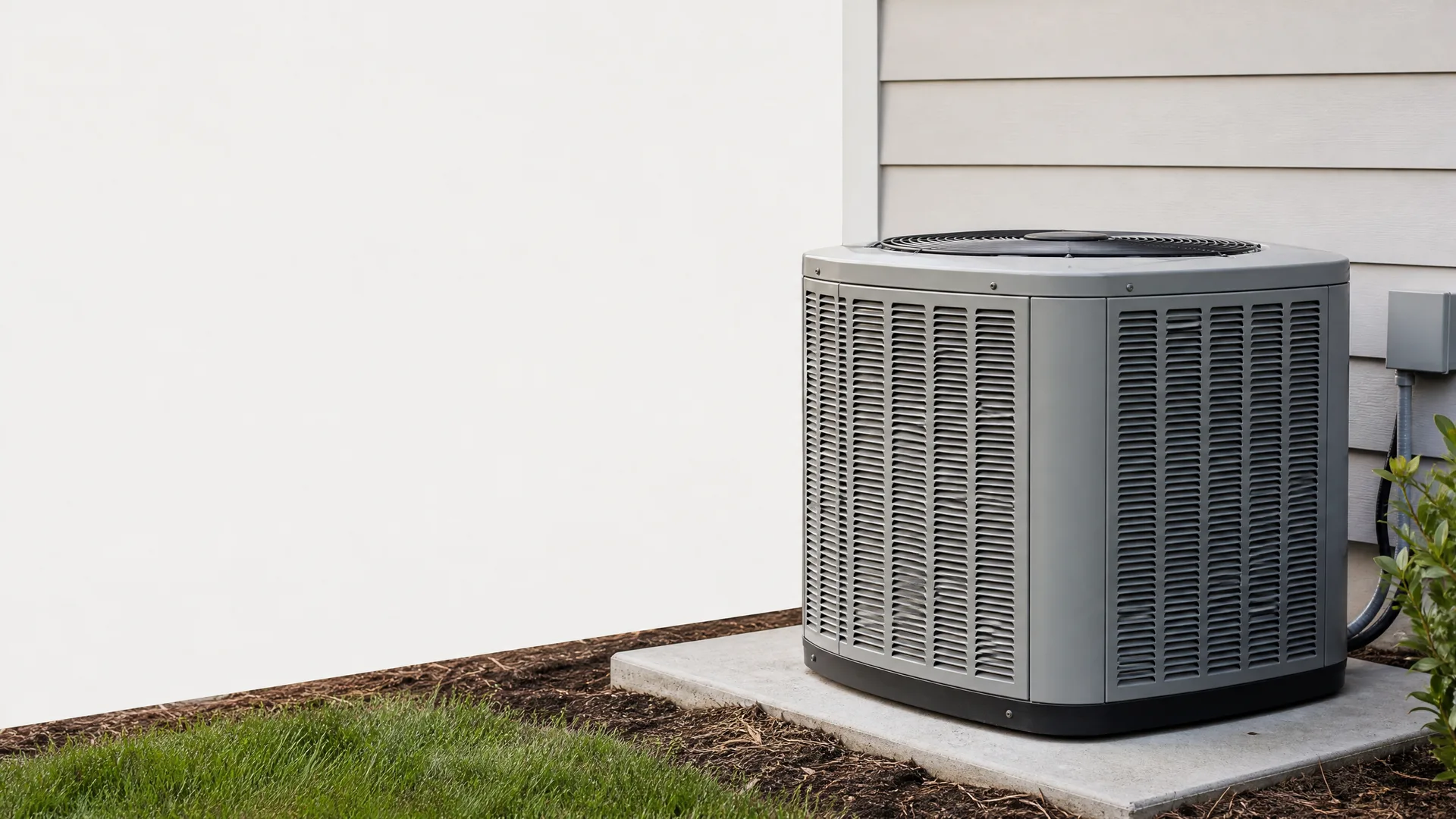
When the condensate line runs free, water drips outside near the outdoor unit and never touches your floor. The pad stays dry, the fins stay clean, and the only sign your AC is working is cool air coming out of the vents.
Water on the floor by your indoor unit almost always means the drain line is clogged. Algae and dirt build up inside that line over a long cooling season, and once it's blocked, the condensation your AC pulls out of the air has nowhere to go but back up and out of the pan. Sometimes the cause is a dirty air filter instead. When airflow is choked off, the coil can ice up, and when it melts it dumps more water than the pan and drain are built to handle. A cracked or rusted drain pan will do the same thing even with a clear line. None of this means the unit is failing, but it does mean water is going somewhere it shouldn't, and left alone it can soak the subfloor, stain a ceiling below, or trip the float switch and shut the whole system down on a hot day. Worth having someone look at it before that happens.
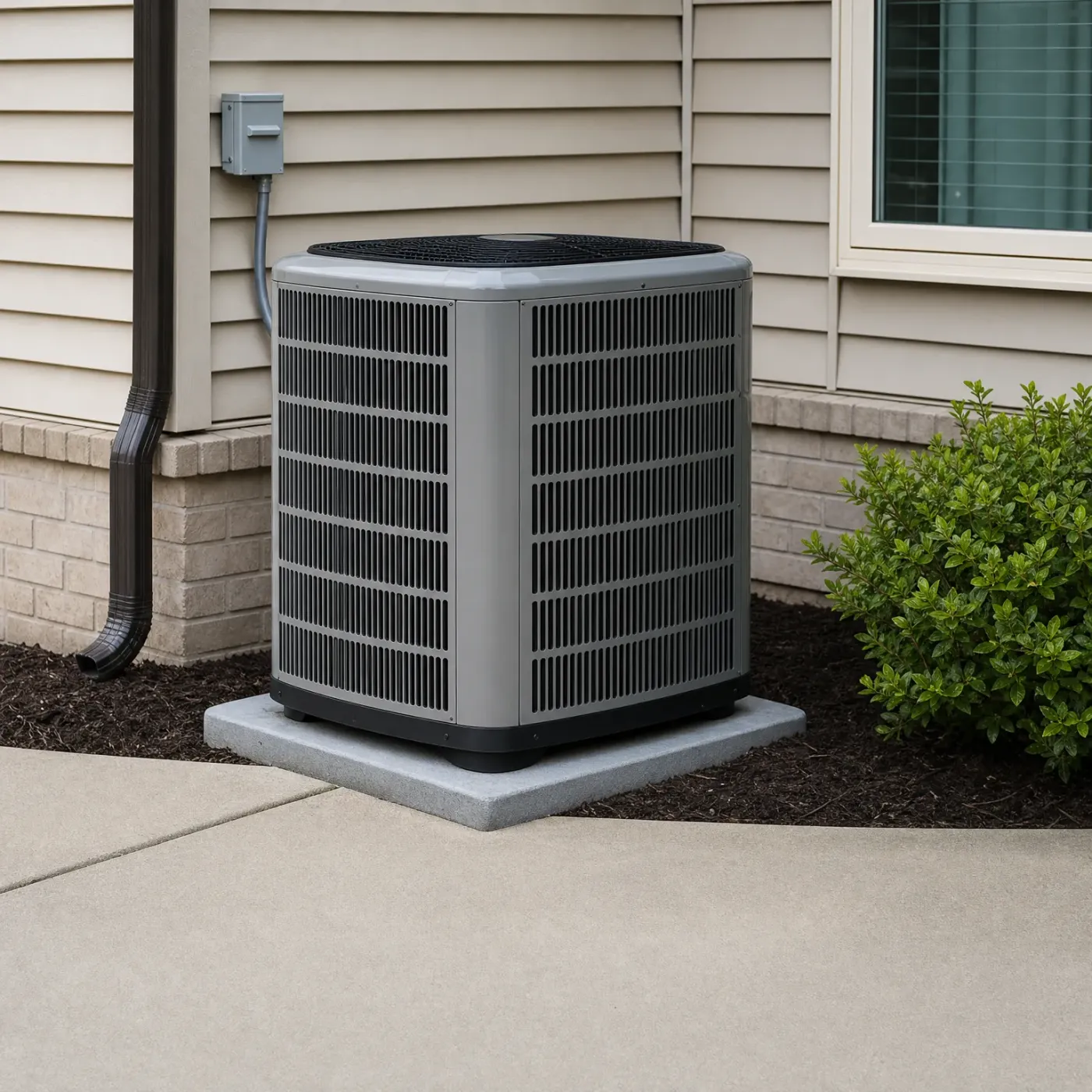
When the condensate line runs free, water drips outside near the outdoor unit and never touches your floor. The pad stays dry, the fins stay clean, and the only sign your AC is working is cool air coming out of the vents.
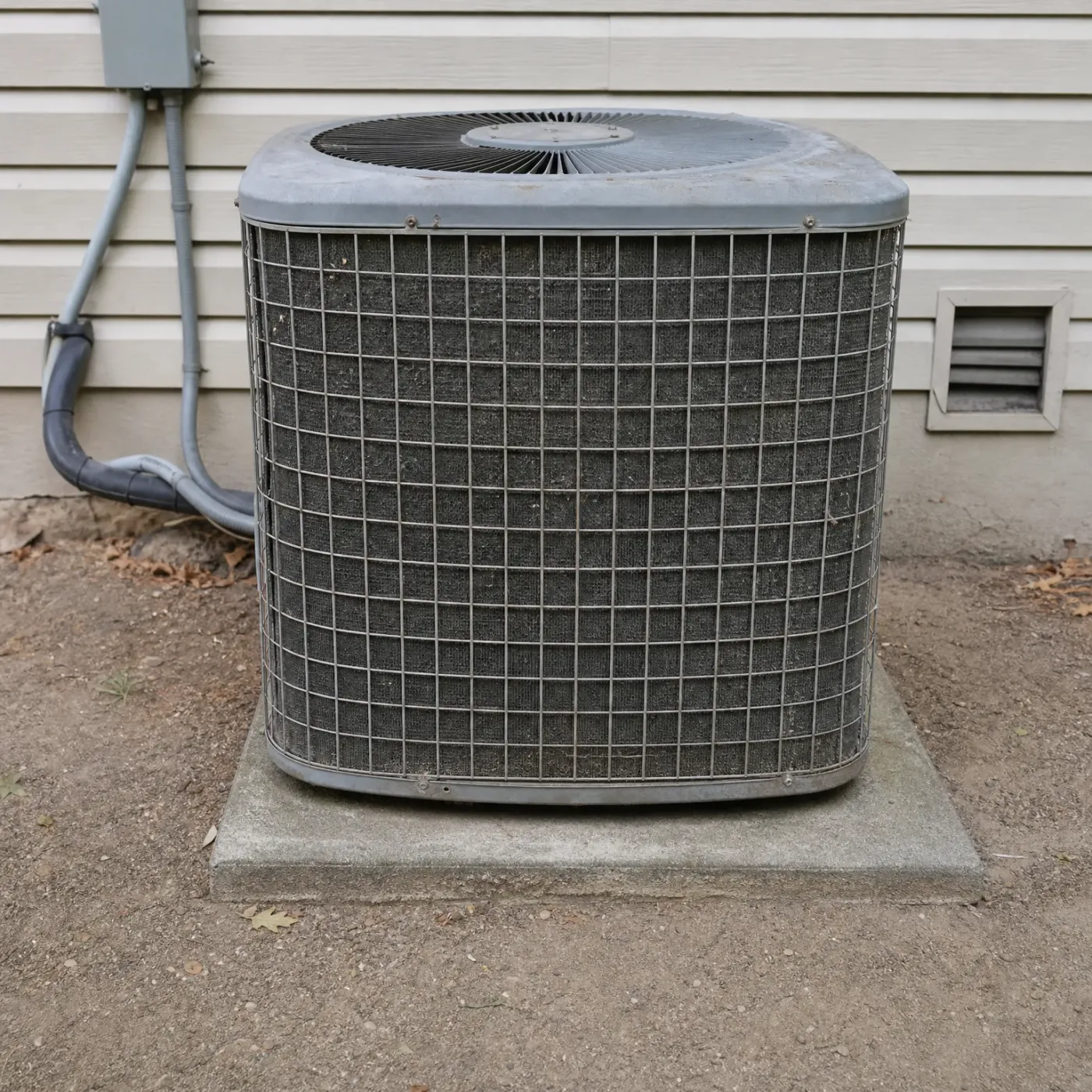
Dirt and grime built up like this on the outdoor unit usually means the whole system has gone a while without a look. Inside, that same neglect lets algae clog the drain line until condensation backs up and finds the floor instead.
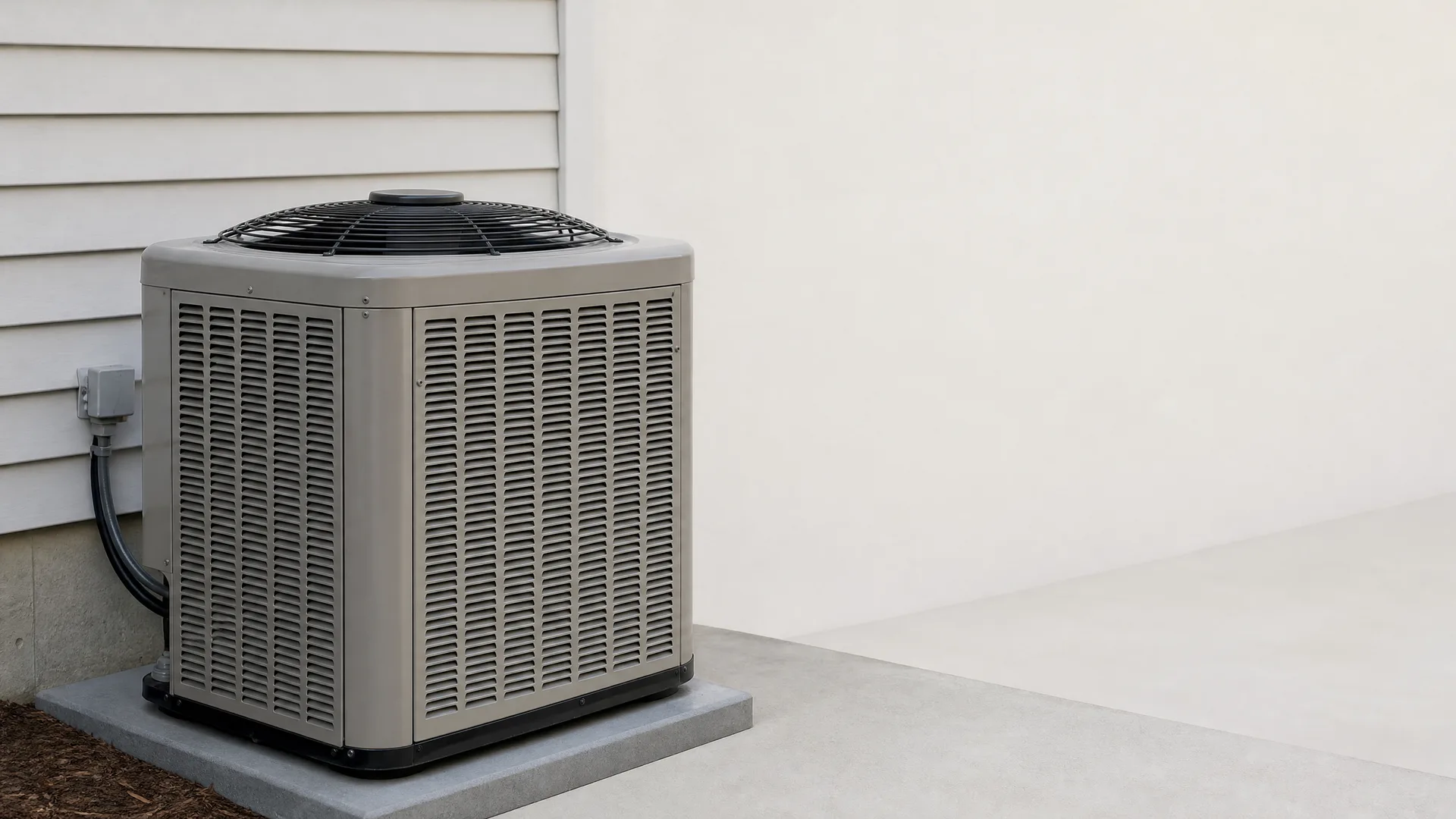
Ames summers run muggy enough that your AC pulls a steady stream of water out of the air for months at a time. All that moisture runs down the same narrow drain line, and algae grows in standing water the way it grows in a birdbath. Add in dust pulled through the coil and the line narrows a little more each week until it shuts tight.
Most systems installed in the last couple decades have a float switch sitting in or near the drain pan. It senses rising water and shuts the AC off before the pan overflows. That switch doing its job is often why your air stopped blowing cold at the same time you noticed water, since the unit shut itself down rather than let the pan spill over onto your floor.
Look for a damp spot on the carpet or floor near the indoor unit, usually in the closet or utility room where it sits. You might notice a musty smell before you see any water, since that drain pan holds moisture long enough to grow mildew. Check the pan itself for standing water or rust along the bottom edge. If the unit sits above a finished ceiling, a brown stain spreading overhead means water has been backing up for a while. Left alone, that water can warp flooring, soak drywall, and rust out the pan itself, and most systems will keep running the whole time unless yours has a float switch to shut it off.




A clogged drain line is the usual cause, but not the only one. A cracked drain pan, a disconnected line, or a coil so iced over it thaws into more water than the pan can hold will all put water on your floor the same way a clog does. Telling those apart means getting hands on the unit, pulling the panel, and checking the pan, the coil, and the line itself. A contractor local to Ames who services this equipment every summer has seen most of what causes this in homes around here and knows where to look first. Water sitting by your indoor unit in July humidity isn't something to let ride. The longer it sits, the more chance it has to warp the subfloor or work into the drywall nearby. Get someone out to look at it before that happens.
A clog that's just starting might only put a few drops on the floor every hour. You could get by for a few days running a wet-dry vac on the line every morning and keeping a towel down by the indoor unit. The AC still cools the house fine. The risk is the particle board or subfloor under that unit, which soaks up water quietly until it's soft, and the drain pan itself, which can rust through if it sits full long enough. What looks like a small problem now is still worth catching before it sits for a week.
A contractor who works on AC systems around Story County every summer has seen this exact clog more times than they can count. They'll clear the line with equipment that gets past bends a vacuum can't reach, check the drain pan for cracks, and look at the coil to rule out ice as the real cause. Since it's one contractor handling the call instead of several competing for it, you're not fielding a round of quotes while water sits on your floor. They're local, licensed, and they'll know within a few minutes whether this is the usual algae clog or something else in the system.


Three months of cooling isn't much time for a slow drip to turn into a real mess, but it's enough. Your AC packs most of a year's condensation into June, July and August, so a clogged line backs up fast, right when you're running the system hardest.
NOAA nClimDiv 1991-2020
Warm air crosses the indoor coil and water condenses on its surface
Condensate drips off the coil into the drain pan below it
The pan feeds that water into the condensate drain line
Water travels through the line and out near the outdoor unit

A clogged drain line is behind most of this, and now you know what to look for and what it looks like when it's working right. Whether yours is a slow drip or a steady one, the fix is the same line, cleared and running free again.
If you'd rather have someone else deal with it, you can get matched with a licensed contractor near Ames who works on drain lines like this all summer and knows which Story County systems tend to clog first. You'll hear from that one contractor directly, not a handful of companies competing for your call.






The pro who gets in touch is licensed in Iowa and works in Story County.
No charge to send it. You decide if you hire them.