




AC can't keep up on hot days in Cedar Rapids, IA

Get matched with a pro who works on air conditioners in Linn County.

Find a pro near me

When your AC runs flat out on a hot, sticky Cedar Rapids afternoon and the house still won't cool past 78 or 80, the system has lost the fight between how fast heat is building up inside and how much it can carry back out. A unit that is low on refrigerant, choked by a dirty coil or filter, or simply sized too small for your house will keep running without ever catching up once the air outside turns heavy and humid. Linn County summers push equipment harder than most of the year asks of it, and a system that managed fine in June can fall behind once July and August humidity sets in. Running longer doesn't mean it's working better. It often means something inside it, the charge, the airflow, or a failing part, is making it work harder for less cooling. Left alone, that strain tends to get worse, not better, as the summer goes on.

A woman with dark hair in a bun wearing a cream knit sweater sits on a gray sofa in a bright living room, looking off to the side.
A woman wrapped in a knit blanket sits on a gray sofa in a living room, looking toward a bright window with houseplants and an armchair in the background.
A woman in a gray cowl-neck sweater sits on a light sofa with cushions, smiling and looking to the side, with a kitchen and window visible behind her.
A woman with dark hair in a bun, wearing a light linen shirt, sits on a sofa and looks to the side, with a window, houseplants and a kitchen with pendant lights blurred behind her.

Fixable Now or Past Its Limit

Running but losing

  • The system cycles on and off or runs nonstop but the house still sits at 78 or 80 on the worst afternoons.
  • Airflow out of the vents feels weak even though the outdoor unit is clearly working.
  • A refrigerant leak or a dirty outdoor coil can cut how much heat the system carries out of the house without stopping it outright.
  • A contractor can check refrigerant charge, clean the coil, and look at the blower before anything gets replaced.
  • If the system is only a few years old, a repair that restores proper airflow or charge can bring it back to cooling the house the way it did before.
  • Waiting through another heat wave to see if it corrects itself usually means more strain on the compressor, not less.

Not built for this anymore

  • An AC sized for a smaller house, or one that has lost capacity with age, will fall behind no matter how well it's maintained.
  • If the compressor is failing or the system needs a part no longer made for it, repeated repairs stop making sense.
  • A unit that struggles every time Cedar Rapids hits the upper 80s and 90s is being asked to do more than it was built to handle.
  • Rising summer electric bills alongside a house that still runs hot points to a system working harder for less result.
  • A contractor can size a replacement to the house itself, rather than matching whatever was there before.
  • Replacing an aging system before it fails completely avoids losing cooling entirely during the hottest stretch of the summer.
  1. Heat moves into the house faster than the system can pull it out

  2. Low refrigerant or a dirty outdoor coil cuts how much heat the system carries away

  3. The compressor keeps running but moves less heat with each cycle

  4. Airflow through the vents drops and cold air can't reach every room

Why does your house feel muggy even with the AC on

You can feel it on your skin before you look at the thermostat. The air coming out of the vents doesn't feel dry and cold the way it should, and rooms upstairs stay warmer than rooms downstairs. Bedding and furniture feel damp to the touch. That dampness is the system failing to pull moisture out of the air, which usually tracks with the same problem that stops it from cooling: it isn't moving enough refrigerant or enough air to do either job. Left alone through a Cedar Rapids summer, the compressor keeps straining against a load it can't keep up with, and that strain is what shortens its life or ends it on the next 90-degree day.

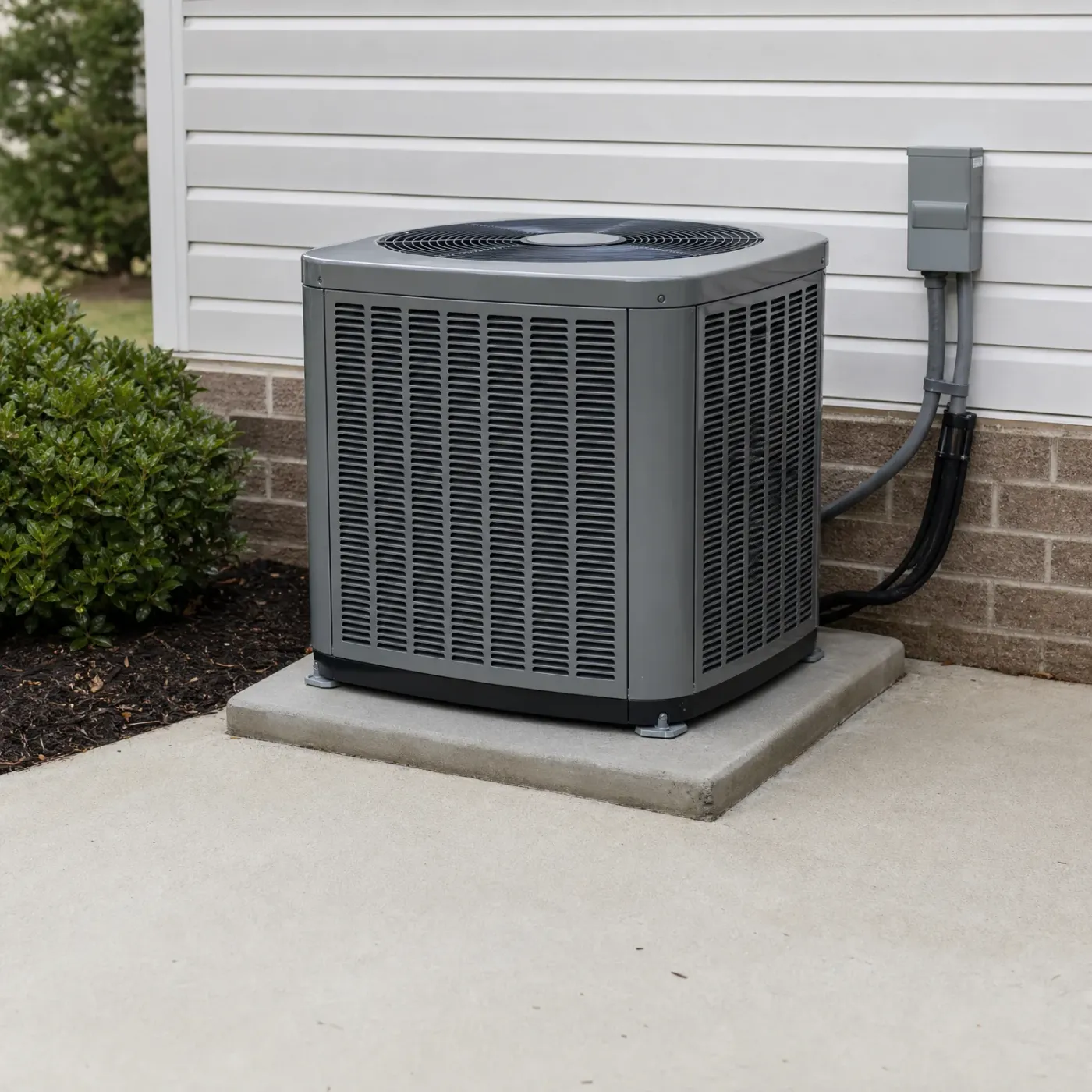
A gray outdoor air conditioner condenser unit on a concrete pad beside a house with white horizontal siding and a brick foundation, with a wall-mounted disconnect box and conduit, and a green shrub with mulch at left.

A unit that can keep pace

The coil and grille are clean and the condenser has clear space around it. Air moves through it freely, so it can actually dump the heat it pulls out of the house. On a hot Cedar Rapids day, this is what keeps the house at the temperature set on the thermostat.
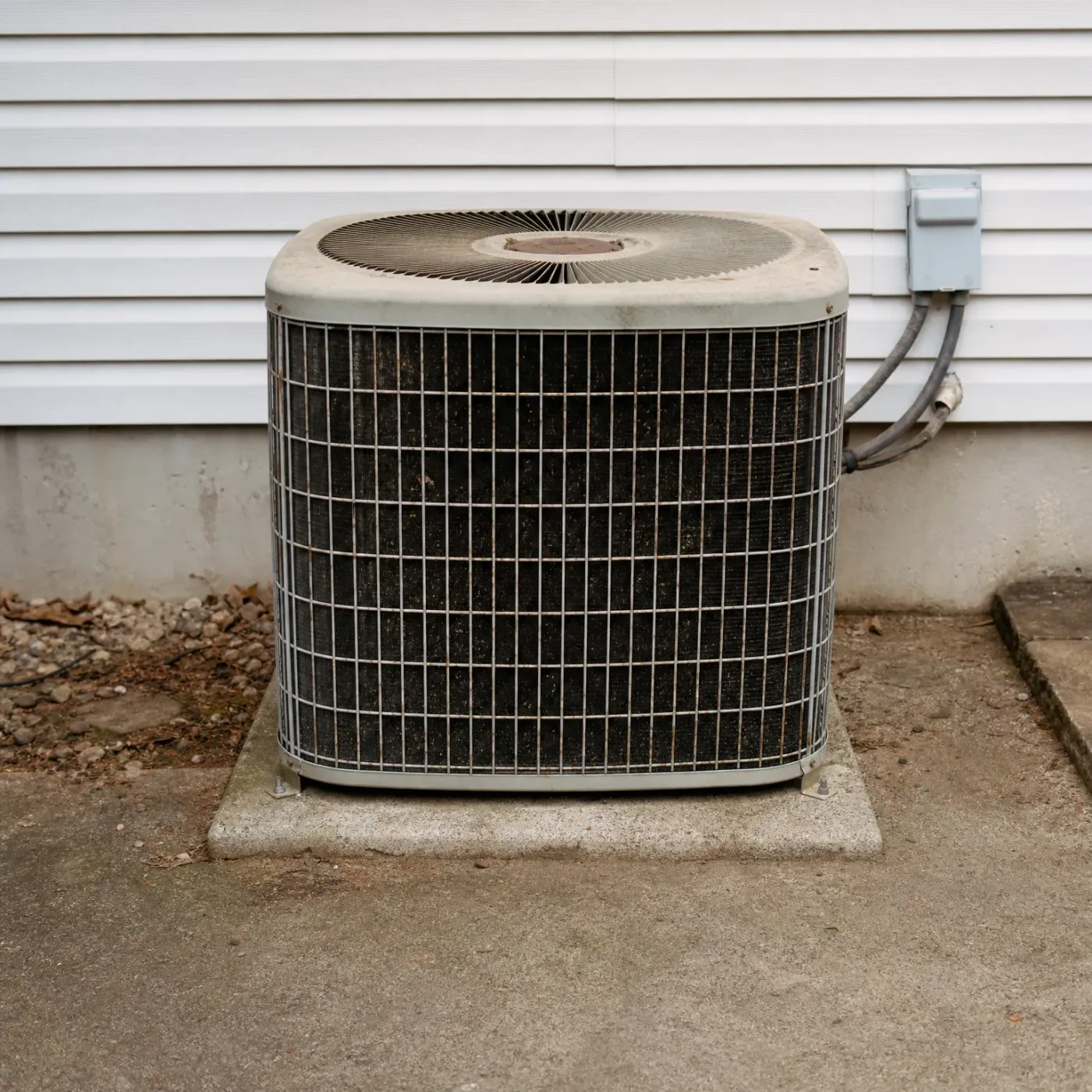
An outdoor air conditioning condenser unit on a concrete pad beside a house with white horizontal vinyl siding, with a gray electrical disconnect box and refrigerant lines on the wall behind it.

A unit fighting its own grime

Dirt and grime cake the wire grille and top cover, choking off the airflow the unit depends on. Heat that should leave the house gets trapped at the coil instead. The compressor keeps running, but it can't move enough heat to catch up, and the house falls behind on the worst afternoons.

Why does my AC run all day and never actually cool the house down?

Why does my AC run all day and never actually cool the house down?

It's moving heat out slower than the house is taking heat in

A healthy AC cycles off once or twice an hour once the house reaches the setpoint. When it runs nonstop from morning to night on a 90-degree Cedar Rapids day, the compressor is working the whole time but each cycle is moving less heat than it should. Low refrigerant means less heat gets carried off with each pass through the coil. A dirty outdoor coil or a condenser crowded by grass or shrubs can't shed that heat into the outside air fast enough. Either way, the house gains ground on the system instead of the other way around, and the thermostat never gets to call for the compressor to shut off.

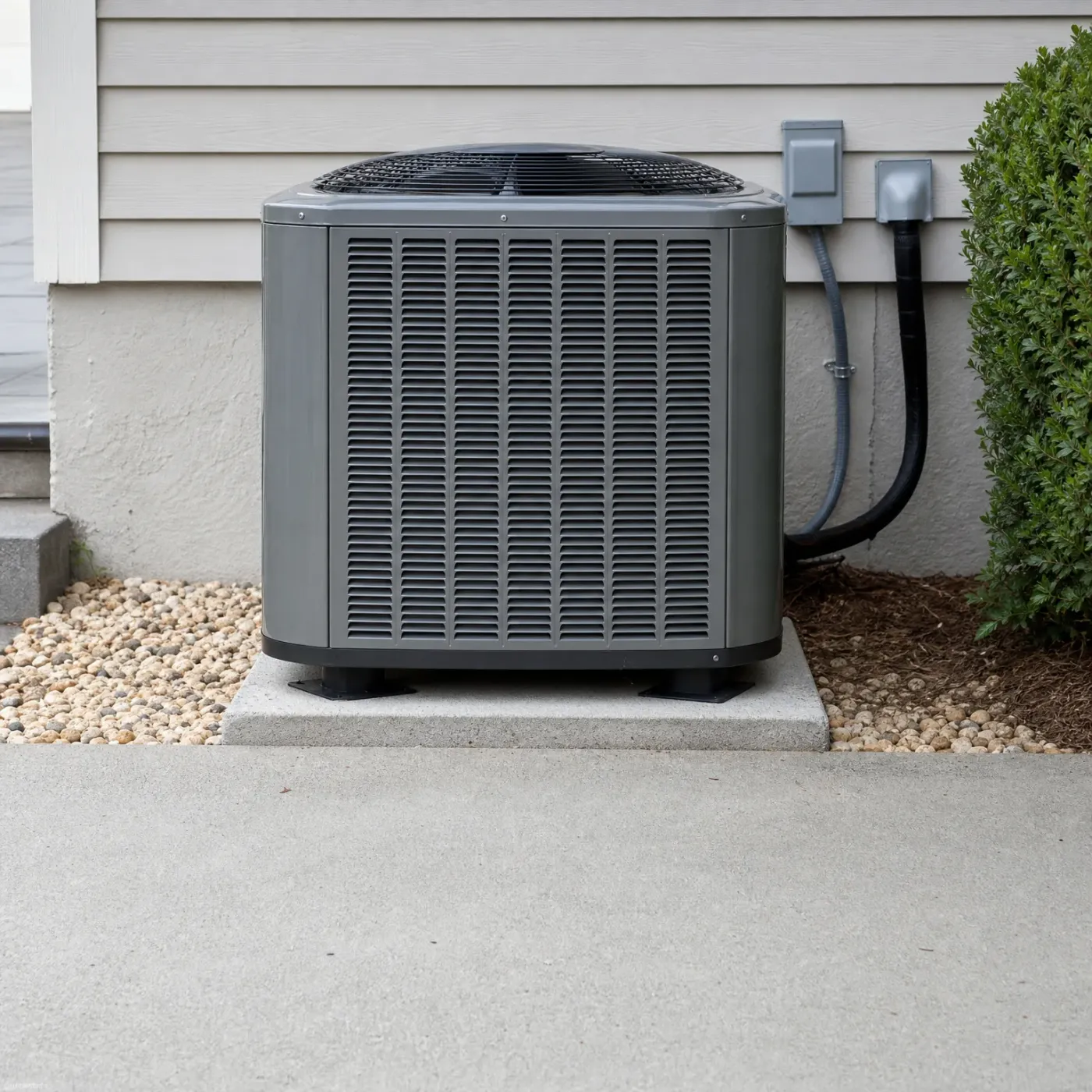
A gray outdoor air conditioner condenser unit on a concrete pad beside a house with horizontal siding and a stucco foundation, with a disconnect box and conduit on the wall, decorative gravel, mulch, and a shrub nearby.
Clear space around the unit and a clean coil let it dump heat as fast as the compressor pulls it in.
An outdoor air conditioning condenser unit on a concrete pad beside a house with horizontal lap siding, with an electrical disconnect box and conduit on the wall, mulch and a green shrub to the right, and a concrete walkway in the foreground.
Dirt packed into the coil grilles blocks airflow, so the unit works harder and still falls behind on a hot afternoon.
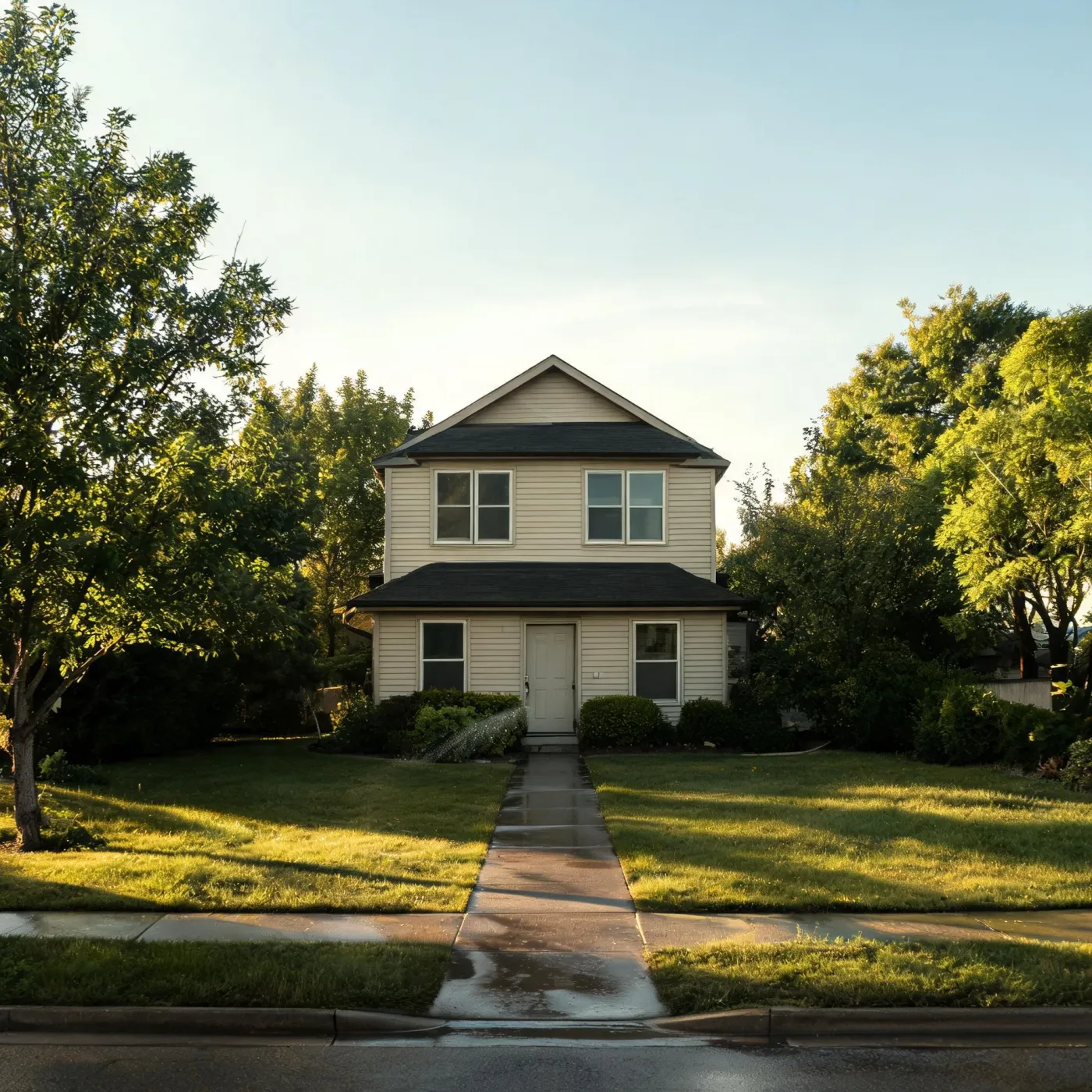
A two-story house with cream horizontal siding, a dark gabled roof, and a white front door, fronted by a lawn, shrubs, and a concrete walkway leading to a sidewalk and street, with large leafy trees on both sides.

A dew point is what makes the air feel heavy instead of just warm, and in Linn County it averages 63°F across June, July and August, according to NOAA climate records. At that level, the air your AC pulls in already carries a lot of moisture, so the system has to wring that out before the house feels dry and cool. That's extra work on top of just dropping the temperature. A unit low on refrigerant or short on airflow falls behind faster on a day like that, and you'll notice it as a house that reads cool enough on the thermostat but still feels damp. When that's what's happening at your place, the next step is getting someone out to look at the system itself.

NASA POWER T2MDEW

Get matched with an air conditioner pro in Linn County

Send the request today and let an air conditioner pro reach out to you.

It costs nothing to send, and you don't have to hire anyone.

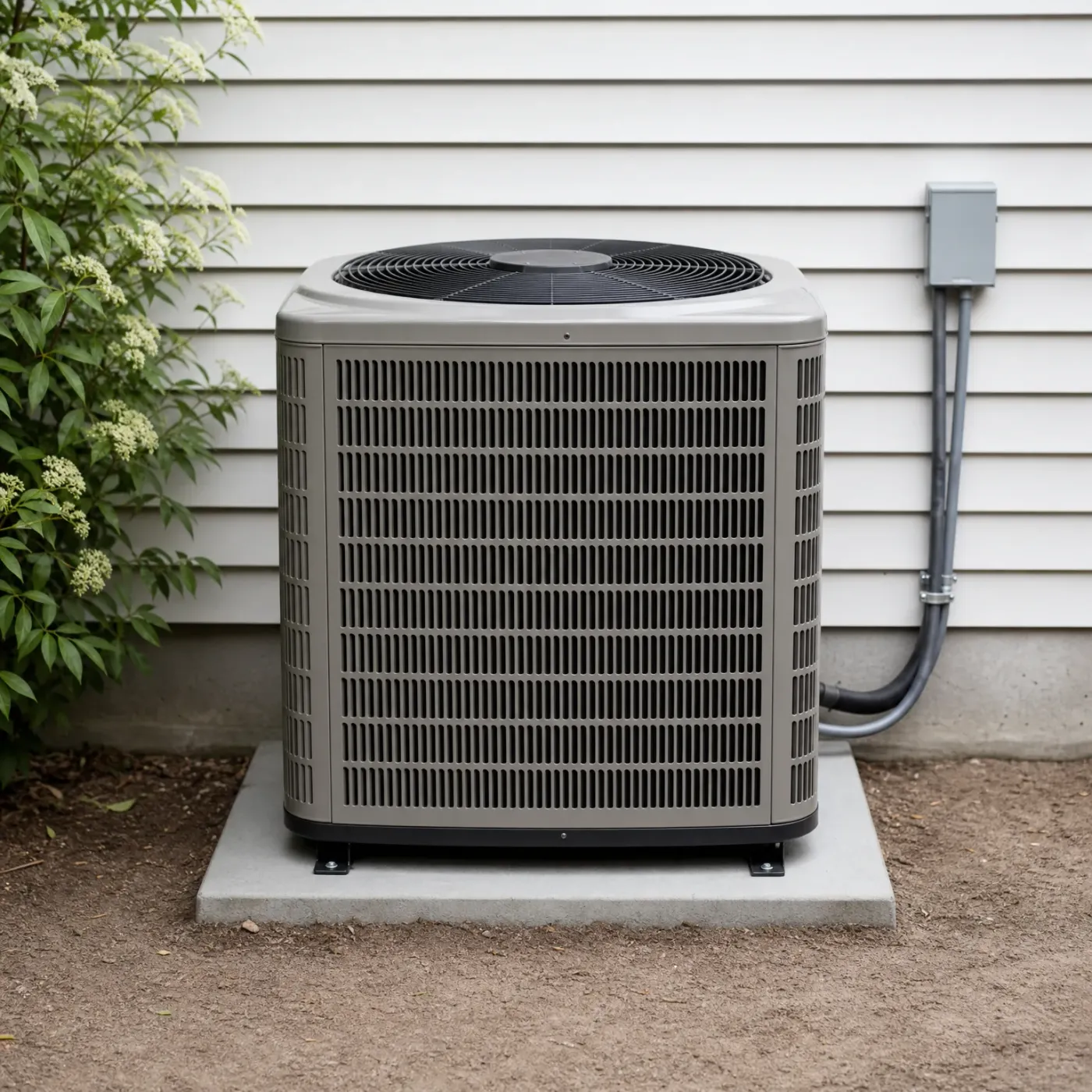
A gray outdoor air conditioner condenser unit on a concrete pad beside a house with horizontal lap siding, with a flowering shrub at left and a disconnect box with conduit on the wall at right.

Keeping pace

The coil is clean and there's open space around the unit on all sides. It pulls heat out of the house and dumps it outside just as fast, cycle after cycle. On a 90-degree Cedar Rapids afternoon, the house still settles at the temperature set on the thermostat.
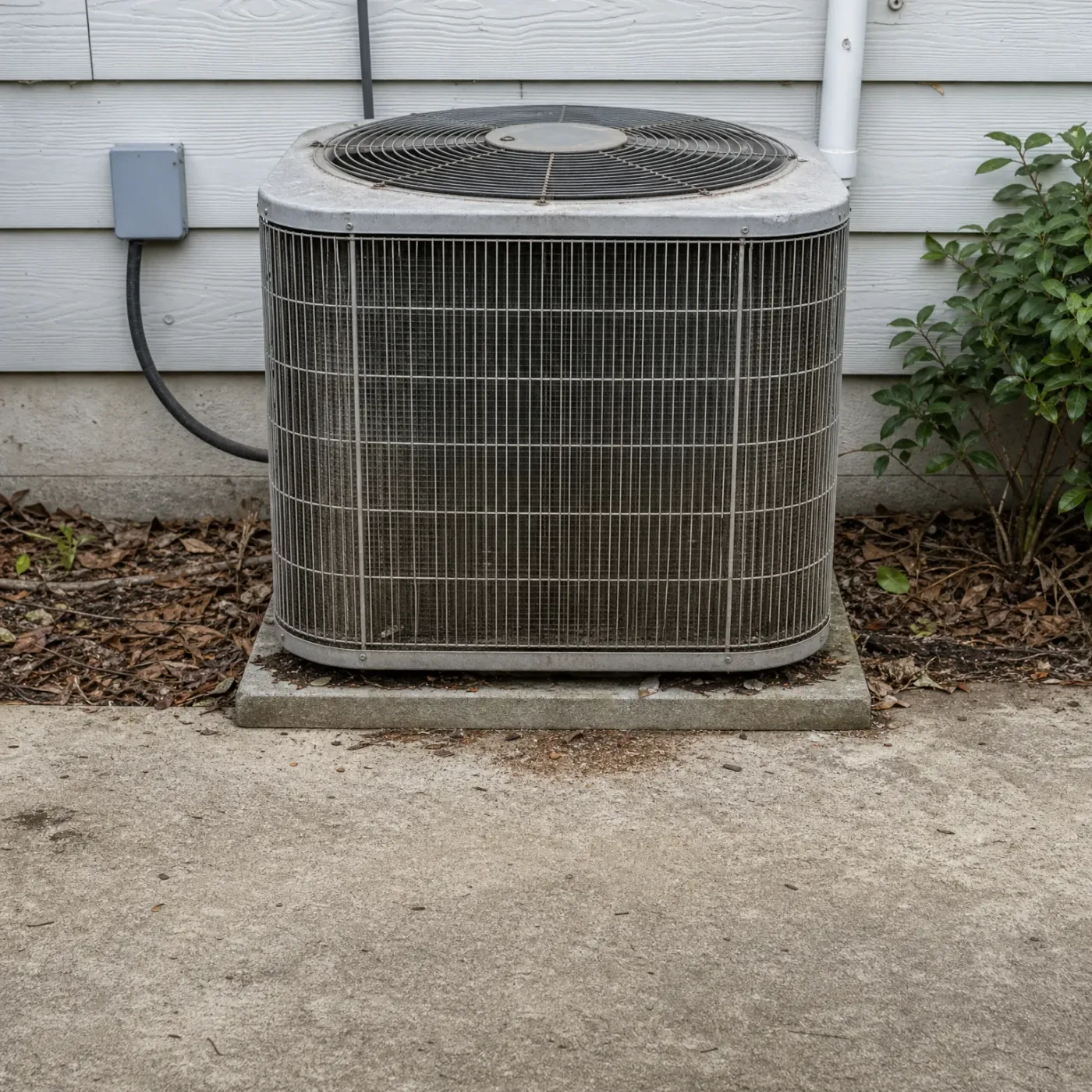
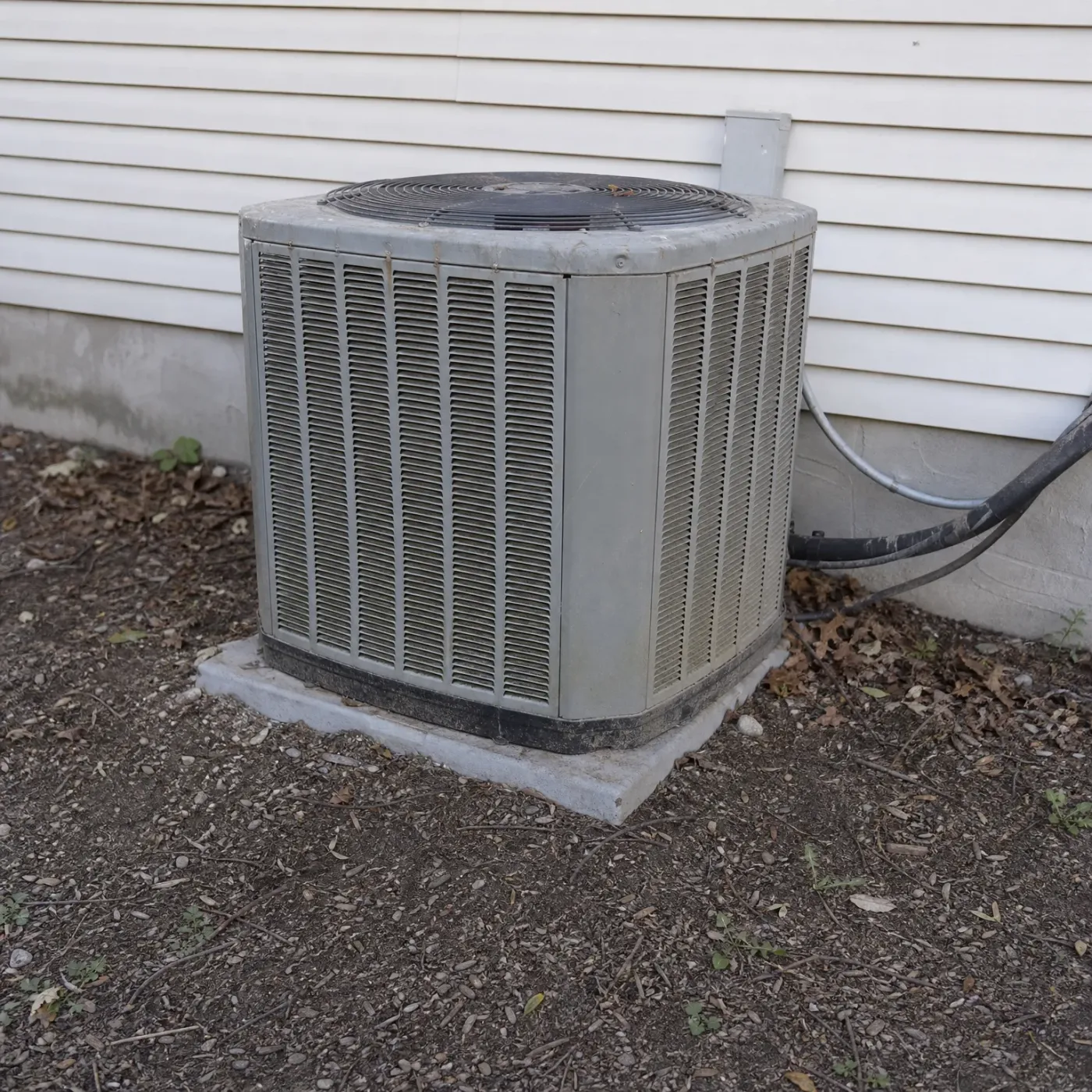
An outdoor air conditioner condenser unit on a concrete pad beside a house with light horizontal vinyl siding, surrounded by bare dirt, gravel and dry leaves, with refrigerant lines and conduit running along the wall.

Falling behind

Leaves and dirt have packed in around the base, and the lines running along the wall show the unit's age. Airflow through the coil is restricted, so it pulls out less heat with each cycle. The house creeps up past 78 or 80 no matter how long it runs.

Cooling runs June through August

Three months is the whole window your AC has to prove itself. June through August is when Linn County needs it most, and a system that's already struggling in June won't get easier to live with by August.

NOAA nClimDiv 1991-2020

An older woman with short gray hair in a cream cable-knit turtleneck sweater smiles while looking to the side in a wooden kitchen, with a round loaf of bread on a board in the foreground and a lit candle by a dark window.
A woman and a child wrapped together in a thick knitted blanket on a sofa, both with eyes closed, with a lit table lamp and houseplant in the dim background.

What all-day strain does to the unit

  • A compressor sized for a 90-degree day still has a duty cycle, a set amount of time it's built to run and then rest.
  • Once the house falls behind, the compressor runs past that cycle for hours and starts drawing more current than it was built to handle.
  • The contactor and capacitor that start and sustain the compressor take the brunt of that extra strain first.
  • A capacitor that's already weak will fail on the hottest day of the year, not a mild one, because that's when the load peaks.
  • Refrigerant lines carry both heat and oil for the compressor, so a slow leak starves it of lubrication long before the house feels warm.
  • A system that short-cycles under strain wears the compressor down faster than one that runs long and steady.

Every compressor is built to run for a stretch, shut off, and rest before it starts again. On a 90-degree Cedar Rapids afternoon, when the house keeps falling behind, that rest stops happening. The compressor just keeps pulling current, hour after hour, well past what it was built to handle in one stretch. The contactor and capacitor are what switch the compressor on and keep it running, and they take that extra draw first. A capacitor that's been weakening for a season usually holds on fine through a mild stretch of weather, then quits outright on the one day it's asked to work hardest. That's not bad luck. That's the part finally meeting a load it can't carry anymore. The refrigerant lines add a second way this fails. They're not just moving heat out of the house, they're carrying the oil that keeps the compressor's moving parts lubricated. A slow leak lets that oil run short well before anyone inside notices the air feels warmer, so the compressor can be wearing down for weeks before the house gives any sign of it. And a system that's short-cycling, switching on and off instead of settling into a long steady run, puts more wear on the compressor over a season than one that just runs long and even. None of this shows up as a single dramatic breakdown. It shows up as a compressor that's quietly been asked to do more than it was built for, on exactly the days it can least afford to.

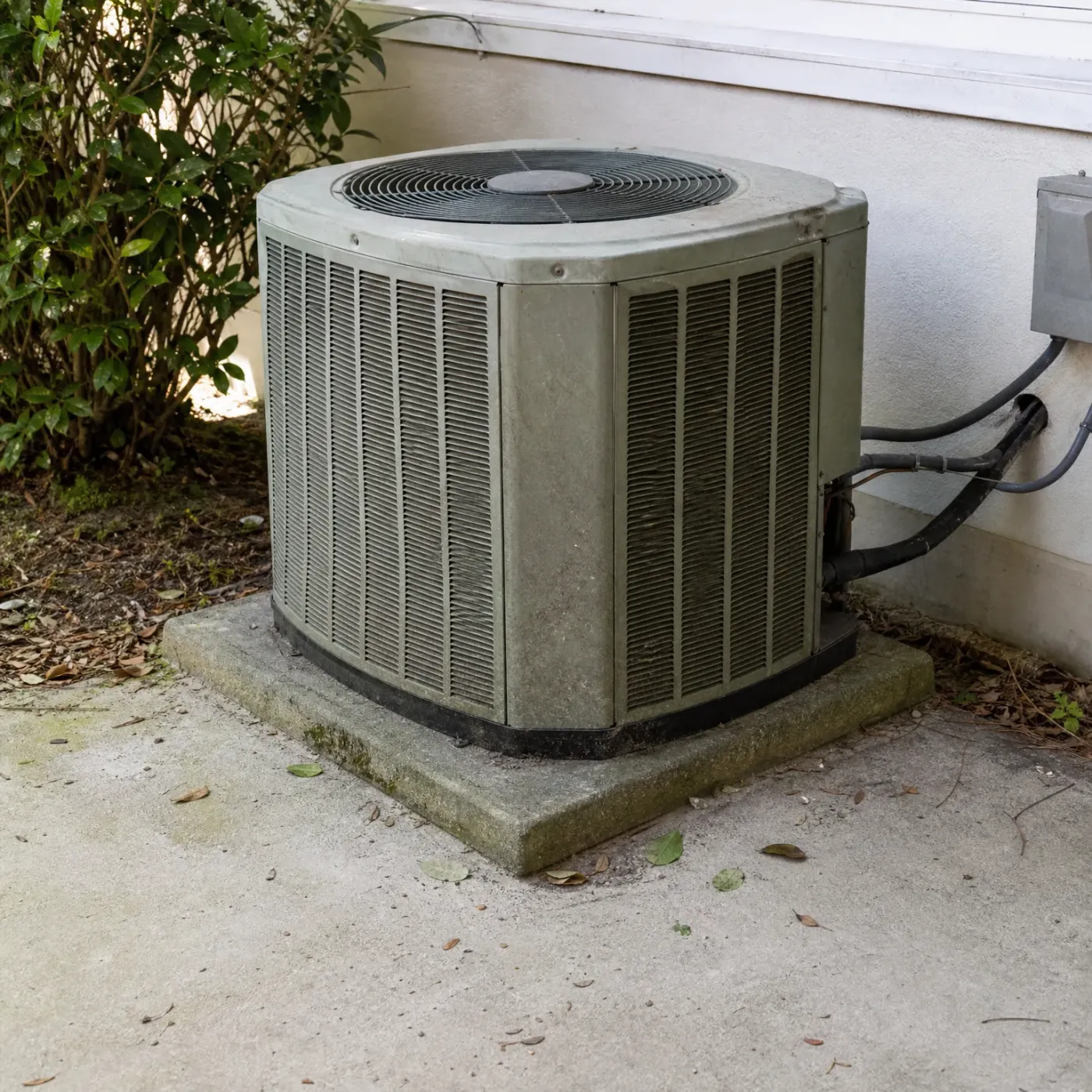
An outdoor air conditioner condenser unit sits on a concrete pad beside a stucco wall, with refrigerant lines and conduit running to the wall and a shrub to the left.
Before you get your air conditioner repair
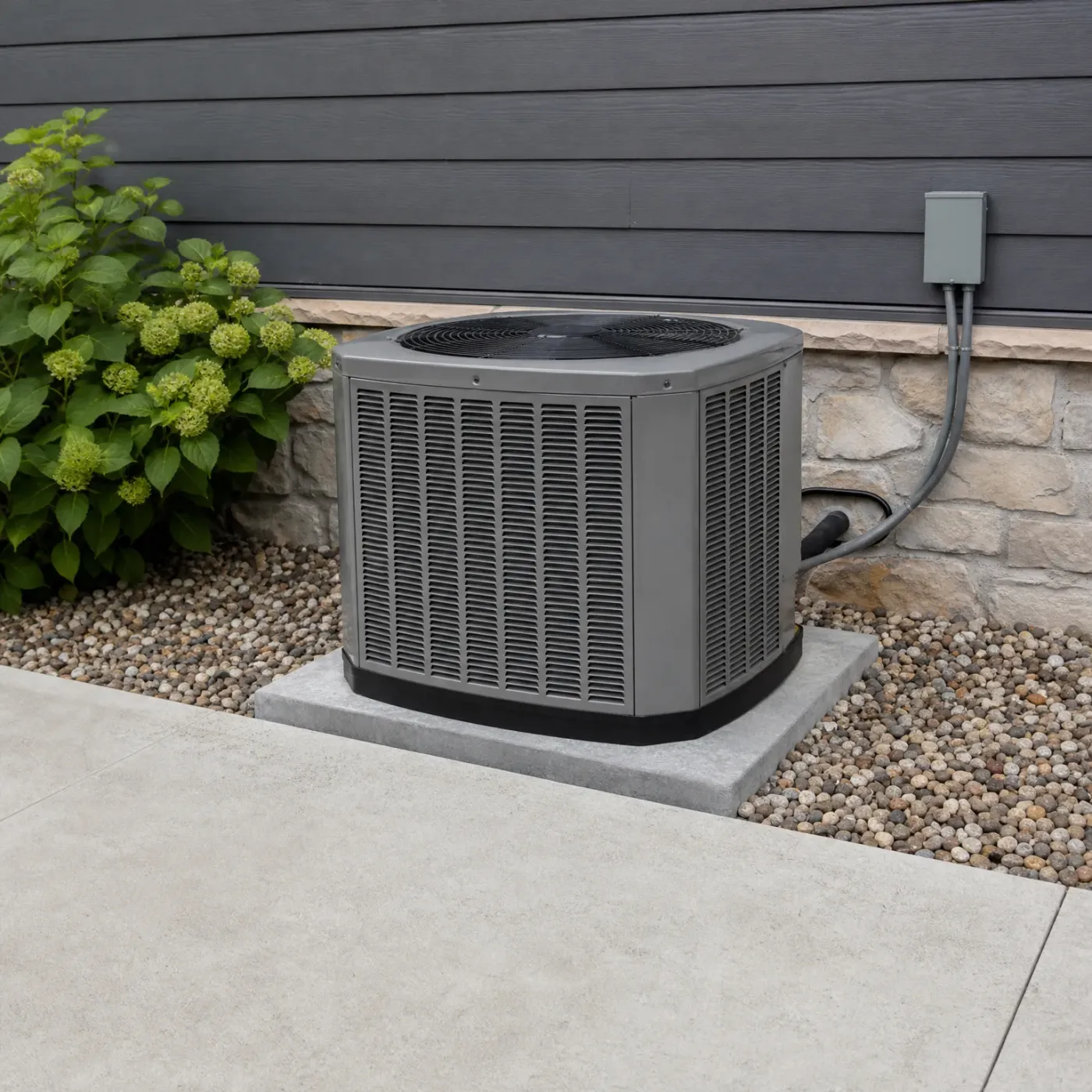
A gray outdoor air conditioner condenser unit on a concrete pad beside a house with dark horizontal siding and a stone base, surrounded by gravel, with a flowering shrub at left and a concrete walkway in front.
After you get your air conditioner repair

Repair now, before the next heat wave

A contractor finds what's cutting your AC's capacity and fixes it, so the system can pull even a 90-degree afternoon back down to your set temperature.

Request a pro

Keep running it as is

The compressor keeps working past the point it was built for, and the house still won't get below 78 or 80 on the hardest days.

Request a pro
A woman stands in the open doorway of a white stucco house holding the dark door, facing a man in a black cap and shirt seen from behind in the blurred foreground, with a potted flowering plant beside the entry.

An AC that can't keep up on a hot day has a reason, and the reason can be found

A house stuck at 78 or 80 on a sticky Cedar Rapids afternoon isn't a system that's too small. It's a system that's lost ground somewhere, a dirty coil, a low charge, airflow that can't move the way it needs to. Once that's found and fixed, the same unit can pull the house back down even when it's 90 outside.

You don't have to track down what's wrong or who to call about it. A contractor who knows these systems and this weather takes it from here, matched to your situation and reaching out to you directly. The next hot stretch doesn't have to go the way this one did.

Interior corner of a dining room with a round wooden table, a ceramic vase holding olive branches, a dark spindle-back chair near a curtained window, and a sideboard with a lamp against beige walls.
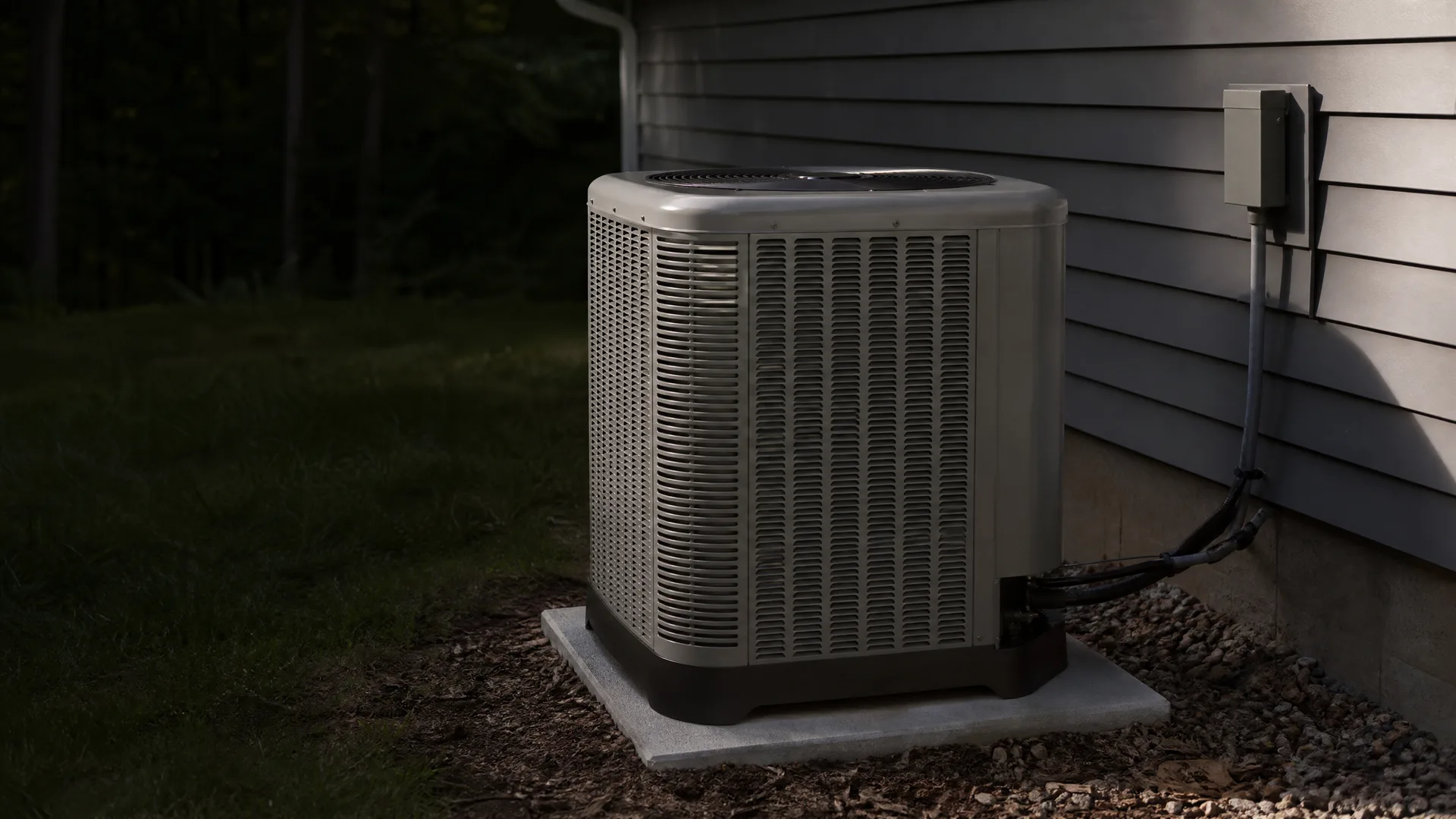
An outdoor air conditioning condenser unit sits on a concrete pad beside a house with horizontal lap siding, with a wall-mounted disconnect box and refrigerant lines entering the wall, gravel and grass around it and dark trees behind.

An air conditioner pro near you

Step 1 of 3: Equipment